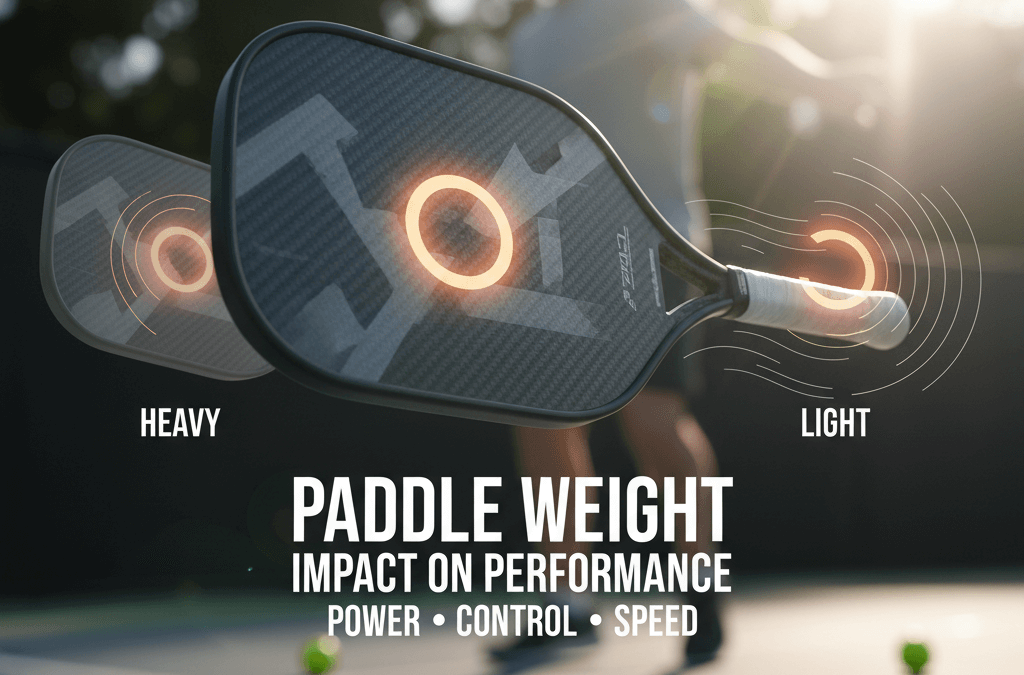
In pickleball, paddle weight directly affects power, control, and comfort. According to USA pickleball , the majority of players use paddles weighing between 7.5 and 8.2 ounces, which they classify as the midweight range. The right paddle weight helps reduce fatigue, improves precision, and enhances gameplay efficiency.
A lighter paddle may feel more comfortable but sacrifices power. Meanwhile, a heavier paddle gives you more strength but can cause arm strain. Finding the right balance is key to maximizing performance.
II. Understanding Paddle Weight Categories
Pickleball paddles are typically divided into three weight categories. Below is an overview based on data from Pickleball Central and Selkirk Sport.
| Category | Weight (oz) | Typical Users | Performance Features |
|---|---|---|---|
| Lightweight | 7.0 – 7.5 oz | Seniors, beginners | Easy to swing, less fatigue, less power |
| Midweight | 7.6 – 8.2 oz | All-round players | Balanced power and control |
| Heavyweight | 8.3 – 8.8+ oz | Advanced & power players | More power, more stability, higher fatigue risk |
According to Paddletek, midweight paddles are the best-selling category because they offer a versatile balance for most skill levels.
III. How Paddle Weight Affects Your Performance
Paddle weight influences four critical performance aspects: power, control, fatigue, and stability.
1. Power
Heavier paddles generate more power due to increased momentum. This is basic physics:
Force = Mass × Acceleration.
A paddle weighing 8.5 oz can produce roughly 10–12% more impact force compared to a 7.3 oz paddle when swung at the same speed. This added momentum is particularly helpful for baseline drives and smashes.
However, heavier paddles require stronger wrists and shoulders to maintain swing consistency.
2. Control
Lightweight paddles (7.0–7.5 oz) allow for quicker reaction times, making them ideal for dinks, volleys, and net play.
Studies show players can adjust paddle angle 15–20% faster with a lightweight paddle compared to a midweight model.
This advantage is why lightweight paddles are often recommended for defensive or placement-oriented players.
3. Fatigue
Fatigue is a critical factor, especially in long games.
Research shows that paddles over 8.4 oz cause up to 25% faster muscle fatigue in forearm and wrist muscles for recreational players over 40 years old.
If you play more than 90 minutes per session, a midweight or lightweight paddle can help reduce fatigue and prevent injuries like pickleball elbow (lateral epicondylitis).
4. Stability
A heavier paddle offers better stability on impact, reducing vibration and maintaining control during fast rallies.
Professional players, often use paddles between 8.2–8.5 oz for consistent drives and blocks.
IV. Paddle Weight, Material, and Balance
Weight isn’t just about total mass — it’s also influenced by materials and balance distribution.
1. Surface Material and Weight Impact
| Material Type | Approx. Density (g/cm³) | Effect on Weight | Performance Notes |
|---|---|---|---|
| Carbon Fiber (T700) | 1.6 | Lightest option | Excellent control and spin |
| Fiberglass | 2.5 | Slightly heavier | More flexible, better power |
| Wood | 3.5+ | Heaviest | Very durable, less control |
carbon fiber offers high stiffness at low weight, making it the preferred material for professional paddles.
2. Paddle Balance
Head-heavy paddles: Deliver more power but slower maneuverability.
Handle-heavy paddles: Easier wrist movement, better control for net play.
Top manufacturers like Joola and ONIX design different balance configurations to match various playing styles.
V. Choosing the Right Paddle Weight for Your Level
Every player has unique needs based on skill level, physical strength, and preferred play style.
Here’s a general recommendation table.
| Skill Level | Recommended Weight Range (oz) | Ideal Features | Why It Works |
|---|---|---|---|
| Beginner | 7.3 – 7.8 | Lightweight or midweight paddle | Easier control, less arm fatigue |
| Intermediate | 7.8 – 8.2 | Midweight paddle | Balance between power and accuracy |
| Advanced / Pro | 8.3 – 8.8+ | Heavy paddle with carbon surface | Maximum power and stability |
???? Pro Tip: If you’re unsure, start with a midweight paddle (7.8–8.0 oz) and adjust later depending on comfort and playing results.
VI. How Manufacturers Control Paddle Weight
Paddle factories use advanced manufacturing techniques to precisely control total weight within ±5 grams. Here are the main production factors:
Core Material:
Polypropylene honeycomb is the most common lightweight core.
A 16mm core generally weighs ~5–10 grams more than a 13mm one, but provides better control and shock absorption.
Surface Material:
T700 raw carbon helps reduce total weight by up to 8% compared to fiberglass.
It also improves spin and ball friction.
Handle Design:
PU grips and longer handles increase comfort but add 5–10 grams.
Some factories use lightweight EVA cores to offset handle weight.
Cold Pressing Technology:
paddles are cold-pressed under uniform pressure to maintain density and durability without excess resin, resulting in consistent weight distribution.
VII. Which Weight Is Right for You?
Choosing the right paddle weight depends on your physical strength, style of play, and comfort preference.
| Player Type | Best Weight Range | Reasoning |
|---|---|---|
| Defensive Player | 7.0–7.6 oz | Faster control, easy wrist movement |
| All-Round Player | 7.8–8.2 oz | Balance between power and touch |
| Aggressive Attacker | 8.3–8.6 oz | Strong impact, powerful drives |
| Senior Player | 7.0–7.5 oz | Prevents joint fatigue |
| Doubles Player | 7.8–8.0 oz | Balanced reaction and stability |
Conclusion
Paddle weight is not just a number — it defines how you play.
A heavier paddle can increase your power and stability, while a lighter one improves speed and control. Most players find the midweight range (7.8–8.2 oz) to be the sweet spot between both worlds.
Manufacturers like Lixisports use advanced materials such as T700 carbon fiber and precision molding to help brands create paddles optimized for every player type.
| Factor | Light Paddle (7.0–7.5 oz) | Midweight (7.6–8.2 oz) | Heavy Paddle (8.3+ oz) |
|---|---|---|---|
| Power | Low | Moderate | High |
| Control | High | Balanced | Medium |
| Fatigue | Low | Moderate | High |
| Speed | Fast | Balanced | Slow |
| Best for | Beginners, seniors | Intermediate, doubles | Advanced, power players |