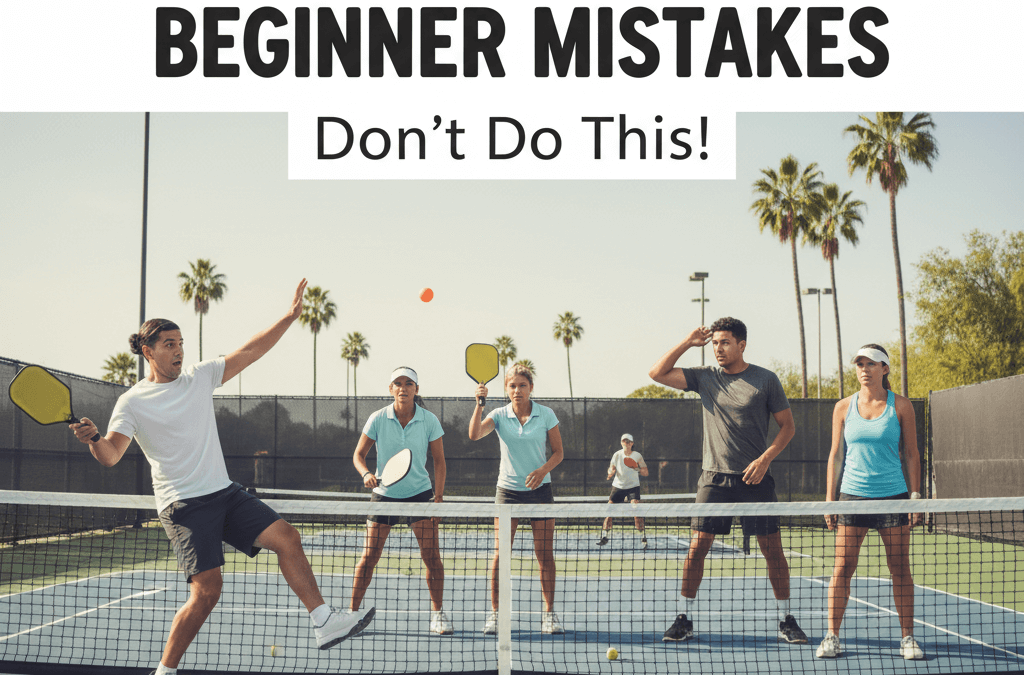
Pickleball may look simple, but mastering it requires more than quick reflexes. Even small technical or strategic errors can cost points and stall improvement. According to USA Pickleball,over 36.5 million Americans played pickleball in 2023, yet most beginners plateau early due to avoidable habits — poor footwork, bad grip, and inconsistent positioning.
Learning to identify and correct these common mistakes not only accelerates skill growth but also reduces injury risks and enhances court confidence. This guide highlights the most frequent beginner errors with clear explanations and data-backed corrections.
II. Mistake #1: Holding the Paddle Too Tight
One of the first errors new players make is gripping the paddle too tightly. A tense grip limits wrist flexibility, reduces control, and increases mishits.
According to Pickleball Central coaches, your ideal grip pressure should feel like “holding a tube of toothpaste without squeezing it.” Too much pressure leads to poor touch shots, especially at the kitchen line.
✅ Fix:
Hold your paddle with about 4/10 tension — firm enough to control, loose enough to stay flexible.
Practice “soft hands” drills near the non-volley zone (NVZ) to improve control.
III. Mistake #2: Standing Too Close to the Net
Beginners often crowd the net after returning serve, leaving them exposed to deep shots or lobs. In pickleball, proper court positioning is crucial.
An analysis found that most points are lost due to poor spacing, not weak shots. Standing too close limits reaction time against fast drives.
✅ Fix:
Maintain a 2–3 feet gap behind the kitchen line when volleying.
After every shot, recover to a balanced “ready” position rather than charging forward.
Drill idea: alternate between dink and lob returns to train quick repositioning.
IV. Mistake #3: Forgetting the “Third Shot Drop”
Many beginners hit their third shot too aggressively — driving the ball hard instead of dropping it softly into the NVZ. This gives opponents control of the rally.
The USAP Official Rulebook identifies the third shot as a transition opportunity. Advanced players use it to move from baseline to the kitchen without exposing themselves to attack.
✅ Fix:
Learn the third shot drop — a soft arc shot that lands just over the net.
Focus on placement rather than power.
Practice with a partner: 10 drops per side, aiming for consistent low bounces.
V. Mistake #4: Ignoring Footwork and Balance
Poor footwork is one of the most overlooked beginner issues. Many players hit flat-footed or reach with their arms instead of moving their bodies.
A study found that 70% of unforced errors in pickleball come from being out of position.
✅ Fix:
Stay light on your feet — small, quick steps beat large lunges.
Always split-step before your opponent hits.
Do ladder drills or shuffle drills 10 minutes before playing.
VI. Mistake #5: Serving Without Purpose
Beginners often treat serves as simple rally starters, not scoring tools. However, a strategic serve can set up the entire point.
top players aim their serves to target opponents’ backhands or move them wide off-court.
✅ Fix:
Mix up serve placement — alternate deep corner and middle serves.
Focus on consistency: over 90% serve accuracy is ideal.
Practice hitting deep, low serves that bounce near the baseline.
VII. Mistake #6: Volleying Too Hard at the Kitchen
At the kitchen line, power is not always your friend. Beginners often smash volleys instead of using controlled dinks. This gives opponents easy counterattacks.
Per Pickleball Magazine, over 60% of rallies end at the NVZ, meaning patience is more valuable than power.
✅ Fix:
Play soft hands — prioritize control and angle over speed.
Practice alternating dink height and depth to create pressure.
Learn to reset fast balls using calm paddle blocks.
VIII. Mistake #7: Forgetting the Non-Volley Zone Rules
Stepping into the kitchen during a volley is an instant fault, yet it’s one of the most common beginner infractions.
The USA Pickleball Rulebook, Section 9A clearly states: “A player may not volley a ball while standing within the NVZ or touching its line.”
✅ Fix:
Practice awareness drills — use tape to mark the NVZ boundary.
Keep your toes behind the line when volleying.
Move into the kitchen only when the ball bounces first.
IX. Mistake #8: Playing Without Communication in Doubles
In doubles pickleball, lack of communication leads to missed shots and confusion. Beginners often fail to call balls or switch coverage effectively.
Pickleball University emphasizes that strong verbal coordination increases win rates by 20%+ in doubles games.
✅ Fix:
Always call “mine” or “yours” loudly.
Decide before the match who covers middle shots.
Practice coordinated movement — both partners move together laterally.
X. Mistake #9: Failing to Watch the Ball
Many beginners look at where they want the ball to go rather than tracking it to the paddle. This causes mistimed hits and off-center contact.
Tennis research from USTA shows athletes who keep their eyes on contact points improve shot accuracy by up to 30% — same principle applies to pickleball.
✅ Fix:
Keep your head steady and watch the ball hit your paddle.
Record yourself hitting and check your eye movement.
Use visual drills (like tossing and catching) to train focus.
XI. Mistake #10: Using the Wrong Paddle
Beginners often pick paddles based on looks or price instead of specs. Using the wrong weight or material reduces control and comfort.
Lightweight paddles (<7.3 oz) are better for control.
Heavy paddles (8 oz+) provide more power but strain wrists.
Carbon fiber faces enhance spin and touch, while fiberglass adds pop.
✅ Fix:
Choose a midweight paddle (~7.5–8 oz) for balanced play.
Test different materials — carbon fiber for control, fiberglass for speed.
See our guide to paddle materials.
XII. Mistake #11: Forgetting to Warm Up
Many players jump straight into matches, leading to early fatigue or injuries. Research indicates dynamic warm-ups reduce muscle injuries by 30–40%.
✅ Fix:
Spend 5 minutes warming up shoulders, wrists, and legs.
Try: light jogging, shadow swings, and short rallying before gameplay.
XIII. Mistake #12: Always Aiming for Winners
Beginners often try to hit perfect shots instead of maintaining consistency. In reality, consistency wins most points.
Pickleball Insights data shows rallies over 7 shots favor consistent players 3:1.
✅ Fix:
Prioritize placement over power.
Play high-percentage shots — aim for opponent’s feet or deep corners.
Remember: every extra shot increases your chance to win.
XIV. Mistake #13: Standing Flat-Footed on Defense
A static stance reduces your ability to react to drives and dinks. Many players stand squarely instead of staying in an athletic position.
✅ Fix:
Keep knees bent and weight on balls of feet.
Maintain slight forward lean for balance.
Drill: Have a partner hit alternating forehand/backhand volleys to test mobility.
XV. Mistake #14: Ignoring Spin and Ball Control
Beginners often play flat shots only. Ignoring spin means giving up a key advantage in placement and deception.
controlled spin adds unpredictable bounce and better control at high levels.
✅ Fix:
Use topspin on drives and underspin on drops.
Practice brushing up the ball for topspin.
Use raw carbon paddles like T700 for more surface friction.
XVI. Mistake #15: Not Practicing Dinking Enough
Dinking is the foundation of control rallies, yet most new players avoid it. In pro-level play, over 60% of points involve dinks before attack.
✅ Fix:
Practice cross-court dinks for consistency.
Keep the ball low — aim 6–8 inches above the net.
Mix in dink-volley drills for better anticipation.
XVII. Conclusion: Smart Players Learn Faster
Pickleball improvement isn’t about power — it’s about precision, positioning, and patience. Avoiding these 15 beginner mistakes can instantly elevate your play, save energy, and help you win more rallies.