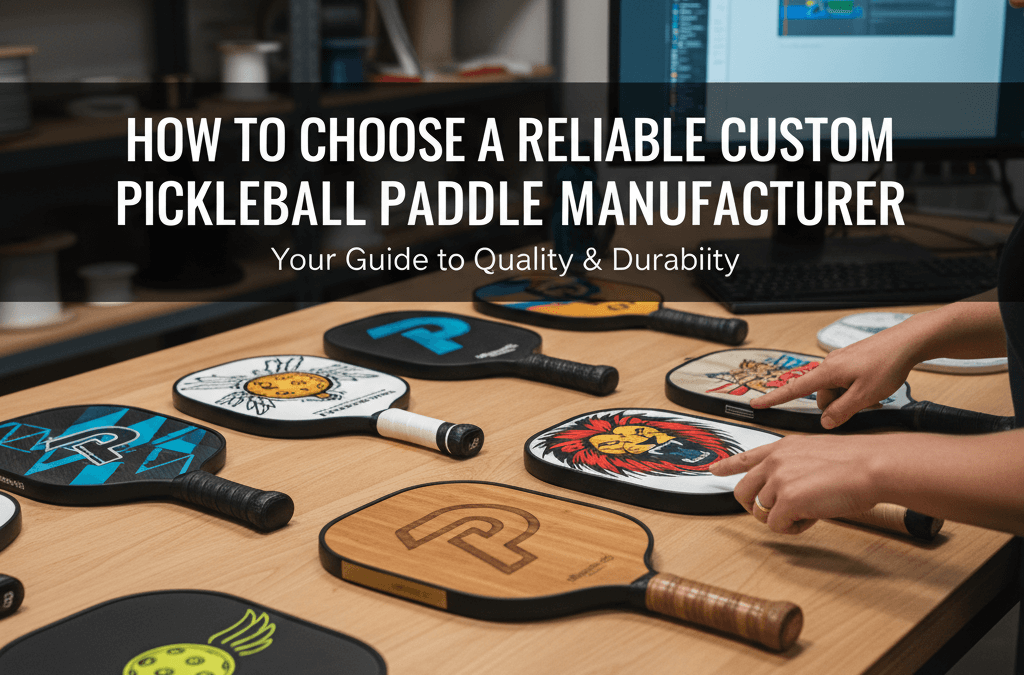
Choosing the right custom pickleball paddle manufacturer directly determines your product’s quality, brand reputation, and business success. A reliable factory ensures consistent materials, precise production, timely delivery, and support for customization. Selecting the wrong manufacturer can lead to defects, delays, and lost revenue — making the decision critical for any brand entering the pickleball market.
II. Understanding the Pickleball Paddle Manufacturing Process
Before evaluating suppliers, it’s critical to understand the core steps of paddle manufacturing. Most custom pickleball paddles consist of three key layers:
| Component | Description | Typical Options |
|---|---|---|
| Surface Material | Determines control, power, and spin | Fiberglass, Carbon Fiber, T700 Raw Carbon, 3K Carbon, 18K Carbon |
| Core Material | Impacts weight, sound, and feel | Polymer Honeycomb (PP), Nomex, EPP |
| Edge Guard & Handle | Affects durability and comfort | PU handle grip, reinforced edge guard, two-handed elongated handle |
The hot-pressing process is now widely used for premium paddles because it ensures a more uniform bond between the face and core, improving durability and consistency.
A reliable OEM or ODM factory should be able to:
Provide multiple material options (e.g., T700 carbon for control-focused paddles).
Offer 16mm core options, which have become standard among professional players.
Customize edge guards, grip textures, and UV printing for brand identity.
Maintain tight weight tolerances (±5g) across batches.
III. Key Factors to Evaluate a Custom Paddle Manufacturer
1. Material Quality and Sourcing Transparency
High-end paddles rely on advanced carbon fiber and core materials. For instance, T700 raw carbon fiber, sourced from suppliers like Toray (Japan) , provides better stiffness and control compared to generic fiberglass.
✅ Tip: Ask your manufacturer about their carbon fiber supplier origin — reliable factories use imported materials with tensile strength above 4900 MPa.
2. Production Capability and Techniques
The manufacturer should have:
Cold/Hot-press technology (used by most premium brands).
Dust-free workshops for lamination.
Mold flexibility for different paddle shapes (standard, elongated, wide-body).
Monthly capacity data (e.g., 10,0000+ paddles/month).
A factory that can show videos or case studies of its mold-making and pressing process is generally more trustworthy.
3. Quality Control System
Every production batch should go through at least four QC stages:
Incoming material inspection
Lamination flatness and adhesion test
Weight and balance consistency test
Final impact and vibration testing
Professional manufacturers maintain defect rates below 2% and provide full inspection reports upon request.
4. Communication and Engineering Support
Custom OEM orders require constant communication about mold tolerance, design layout, and logo effects. Factories with in-house engineers fluent in English or dedicated account managers can shorten development time by up to 30–40% compared to those relying on translators.
IV. Certifications, Standards, and Testing You Should Check
Reliable manufacturers should follow USAPA (USA Pickleball Association) standards to ensure tournament legality and quality. The USAPA testing focuses on:
| Test Item | Standard | Description |
|---|---|---|
| Paddle Dimensions | ≤ 24 inches (length + width) | Ensures standard playability |
| Paddle Roughness (Surface Texture) | ≤ 40 micrometers | Limits spin-enhancing coatings |
| PBCOR (Coefficient of Restitution) | ≤ 0.43 | Controls rebound and speed |
| Noise Level | Must meet community noise standards | For “quiet paddle” certification |
✅ Key takeaway:
When selecting a supplier, request test reports from their lab. The PBCOR value below 0.43 is critical — any paddle exceeding this fails USAPA certification.
Also, professional factories often have ISO9001 certification, proving consistent process management.
V. Common Mistakes When Choosing a Manufacturer
1. Relying Only on Alibaba or Made-in-China Listings
While platforms like Alibaba and Made-in-China are good for initial supplier discovery, many listings are trading companies or brokers posing as factories. This can lead to:
Higher prices (10–20% markup).
Poor quality control (since they don’t produce directly).
Limited customization flexibility.
✅ Better approach:
Search for factories with their own websites, visible factory photos, and Google Business listings. Check for consistent branding and factory address verification on maps.
2. Ignoring Small Sample Orders
Always start with 3–5 sample paddles before mass production. A reliable factory won’t resist small orders and will let you evaluate grip comfort, balance, and spin potential firsthand.
3. Overlooking After-Sales Service
Reliable suppliers offer:
1-year defect warranty.
Free replacement for verified material issues.
Transparent communication channels (WhatsApp, email, or Google Meet support).
4. Not specifying your requests clearly
Most suppliers are in China, and their native language is not English and there exists time difference, for efficient communication:
Stating requests clearly, like targeted production method( cold pressed or hot pressed),surface material, order quantity, customizaton details of grip, edge guard, rubber ring etc.
Use simple English.
You can use Wechat if possible for faster communication.
VI. Comparing Different Regions: China vs. Vietnam vs. U.S.
| Factor | China | Vietnam | U.S. |
|---|---|---|---|
| Labor & Material Cost | Low | Medium | High |
| Production Experience | 10+ years (mature) | Emerging | Limited |
| Lead Time | 25–40 days | 30–45 days | 60+ days |
| Customization Options | Very flexible | Moderate | Limited |
| MOQ (Minimum Order Quantity) | 100–300 units | 300+ | 1000+ |
| Typical Price Range (per paddle) | $5–$30 | $25–$50 | $70+ |
✅ Conclusion:
For B2B brands, China remains the best option for OEM/ODM custom pickleball paddle production due to cost efficiency, advanced pressing technology, and customization flexibility.
Factories like LIXI Pickleball is example of manufacturers combining modern cold-press techniques with custom branding services (UV logo, edge guard color, custom packaging).
VII. How to Verify a Factory’s Reliability
| Verification Method | What to Check |
|---|---|
| Video Call Factory Tour | Request to see pressing area, storage room, and packaging line |
| Third-Party Audit | Hire SGS or TÜV inspection for $200–$300 |
| Factory License Verification | Ask for Chinese “Business License” (营业执照) with matching address |
| Previous Client References | Check brand collaboration or export markets |
| Sample Quality Report | Inspect adhesion strength and PBCOR test result |
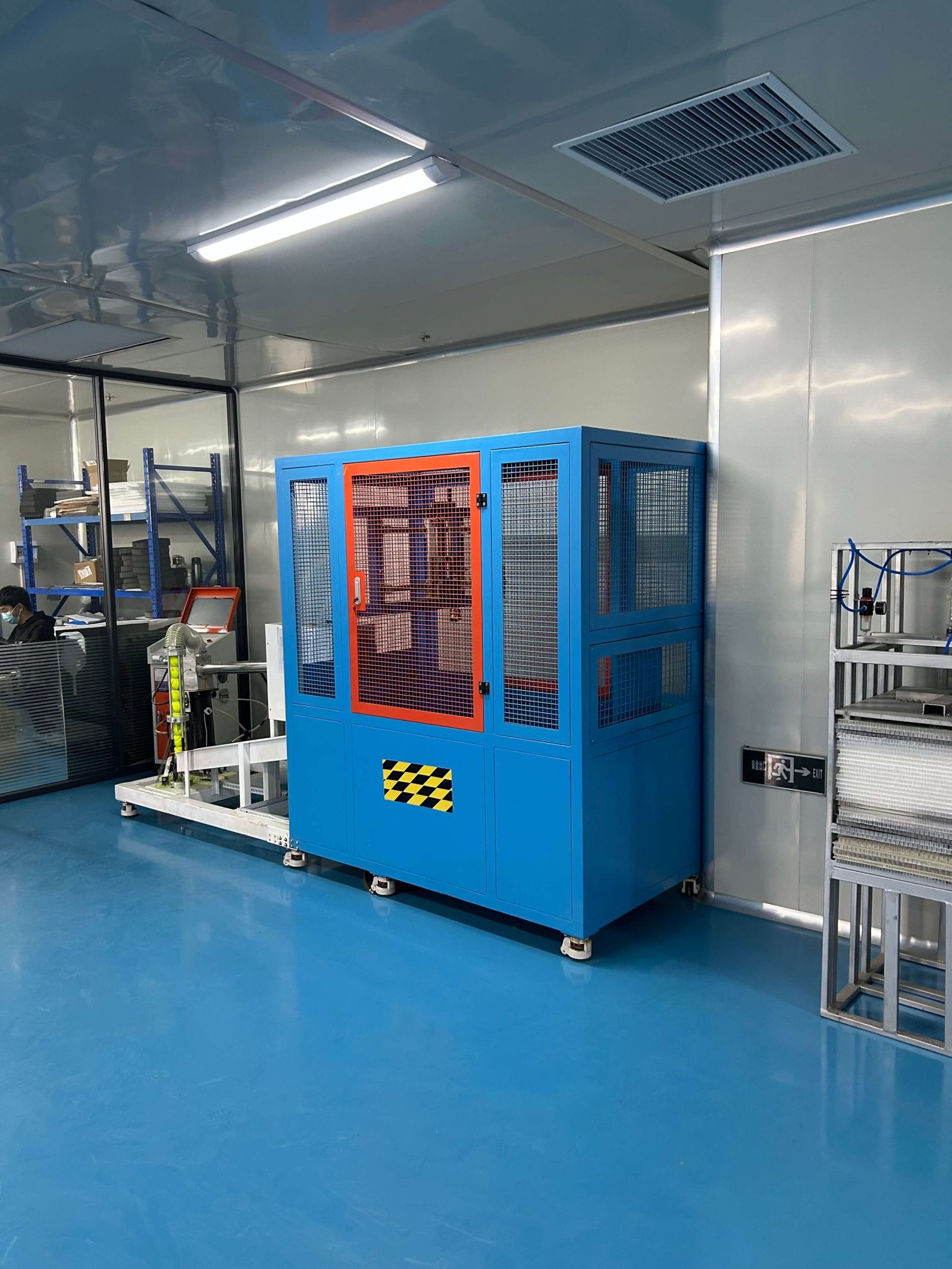
VIII. How to Communicate Your Customization Requirements
Provide your supplier with a clear specification sheet, including:
Paddle shape and mold code
Surface material (e.g., T700 raw carbon)
Core thickness (13mm, 16mm, or 19mm)
Handle length and grip style
Logo placement and color codes (Pantone preferred)
Packaging format (polybag, box, or full-color retail pack)
✅ Pro tip: Use design software like Adobe Illustrator (AI file) or CorelDRAW to send accurate vector logo files for UV or laser engraving.
Conclusion
Choosing a reliable custom pickleball paddle manufacturer requires careful evaluation of material sourcing, production capability, certifications, and communication quality. While many suppliers appear on Alibaba or Made-in-China, genuine OEM factories with cold/hot-press facilities, quality control systems, and PBCOR-compliant products (≤0.43) are rare.
Partnering with the right manufacturer can help you:
Build a unique paddle brand identity.
Ensure consistent tournament-legal quality.
Scale profitably in the fast-growing pickleball market.