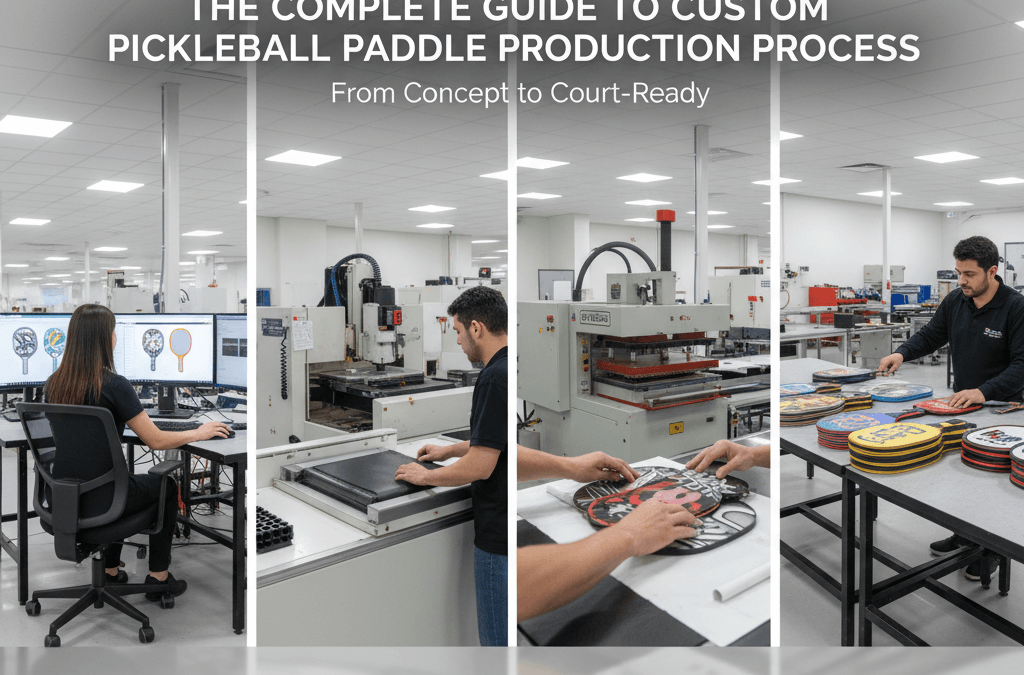
In the fast-growing pickleball industry, understanding how a custom paddle is made is key to building a successful brand. For companies planning to launch or expand their product line, knowing each step of the paddle manufacturing process helps ensure consistent quality, better performance, and stronger market differentiation.
A modern pickleball paddle combines engineering precision, material science, and skilled craftsmanship. Every detail—from the core material to surface lamination and finishing—impacts the paddle’s playability, durability, and feel.
II. Understanding Paddle Materials
1. Core Materials: PP and EPP
The core is the foundation of every pickleball paddle, determining its weight, power, control, and sound. Today, the vast majority of professional paddles use polypropylene (PP) honeycomb cores, followed by expanded polypropylene (EPP) for softer, control-oriented paddles.
Polypropylene (PP) Honeycomb Core
The most widely used material, found in over 90% of professional paddles.
Density: 80–100 kg/m³, providing excellent stiffness-to-weight ratio.
Advantages:
Lightweight and stable.
Strong rebound response for power shots.
Consistent performance across temperature variations.
Common thickness: 13 mm, 14 mm, and 16 mm.
Typical players: Intermediate to pro players who value a balanced mix of power and control.
Expanded Polypropylene (EPP) Core
Slightly softer and heavier than PP, with better shock absorption.
Ideal for players who prefer touch and control over raw power.
Common in “soft-control” paddles.
Other Core Materials (Nomex, Aluminum, EVA)
Nomex: Very rigid and powerful but louder, often used in old-school or power paddles.
Aluminum: Lightweight but less durable; used rarely today.
EVA Foam: Seen only in training or special-edition paddles due to low structural strength.
| Core Type | Density (kg/m³) | Weight | Control | Durability | Common Usage |
|---|---|---|---|---|---|
| PP Honeycomb | 80–100 | Light | Balanced | High | Standard paddles |
| EPP | 60–80 | Medium | High | Medium | Soft-control paddles |
| Nomex | 100–120 | Heavy | Low | Very High | Power paddles |
| EVA | 50–70 | Light | Low | Low | Training paddles |
2. Surface Materials: Fiberglass vs. Carbon Fiber
The paddle face defines how the ball interacts with the surface—spin, control, and overall feel depend heavily on this layer.
Fiberglass Surface
Made from woven glass fibers coated with resin.
Produces a softer, more flexible feel, perfect for beginner or intermediate players.
Cost-effective and easy to customize with colorful graphics.
Offers high power but slightly less control.
Carbon Fiber Surface (T700 / 3K / 12K / 18K)
Preferred for professional paddles because of its stiffness and responsiveness.
T700 raw carbon is the current standard for high-performance paddles, offering superior spin and touch.
Surface roughness is tested under USAPA standards to ensure PBCOR ≤ 0.43.
Different weaves like 3K, 12K, and 18K affect texture, stiffness, and price:
3K: Balanced spin and control.
12K/18K: Denser weave for more durability and precise response.
| Surface Material | Weight | Spin | Power | Cost | Durability |
|---|---|---|---|---|---|
| Fiberglass | Medium | Medium | High | Low | Medium |
| T700 Raw Carbon | Light | Excellent | Medium | High | High |
| 3K Carbon | Light | Excellent | High | High | High |
| 12K/18K Carbon | Light | Excellent | Medium | High | Very High |
3. Handle and Grip Materials
The handle ensures comfort, grip stability, and vibration control.
Most modern paddles use:
PU handle: Soft, non-slip texture for comfort and shock absorption.
Synthetic Leather: Premium feel and durability for advanced players.
Rope Wrap or Towel Grip: Lightweight and breathable, used in summer editions.
Custom handle options include:
Elongated Handles (7.3 in): Allow for two-handed backhand shots, preferred by players transitioning from tennis.
Grip Sizes: Usually between 4.0 and 4.5 inches circumference.
III. Step-by-Step Production Process
The manufacturing process combines engineering precision with handcrafting skill. Here’s a breakdown of each major stage.
1. Mold and Shape Design
Paddle shape affects sweet spot size, aerodynamics, and swing balance.
Common shapes: Standard (16×8 in), Elongated, and Widebody.
OEM projects use existing molds, while ODM clients can create custom molds for unique designs.
Mold material: CNC aluminum alloy ensures repeatability and precision.
2. Core Cutting and Preparation
PP or EPP honeycomb blocks are CNC-cut into paddle shapes.
Factory tolerance: ±0.2 mm to ensure consistent flatness.
Each core is checked for even cell size and clean edges.
3. Surface Lamination (Cold Press Process)
A critical step determining strength and balance.
The factory aligns the carbon or fiberglass sheets on both sides of the core.
Using a cold-pressing machine, high pressure (around 10 tons) ensures even adhesion without deforming the honeycomb.
Curing time: 8–12 hours depending on temperature and resin type.
Advantages of cold pressing:
Better surface flatness.
Stronger bonding.
Lower risk of core compression.
4. Edge Guard and Frame Assembly
The edge guard protects the paddle from impact damage and maintains structural integrity.
Material: TPU or ABS, known for flexibility and strength.
Can be customized in color or printed with brand logos.
The edge guard is attached using high-temperature adhesive, followed by trimming and polishing.
5. Handle Wrapping and Finishing
The handle is attached using epoxy resin or hot-melt adhesive for torque resistance.
After curing, workers wrap the handle manually with PU or synthetic leather to ensure uniform grip tension.
Optional butt cap customization allows for logo embossing or metal plating.
6. Graphics and Branding
Printing options:
UV printing: High-resolution, scratch-resistant, suitable for matte carbon finishes.
Decal: Applicable to unibody paddles.
Water transfer: Smooth, seamless graphics over complex shapes.
UV coating can be added to protect graphics from wear and fading.
Many brands also request 3D frosted or smoky textures for a premium look.
7. Quality Testing and Standards
A professional OEM factory should follow strict quality control procedures at every step.
Common tests include:
| Test Type | Standard / Unit | Acceptable Range |
|---|---|---|
| PBCOR | USAPA Standard | ≤ 0.43 |
| Surface Roughness | μm | ≤ 30 |
| Weight Consistency | g | ±2 |
| Bounce Test | Rebound Height | ≥ 85% uniformity |
| Adhesion Strength | MPa | ≥ 1.5 |
| Edge Impact Test | Cycles | ≥ 500 hits |
Paddles meeting USAPA approval are eligible for tournament play.
Testing is typically done on random samples from each production batch.
8. Packaging and Shipping
OEM factories can provide:
Custom packaging boxes, color bags, or blister packs.
Individual or bulk packaging for cost efficiency.
Logistics options include FOB, CIF, DDP, or air freight depending on client location.
Each shipment includes a final inspection report summarizing batch weight, adhesion, and PBCOR test results.
IV. OEM vs ODM Customization
When developing your paddle brand, it’s essential to understand the difference between OEM and ODM projects.
| Feature | OEM | ODM |
|---|---|---|
| Design Source | Using existing molds or template dieline | Developed by factory and brand owners together |
| Mold Ownership | Belongs to factory | Belongs to buyer |
| Customization Depth | Surface, graphics, packaging | Structure, mold, and materials |
| Time to Market | 30–45 days | 60–90 days |
| MOQ | 200–300 units | 500+ units |
| Ideal For | New brands | New or innovative brands |
OEM production is ideal for brands that already have a paddle design and simply need reliable manufacturing at scale.
ODM production, on the other hand, suits companies looking for complete product development—from R&D to mold creation and final branding.
Choosing between the two depends on your timeline, budget, and level of design innovation.
V. Quality Control Standards
To ensure long-term performance and compliance with tournament regulations, factories must follow strict testing and documentation.
USAPA Standards
PBCOR ≤ 0.43
Surface roughness ≤ 30 μm
Maximum paddle length: 17 inches
Material Standards
Carbon fiber tested per ASTM D3039 (tensile strength).
PP and EPP cores tested for density and compression resistance.
Process Control
Temperature and humidity recorded during lamination.
Adhesive curing monitored by digital sensors.
Weight and Balance Inspection
Every paddle measured to ensure ±2 g variance.
Center of gravity consistency checked within 1 cm tolerance.
Durability and Torque Tests
Simulated swing test: 500 repetitions without handle loosening.
Edge impact test ensures frame stability.
By maintaining these standards, a factory demonstrates both product reliability and manufacturing professionalism.
VI. Common Mistakes When Customizing Paddles
Even experienced buyers sometimes overlook critical factors when starting custom paddle projects. Here are common pitfalls and how to avoid them:
Selecting suppliers only through Alibaba or Made-in-China listings
Many listings are trading companies, not real factories. Always verify production capability through factory visits or live video audits.
Ignoring material and testing data
Always request PBCOR, weight, and surface roughness reports to ensure USAPA compliance.
Over-customizing molds without MOQ awareness
A new mold may cost USD 800–1500; ensure production volume justifies it.
Not confirming grip size and handle length
Mismatched handle specifications can lead to player discomfort.
Neglecting logistics and lead times
Typical OEM lead time: 30–45 days after sample approval.
ODM projects may take up to 90 days for mold creation and testing.
VII. Conclusion
The production of a custom pickleball paddle is a detailed process that combines science, craftsmanship, and precision. From choosing the right PP honeycomb core to mastering the cold-press lamination process, every detail influences how your paddle feels, performs, and lasts.
Working with an experienced OEM or ODM manufacturer allows brands to:
Control product quality and compliance.
Shorten development time.
Customize appearance and performance for specific market needs.