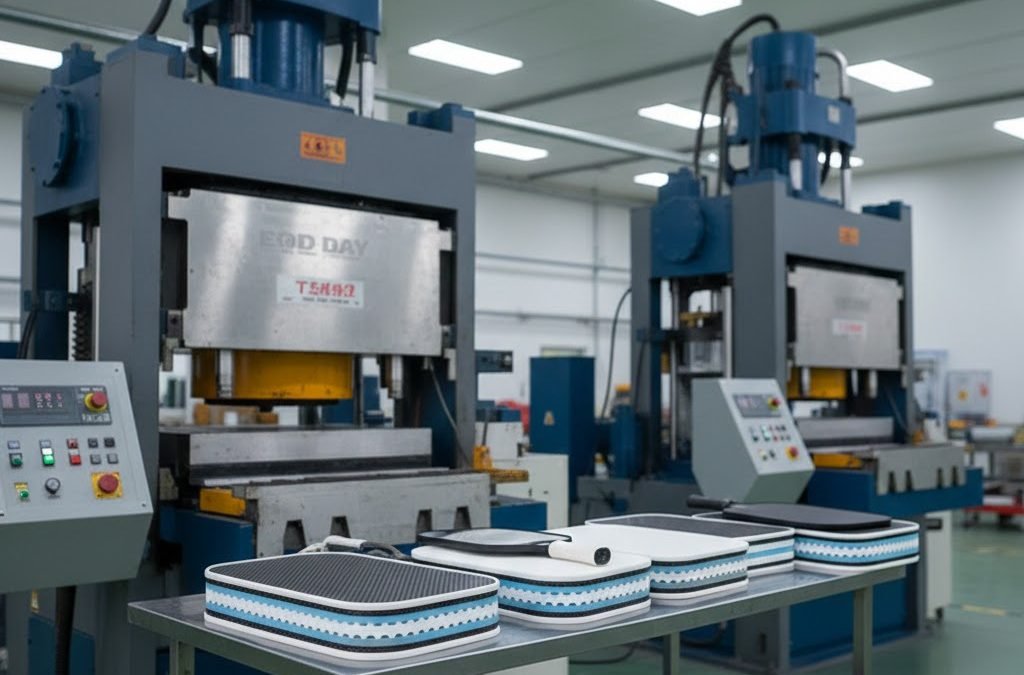
Choosing the right pickleball paddle factory directly affects product performance, durability, and long-term brand consistency. Before committing to an OEM or ODM supplier, brands must evaluate manufacturing capability, material control, process stability, and quality systems, not just price. Key indicators include paddle thickness (13–16 mm), weight tolerance (±5–10 g), core type (PP vs MPP), pressing method (cold vs hot press), and batch consistency metrics. Asking the right technical and operational questions early helps reduce sampling risk, production variance, and post-launch quality issues.
2. Technical Background: Why Factory Selection Matters
A pickleball paddle is not a simple laminated product. It is a composite structure system combining:
Core material (PP honeycomb, MPP foam, EPP, hybrid cores)
Face materials (fiberglass, T700 raw carbon fiber, woven carbon)
Resin systems and bonding layers
Pressing process (cold press or hot press)
Handle structure, edge guard, and grip assembly
Small differences in core density, face layup sequence, resin curing temperature, or press pressure can significantly impact:
Control vs power balance
Vibration damping and arm comfort
Sweet spot size and consistency
Delamination risk and fatigue life
Compliance with USA Pickleball equipment guidelines
For brands, the factory is not just a supplier—it becomes an extension of your R&D and QA system.
3. The 10 Critical Questions to Ask a Pickleball Paddle Factory
3.1 Are You an OEM or ODM Factory — and What Does That Mean in Practice?
Many disputes start here.
ODM: Factory builds strictly to your specifications; you own design, mold, and IP.
OEM: Factory offers existing designs with limited customization; factory often retains mold ownership.
Why it matters
ODM partnerships allow true differentiation and IP protection, but usually require higher MOQ (300–1000 units) and longer development time. OEM is faster but limits performance tuning and brand uniqueness.
Ask clearly:
Who owns the mold?
Can the same design be sold to other brands?
3.2 What Core Materials Do You Actually Produce In-House?
Common answers include PP honeycomb, MPP foam, or “custom core.” Push deeper.
Key parameters to confirm:
Core thickness: 13 / 14 / 16 mm
Core density range (kg/m³)
Cell size (for PP honeycomb)
Compression recovery rate (for foam cores)
Why it matters
Core density and thickness directly affect dwell time, power output, and sweet spot size. Two 16 mm paddles with different core densities can feel completely different on court.
3.3 What Surface Materials and Carbon Grades Are Available?
Not all “carbon fiber” is the same.
Ask specifically:
Fiberglass vs carbon fiber
T700 raw carbon vs woven carbon (3K / 12K / 18K)
Resin system used (epoxy type, Tg range)
Typical ranges:
Surface thickness: 0.3–0.6 mm
Friction coefficient (relative): carbon > fiberglass
Why it matters
Raw carbon surfaces increase spin potential and control, while fiberglass offers softer feel and forgiveness. Surface choice also affects durability and surface wear over time.
3.4 Do You Use Cold Press or Hot Press Manufacturing?
This is one of the most misunderstood topics.
Cold press: Lower temperature, longer curing, better thickness control
Hot press: Faster cycle time, higher output, greater risk of variation
Typical parameters:
Cold press pressure: 20–30 tons
Thickness tolerance: ±0.3–0.5 mm
Why it matters
Cold pressing generally improves flatness, bonding stability, and batch consistency, especially for raw carbon paddles.
3.5 What Is Your Weight and Balance Tolerance in Mass Production?
Sampling weight means little without production data.
Industry norms:
Weight range: 7.8–8.5 oz (221–241 g)
Acceptable tolerance: ±5–10 g
Balance point variance: ±5 mm
Why it matters
Large weight variance causes inconsistent swing feel, customer complaints, and returns—especially for competitive players.
3.6 How Do You Control Bonding and Delamination Risk?
Delamination is one of the most common long-term failures.
Ask about:
Resin application method
Cure time and temperature control
Peel or shear testing during QC
Impact or fatigue testing cycles
Why it matters
Poor bonding may not show in samples but appears after hundreds of ball impacts during real play.
3.7 What QA Checks Are Done Beyond Visual Inspection?
A professional factory should provide process-based QA, not just final checks.
Typical inspections:
Incoming material inspection (core, fabric, resin)
Thickness and flatness measurement
Weight and balance recording
Random destructive testing per batch
Why it matters
Quality consistency is built during production, not at the end.
3.8 Can You Provide Data from Mass Production, Not Just Samples?
Samples are often hand-selected.
Ask for:
Production batch QC records
Weight distribution charts
Thickness deviation reports
Why it matters
Your brand reputation depends on what customers receive, not what you approve as samples.
3.9 How Does Customization Affect MOQ, Cost, and Lead Time?
Customization variables include:
New mold
Custom core density
Custom face material
Handle length or shape
Edge guard color and logo
Typical impacts:
MOQ increase: +200–500 units
Lead time increase: +15–30 days
Why it matters
Understanding these trade-offs early prevents delays and budget overruns.
3.10 How Do You Support Long-Term Consistency and Product Iteration?
Ask about:
Engineering change management
Version tracking (V1, V2, V3)
Tooling maintenance
Material supplier stability
Why it matters
Successful brands evolve products over time. Your factory must support controlled iteration, not random changes.
4. Specification Table
| Parameter | Typical OEM / Industry Range | Why It Matters |
|---|---|---|
| Paddle thickness | 13 / 14 / 16 mm | Control vs power balance |
| Weight | 7.8–8.5 oz | Swing speed & fatigue |
| Weight tolerance | ±5–10 g | Batch consistency |
| Core type | PP / MPP | Feel & durability |
| Surface material | Fiberglass / T700 carbon | Spin & touch |
| Handle length | 5.3–7.5 in | Two-handed backhand |
| Pressing method | Cold / Hot press | Structural stability |
5. Impact on Performance
Proper factory capability directly affects:
Control accuracy through consistent dwell time
Power transfer efficiency via stable core compression
Sweet spot size through uniform thickness and bonding
Vibration damping via material pairing and resin control
Durability under repeated impact cycles
Batch-to-batch consistency in global distribution
6. Quality Control & Testing Methods
Professional paddle factories implement:
Incoming inspection for core density and fabric weight
In-process thickness and flatness checks
Weight & balance recording per batch
Bonding integrity testing
Periodic compliance checks against USA Pickleball equipment guidelines
7. Purchasing & OEM Supplier Evaluation Tips
Do not judge factories by sample quality alone
Clarify mold ownership and IP rights in writing
Align MOQ with realistic sales forecasts
Prioritize process stability over lowest price
Choose factories experienced with your target market level
8. FAQ
What thickness is best for control-focused paddles?
16 mm is generally preferred due to longer dwell time.
Is MPP core more durable than PP honeycomb?
MPP offers better impact absorption but requires stricter process control.
What weight tolerance is acceptable for OEM orders?
±5 g is ideal; ±10 g is common for mid-range production.
Does cold pressing improve consistency?
Yes, especially for carbon-fiber paddles.
Can factories guarantee zero delamination?
No, but proper bonding and QC significantly reduce risk.
9. Final Practical Checklist
Define target specs before sampling
Confirm OEM vs ODM and mold ownership
Set acceptable weight and thickness tolerance
Verify pressing method used
Request QC data from mass production
Align MOQ with customization level
Plan for long-term consistency, not just first launc