
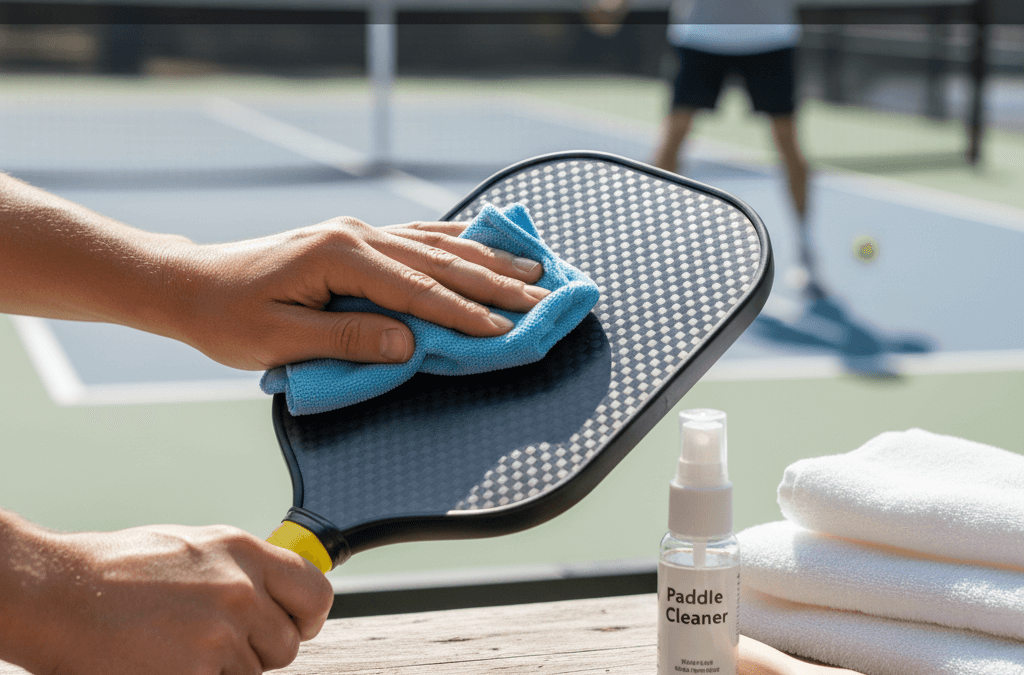
Your pickleball paddle is the most important tool for your game. Over time, sweat, dust, and sun exposure can slowly wear down the surface, affect control, and even shorten your paddle’s lifespan. According to Pickleball Central, regular paddle maintenance can help extend a paddle’s usable life by 20–30%, saving players from frequent replacements.
1. Why Paddle Maintenance Matters
A well-maintained pickleball paddle offers consistent performance and longer durability. Over time, small contaminants — like dust, sunscreen, and sweat salts — can reduce surface friction and make your paddle feel less responsive.
A USAPA report (2023) noted that paddles with worn surfaces lose up to 18% of spin potential compared to new ones. That’s because oil and micro debris fill the surface texture, especially on raw carbon paddles, reducing their grip on the ball.
Key benefits of maintenance include:
| Benefit | Explanation |
|---|---|
| Better control | A clean surface maintains friction for precise ball placement. |
| Longer paddle life | Prevents material fatigue and surface dulling. |
| Consistent feel | Avoids uneven performance caused by dirt buildup. |
| Improved hygiene | Removes bacteria and odor from sweat buildup. |
2. How Often Should You Clean Your Paddle?
The cleaning frequency depends on how often you play and your environment.
| Playing Frequency | Recommended Cleaning |
|---|---|
| 2–3 times per week (indoor) | Light cleaning after each session |
| 4–6 times per week (outdoor) | Deep cleaning once a week |
| Competitive/tournament players | Before every major match |
If you play outdoors often, your paddle is exposed to UV rays and fine dust, which can accelerate surface oxidation. Studies from Wilson Sporting Goods show that constant sunlight exposure can make paddle resins 10–15% more brittle over six months.
3. How to Clean the Paddle Surface
The correct cleaning method depends on the surface type: fiberglass, carbon fiber, or raw carbon (T700/3K/12K).
Step-by-Step Cleaning Guide
Use a damp microfiber cloth
Wipe away sweat and visible dirt gently. Avoid soaking.
Microfiber traps fine particles without scratching.
Apply mild soap if needed
Mix a small amount of dish soap (pH-neutral) with warm water.
Wipe gently — never submerge the paddle.
Avoid alcohol or harsh chemicals
Solvents can degrade epoxy resin or fade the UV finish.
Dry naturally
Air-dry your paddle at room temperature.
Avoid hairdryers or heaters — heat can warp internal honeycomb cores.
According to Gearbox Sports, carbon paddles cleaned with harsh chemicals lose up to 12% of surface grip after repeated exposure. Therefore, use only gentle materials.
4. Cleaning Raw Carbon Paddles (T700 / 3K / 12K)
Raw carbon paddles have exposed fiber textures that improve spin but also attract dirt and sweat. You can safely clean them using a Magic Eraser (melamine sponge).
How to do it:
Wet the Magic Eraser with water only.
Gently rub the paddle face in circular motions.
Wipe off with a dry microfiber towel.
This technique helps restore friction without damaging carbon fibers. A test by JustPaddles.com found that Magic Eraser cleaning restored up to 90% of the original friction coefficient measured by surface texture testing.
5. Grip Maintenance: Keep It Fresh and Functional
The handle is where sweat, bacteria, and wear accumulate fastest. Replacing or maintaining your grip regularly keeps the paddle comfortable and prevents slippage.
Tips for Grip Care
| Task | Frequency | Why It Matters |
|---|---|---|
| Wipe grip after each session | Every use | Removes sweat and salt crystals |
| Replace overgrip | Every 20–30 hours of play | Ensures proper tackiness |
| Deep clean leather/PU grip | Once a month | Maintains elasticity |
PU grips exposed to sweat and UV light lose 25% of their tackiness after 40 hours of use. You can extend lifespan by wrapping a thin absorbent overgrip and replacing it regularly.
6. Storage: Protecting Your Paddle Off the Court
Improper storage is one of the main reasons paddles deform or lose surface tension. Avoid leaving your paddle in hot cars or damp environments.
Best Storage Practices
Keep below 30°C (86°F) — Heat softens polymer cores.
Use a paddle cover — Prevents UV and dust exposure.
Avoid direct sunlight — Carbon and fiberglass layers can delaminate.
Store vertically — Reduces pressure on edges.
A Pickleball Magazine (2023) report showed that paddles stored in cars during summer reached 65°C (149°F) inside, causing noticeable surface bubbling in as little as 3 weeks.
7. Avoid These Common Mistakes
Even experienced players make cleaning errors that can shorten paddle life:
| Mistake | Why It’s Harmful |
|---|---|
| Using alcohol wipes | Damages resin and weakens surface texture |
| Using abrasive brushes | Scratches fiberglass or carbon weave |
| Storing paddle in trunk | Heat warps core materials |
| Using disinfectant sprays | Leaves residue that attracts dust |
| Washing paddle under running water | Moisture seeps into honeycomb core |
Always use controlled moisture and gentle motion for cleaning.
8. When to Replace Your Paddle
Even with good care, paddles wear out over time. The average lifespan of a quality paddle is 12–18 months for frequent players, based on data from Pickleball Effect.
Signs you should replace your paddle:
Noticeable dead spots when hitting
Faded surface texture
Cracked edge guard
Loose or slippery grip
If you play competitively, changing your paddle yearly ensures consistent feel and spin response.
9. Eco-Friendly Disposal Tips
When replacing paddles, avoid throwing them away. Many local clubs or organizations recycle or repurpose paddles for beginners.
For example, RePickle Project collects used paddles and donates them to community centers, reducing waste by up to 40% per year.
Conclusion
A clean and well-maintained paddle not only performs better but also lasts much longer. By wiping the surface regularly, caring for the grip, and storing it properly, you can preserve up to 30% more play life while maintaining consistent control and spin.
At Lixi Pickleball, we design paddles with T700 raw carbon, PU long handles, and cold-pressed 16mm cores, ensuring top durability and feel. With proper maintenance, your paddle can stay tournament-ready for years.
FAQ
1. Can I clean my pickleball paddle with alcohol wipes?
No. Alcohol can break down the resin layer on carbon and fiberglass paddles. Use a damp microfiber cloth instead.
2. How do I clean the paddle if I dropped it in dirt?
Wipe gently with a damp cloth and mild soap, then air-dry completely before storage.
3. How often should I replace my grip?
If you play 3–4 times a week, replace the overgrip every 3–4 weeks for best comfort and control.
4. Is it okay to use a hairdryer to dry my paddle?
No. Heat may warp the honeycomb core or loosen the adhesive layers.
Recent Comments