
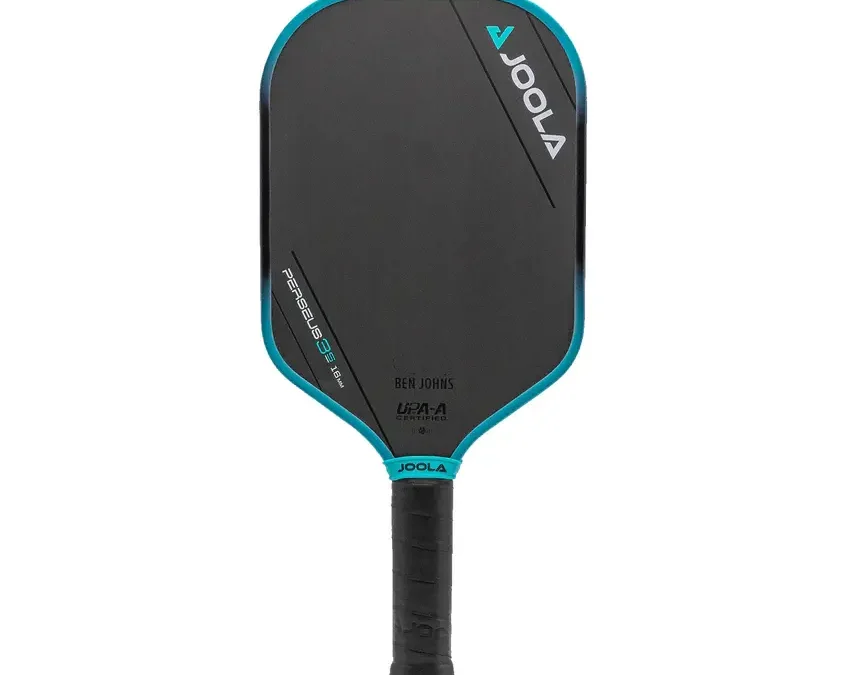
As a brand synonymous with high-performance pickleball paddles, JOOLA has built a reputation for pushing the boundaries of innovation to meet the demands of a rapidly evolving sport. From a factory perspective, their latest release, the JOOLA Perseus Pro IV, isn’t about reinventing the paddle but refining what already works. With their paddles, like the JOOLA 3S, already excelling in the power category, the focus with the JOOLA Pro IV shifts toward enhancing feel, balance, and stability. The result? A significant upgrade to one of the market’s most popular power paddles, the JOOLA Ben Johns Perseus 3S 16mm Pickleball Paddle, without losing sight of what made the original design so effective.
In this review, we’ll dissect the JOOLA Perseus Pro IV paddle, explore its technical advancements, and compare it to the JOOLA 3S paddles—including models like the JOOLA Gen 3S—to highlight their differences and positioning in the market. Written from a neutral, factory-informed standpoint, this post aims to give players a clear understanding of what sets these paddles apart.
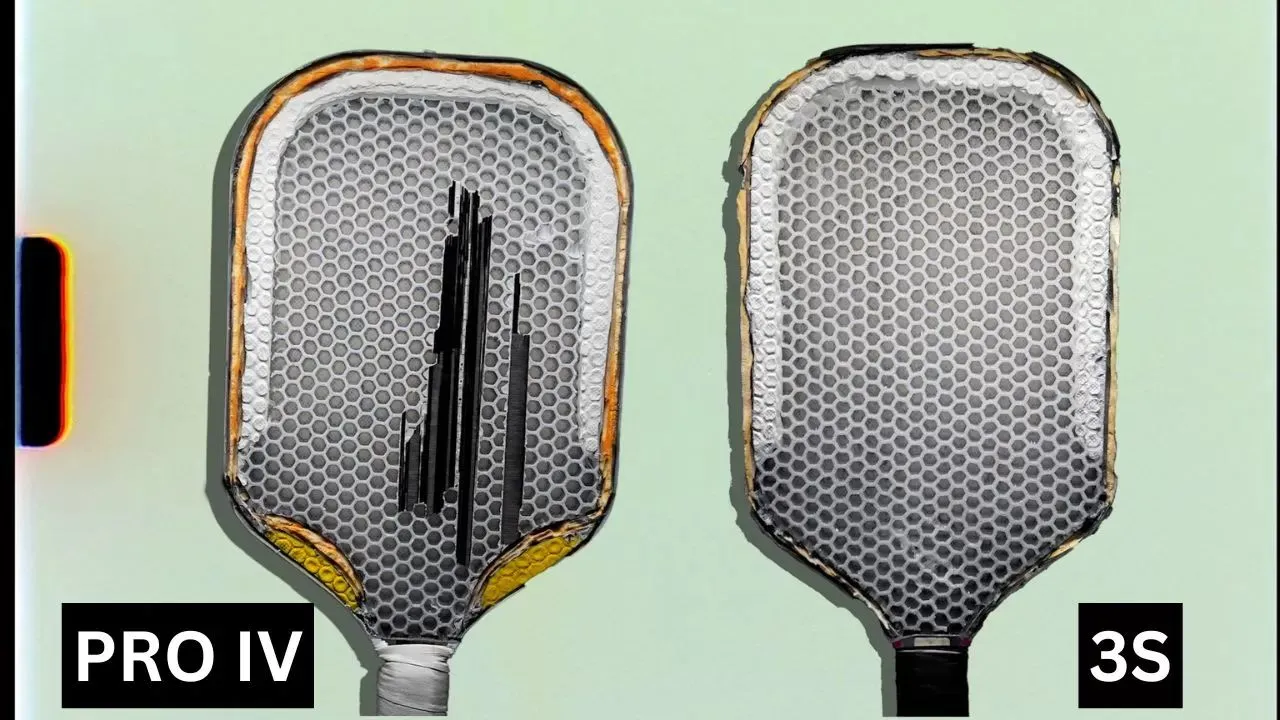
From a manufacturing lens, the JOOLA Pro IV builds on the foundation laid by the JOOLA 3S. Both paddles feature the Propulsion Core technology, a design that balances power and control seamlessly. However, the Pro IV introduces a key innovation: Tech Flex Power (TFP). This involves injecting a layer of high-density foam into the throat area of the paddle, a structural tweak that enhances vibration dampening and maneuverability while preserving the explosive power players expect from JOOLA’s power-focused lineup.
When you cut open a JOOLA Perseus Pro IV paddle and compare it to a JOOLA 3S, the differences become evident. The Pro IV’s throat area contains this dense TFP foam, surrounded by standard edge foam that extends into the handle. Pressing the TFP foam reveals its higher density compared to the softer edge foam used elsewhere in the paddle. This strategic placement reduces vibrations on impact and optimizes weight distribution, making the paddle feel lighter and more responsive in hand. For players, this translates to a smoother experience during extended play and improved agility, especially in fast-paced scenarios like net exchanges.
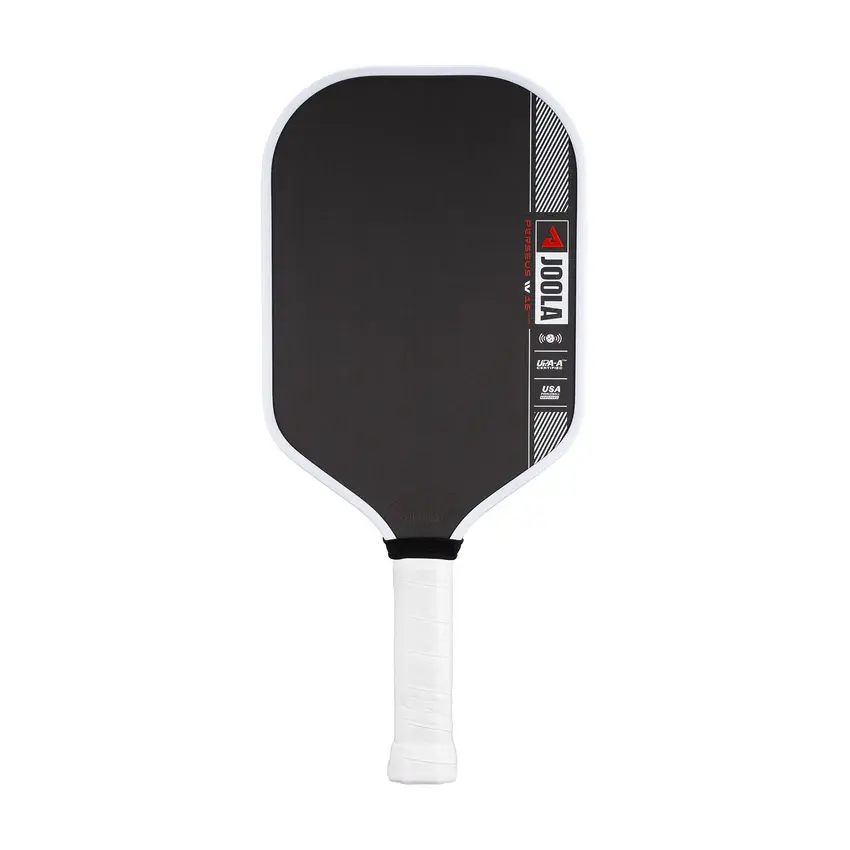
Performance Comparison: Pro IV vs. 3S
In terms of raw power and shot trajectory, the JOOLA Pro IV and JOOLA 3S are neck-and-neck, both sitting at the top tier of power paddles. Whether you’re smashing serves or driving aggressive volleys, these paddles deliver. However, the Pro IV’s TFP technology gives it a distinct edge in responsiveness. Testing shows it shines in net play and light acceleration shots, making it a standout for offensive players who need quick reactions without sacrificing force.
Control is another area where the Pro IV refines the 3S’s formula. While the JOOLA Hyperion 3S review often praises its balance of power and precision, the Pro IV takes this further. The TFP foam mitigates the stiffness that’s common in power paddles, offering a crisper, more cushioned feel. This is especially noticeable in the 16mm version of the JOOLA Perseus Pro IV paddle, which feels plush yet responsive—a trait that softens subtly over time as players break it in.
Compared to the JOOLA 3S paddles, the Pro IV also improves maneuverability. The optimized weight distribution lowers the swing weight, allowing for faster hand speed during blocks and counters. However, there’s a trade-off: spin generation has been slightly reduced in the Pro IV to comply with updated USAP regulations. The surface grit is smoother than the pre-regulation JOOLA Gen 3S, aligning it closer to models like the Mod-TA 15. While this may disappoint spin-focused players, the overall performance remains exceptional.
Design and Construction Insights
From a factory perspective, the integration of TFP foam isn’t just a performance booster—it’s a durability enhancer. The denser foam in the throat area absorbs impact stress more effectively, potentially extending the paddle’s lifespan compared to earlier models like the JOOLA 3S. This is a practical improvement, addressing a common concern with power paddles that endure heavy use.
The Pro IV’s feel draws parallels to the Mod-TA series, softening the rigid feedback that can make power paddles intimidating for newcomers. For example, the JOOLA Ben Johns Perseus 3S 16mm Pickleball Paddle is a powerhouse, but its stiffness can challenge less experienced players. The Pro IV counters this with a smoother, more forgiving response, making it accessible without diluting its offensive capabilities.
Target Audience and Suitability
The JOOLA Perseus Pro IV caters to two main groups. First, experienced players who can harness its power while appreciating the enhanced control and reduced vibration. Second, players with limited physical strength who need a paddle to amplify their shots. The TFP technology provides that extra boost, making it easier to generate pace and depth. It’s also a solid option for those transitioning from tennis or other racket sports, thanks to its balanced design and approachable feel.
That said, the reduced spin potential might not suit everyone. If you rely heavily on spin, the JOOLA 3S paddles—particularly pre-regulation versions—may still hold an edge. For most players, though, the Pro IV’s versatility across the court makes it a compelling choice.
Comparison Table: Pro IV vs. 3S
comparison table
| Feature | JOOLA Perseus Pro IV | JOOLA 3S |
|---|---|---|
| Core Technology | Propulsion Core with TFP | Propulsion Core |
| Foam Integration | High-density foam in throat | Standard edge foam |
| Power | High | High |
| Control | Enhanced with TFP | Standard for power paddles |
| Maneuverability | Improved due to TFP | Standard |
| Vibration Dampening | Superior with TFP | Good |
| Spin Generation | Reduced (USAP compliant) | Higher (pre-regulation) |
Conclusion and Recommendations
The JOOLA Perseus Pro IV represents a thoughtful evolution of the JOOLA 3S. It keeps the power that defines JOOLA’s high-performance paddles while improving feel, balance, and stability through TFP technology. From a factory standpoint, this isn’t a radical departure but a precision upgrade—proof of JOOLA’s commitment to refining what works rather than chasing gimmicks.
For players eyeing the JOOLA Pro IV, testing both the 14mm and 16mm versions is wise. The 14mm leans toward pop and agility, ideal for aggressive play, while the 16mm offers a plusher feel for all-court versatility. While the spin reduction may deter some, the paddle’s overall performance makes it a top pick for serious players. Try it yourself to feel the difference—it’s a paddle that builds on the JOOLA 3S paddles legacy with finesse.
Recent Comments