
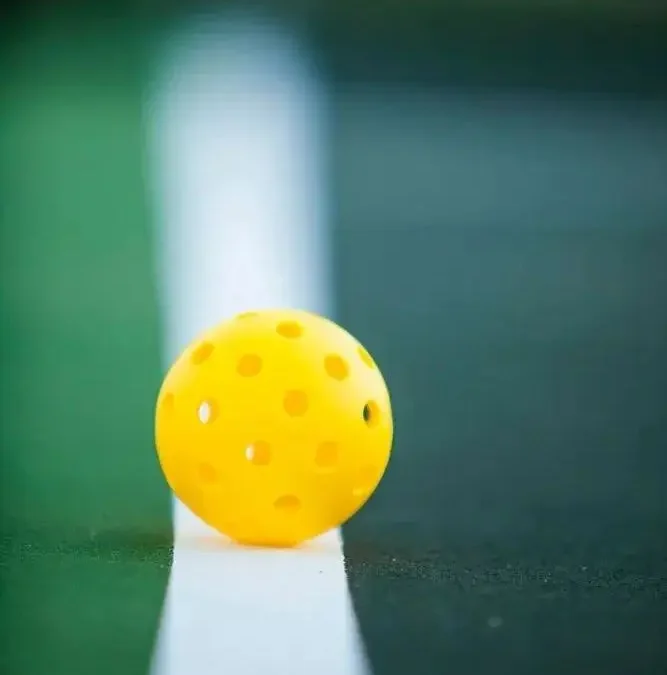
Pickleball, the rapidly growing sport blending elements of tennis, badminton, and ping-pong, has recently faced a recurring debate: the accuracy and fairness of line calls. Federico Staksrud, the current men’s singles world No. 1, highlighted this issue in a recent interview, calling frequent line-calling disputes “the biggest problem in pickleball today.” To shed light on this critical aspect of the game, let’s break down the rules, challenges, and ethical principles surrounding pickleball line calls.
A line call in pickleball occurs when a player or team determines whether a ball landed “in” or “out” on the court. According to the USA Pickleball Association (USAPA), the rules for line calls are straightforward but require precision:
Contact with the ground: A ball’s status (in or out) is determined only when it touches the ground.
The “space” rule: If a visible gap exists between the ball and the line, the ball is “out.” If no gap is visible, it’s “in.”
Perspective matters: Viewed from above, if the ball’s edge covers part of the line but its base doesn’t touch the line, it’s still considered out.
These rules apply universally but become trickier in fast-paced rallies, where split-second judgments are required.
Line Calls in Pickleball: Key Scenarios
During Serves
Serves must land in the diagonal service box. Lines marking the service area (excluding the non-volley zone line) are considered “in.” If a serve touches the non-volley zone line or lands outside the service box, it’s out.
In Doubles Matches
Either partner can make a line call, but conflicting judgments between teammates default to “in.” For example, if one player calls “out” and their partner calls “in,” the ball is ruled “in.” Players must also make calls immediately after the ball bounces—delayed calls result in the ball being deemed “in.”
With Referees
In officiated matches, players are responsible for line calls except for specific violations (e.g., foot faults). If a referee and line judges are present, players only handle mid-line serve calls. Importantly, players can appeal a line judge’s decision to the referee. If the referee overrules the call, the point is replayed.
The Ethics of Line Calls: Honor and Accuracy
The pickleball line call rules emphasize integrity. The USAPA’s “Code of Ethics for Line Calling” urges players to prioritize accuracy and sportsmanship:
Clear visibility required: Only call a ball “out” if you clearly see a gap between the ball and the line.
Perspective advantage: Players inside the court have a better view of outside lines, while those outside lack this advantage for inside lines.
Doubt favors the opponent: Any uncertain call must be ruled “in,” benefiting the opposing team.
This “honor system” is central to pickleball culture. As Staksrud implied, frequent disputes undermine trust, making adherence to ethical guidelines vital.
Resolving Line Call Disputes
Conflicts often arise when players disagree. Here’s how official rules address them:
Player responsibility: The side where the ball landed must make the call. If unsure, they must rule it “in.”
Appeals: Players can ask referees or opponents for input but lose their right to call once they do. If the referee lacks clarity, the original call stands.
No redo policy: Officially, there’s no “replay” option for unclear calls—players default to “in.” However, recreational games often allow replays to maintain goodwill.

Special Cases and Common Pitfalls
Audience interference: Spectators cannot influence line calls.
Verbal vs. official calls: Shouts like “no!” during a rally are considered tactical communication, not formal calls—unless the ball has bounced.
Self-overrule: Players can reverse a call that harms their own team, even with referees present.
Why Line Calls Matter Beyond the Court
Accurate line calls in pickleball aren’t just about rules—they reflect the sport’s spirit. The USAPA notes, “Players tasked with line-judging must strive for accuracy and resolve all doubts in the opponent’s favor.” This ethos fosters respect and fairness, critical for pickleball’s community-driven growth.
Conclusion: Balancing Rules and Respect
While pickleball line call rules are detailed, their success hinges on players’ commitment to honesty. As the sport evolves, maintaining this balance will be key to preserving its appeal. Whether you’re a casual player or a competitor, understanding these principles ensures every match remains fair—and fun.
What’s your take on line-calling challenges? Share your experiences or tips in the comments!
Just to clarify . I am on the server side and the ball on the ceiving team is clerly side line outside and I am the only that saw it. and the angle he was playing from It was returned by the players as he was not sure it was in. Can I make the call before he hits the ball after it touches the ground or do I need to wait after the play is dead to call it outside and gave them the point. If I need to be honest or keep the info for myself and let them loose the point?
Thank you