
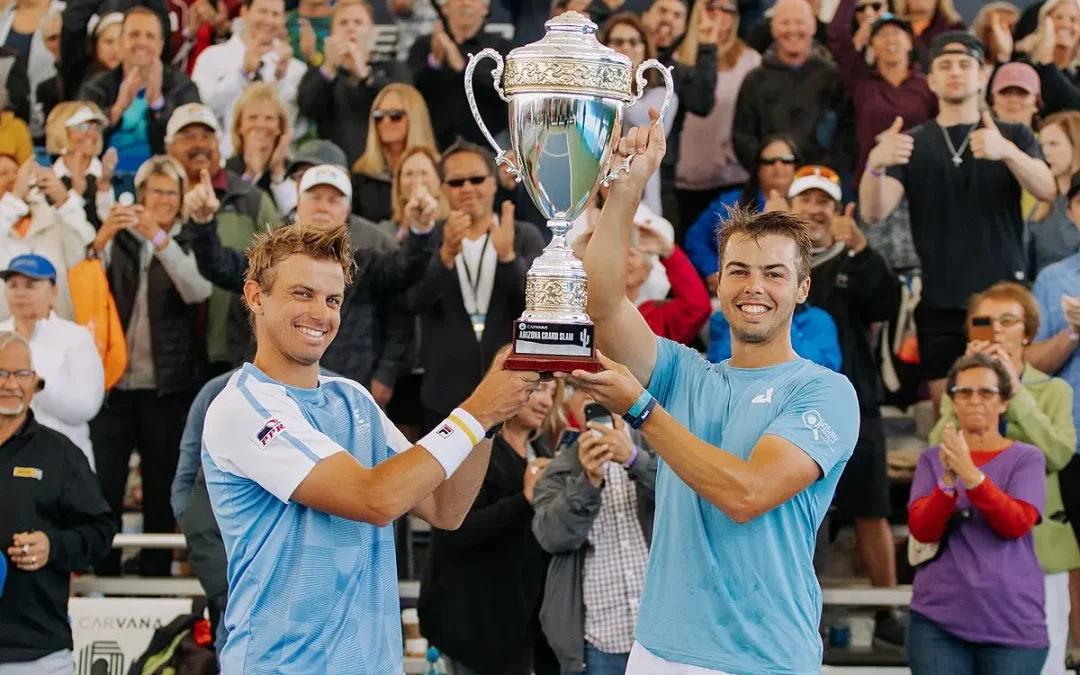
The 2025 professional pickleball season has ignited a firestorm over three explosive terms: Body Bagging (aggressive body shots), Pegging (power drives at opponents), and Targeting (deliberate aiming). At the center of the controversy stands the United Pickleball Association – Americas (UPA-A), which recently announced a groundbreaking rule to penalize intentional or reckless shots aimed at opponents’ heads or necks. Effective at the Carvana PPA Mesa Cup in 2025, this policy has divided players, fans, and analysts.
But is this a necessary step to preserve sportsmanship, or an overreach that risks dulling the sport’s explosive appeal? Let’s break down the rule, its implications, and why it’s sparking fierce debates.
The Need for Change: Pickleball’s "Fast Era"
Pickleball’s evolution from backyard pastime to professional spectacle has been rapid. Over the past decade, advancements in paddle technology—carbon fiber surfaces, textured grips, and aerodynamic designs—have transformed gameplay. Ball speeds now exceed 70 mph, and the rise of hyper-aggressive strategies like third-shot drives and speed-ups has turned rallies into lightning-fast exchanges.
However, this “Fast Era” has also normalized high-risk tactics. While body shots have always been part of strategic play, the increasing frequency of head-level drives—often justified as “unavoidable in split-second reactions”—has raised safety concerns. Notable incidents include:
Ben Johns nearly hitting Quang Duong in the face during the 2024 Masters Final.
Jay Devilliers drilling a 68 mph shot at James Ignatowich’s torso during an MLP match.
Hayden Patriquin’s near-miss at Andre Daescu’s neck, later dismissed by Daescu as “just part of the game.”
UPA-A Commissioner Lindsay Newman stated: “We’re not outlawing aggressive play. But when shots cross into reckless endangerment, we must draw a line. Player safety cannot be negotiable.”
Breaking Down UPA-A’s New Rules
The policy targets intentional or reckless head/neck targeting, defined as:
- Intentional: Premeditated aiming (e.g., glaring at an opponent before striking).
- Reckless: Disregard for safety despite clear risk (e.g., windmill slams in close-range exchanges).
Penalty Structure
- First Offense (Per Team)
- Technical foul: Opponent awarded 1 point.
- Minimum $2,500 player fine.
- Mandatory referee warning to both teams.
- Second Offense (Same Team)
- Minimum $5,000 team fine.
- Immediate forfeit of the match.
- Retaliatory Strikes
- Technical foul + 1 point to the opposing team.
- $5,000 minimum fine for the retaliating player.
- Third Offense
- Team disqualification from the tournament.
- Possible suspensions or extended fines.
Additionally, UPA-A reserves the right to impose harsher penalties for repeat offenders or severe incidents. Match officials will review ball trajectory, player intent, and situational context (e.g., crowd provocation) before rulings.
The Debate: Safety vs. Gameplay Integrity
While the rule aims to reduce injuries, critics argue it undermines pickleball’s core appeal. Let’s examine both sides.
Supporters’ Perspective
- Safety First: Head injuries in sports like hockey and football have led to long-term health crises. Pro pickleball players, though padded, wear minimal protection.
- Preserving Sportsmanship: As paddle tech evolves, unchecked aggression could turn matches into “glorified dodgeball.”
- Liability Concerns: Without clear rules, leagues risk lawsuits from injured players.
Anna Leigh Waters, ranked #1 in women’s singles, remarked: “Nobody wants to see someone get hurt. This isn’t MMA; it’s pickleball.”
Critics’ Counterarguments
- Split-Second Decisions: In fast-paced exchanges, players can’t consciously redirect shots. Penalizing instinctive reactions is unrealistic.
- Subjectivity in Officiating: How do referees distinguish “reckless” from “accidental”? A disputed call could unfairly decide matches.
- Stifling Innovation: Restrictions may discourage players from developing advanced techniques like Erne slams or ATP (Around-the-Post) shots.
- Equipment Over Regulation: Instead of limiting play, why not develop softer balls or impact-reducing paddles?
Tyson McGuffin, 4x national champion, argued: “This isn’t tiddlywinks. If you’re scared of the ball, stay off the kitchen line.”
Case Study: Tennis vs. Pickleball
Tennis faced similar debates in the 1990s when serves began exceeding 150 mph. The ITF responded by regulating racket materials and ball pressure—not player behavior. Result? Safer play without sacrificing intensity.
Could pickleball follow suit? Innovations like:
Foam-core balls: Reduced speed without altering gameplay.
Smart paddles: Sensors to detect excessive force.
Protective gear: Lightweight helmets or face shields.
Yet UPA-A’s current focus remains on penalties, not tech upgrades.
The Road Ahead: Will This Rule Stick?
The Carvana PPA Mesa Cup will be the first test. Key questions linger:
Will players adapt tactics to avoid headshots, or will fines become a routine cost?
How will referees handle high-pressure rulings in televised matches?
Could this push top athletes to independent leagues with laxer rules?
As the 2025 season unfolds, one truth remains: pickleball’s identity hangs in the balance. Is it a genteel sport prioritizing safety, or a thrilling spectacle where risk is part of the allure? The answer may define its future.
Final Thoughts
The UPA-A’s new rule reflects pickleball’s growing pains as it transitions from niche hobby to mainstream sport. While protecting players is paramount, finding a balance between safety and raw competition will require nuance—perhaps through tech innovation, not just punitive measures.
As fans, we crave the adrenaline of a Ben Johns speed-up or a Catherine Parentau Erne. But we also want athletes to retire healthy. Whether this policy succeeds depends on one factor: Can pickleball stay true to its roots while evolving responsibly?
The ball—quite literally—is in UPA-A’s court.
Recent Comments