
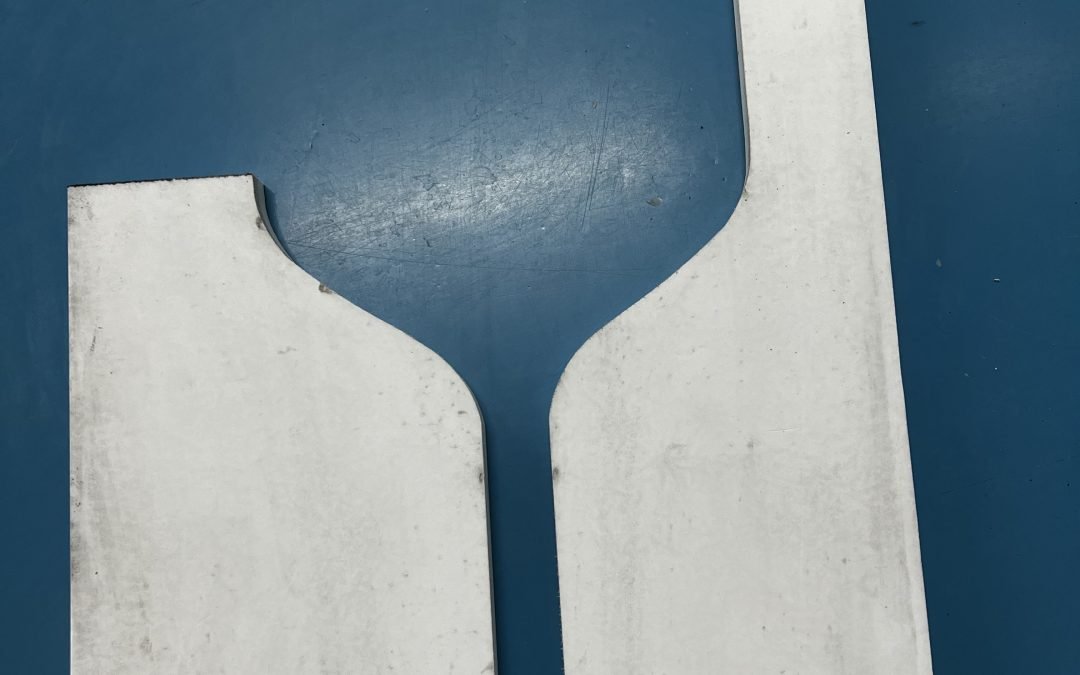
Key performance indicators include:
Core density: 60–80 kg/m³ for balanced power and control
Paddle thickness: 14–16 mm for durability and feel
Weight tolerance: ±5–10 g to ensure batch consistency
Technical Background
What is an MPP Core?
An MPP core is constructed from multiple layers of foam polymers, often combining a denser inner foam with a softer outer layer. This contrasts with the traditional PP (polypropylene) honeycomb core, which is a single rigid structure. The MPP structure typically sits between the paddle’s outer surface (carbon or fiberglass) and the handle, forming the central shock-absorbing layer.
Why MPP Cores Matter:
Control vs. Power Balance: Multi-polymer layers allow engineering of precise flex points, influencing ball dwell time and power transfer, besides, it is less noisy than the EPP core paddle
Vibration Damping: Softer polymer layers absorb shock more effectively than PP honeycomb, reducing player fatigue.
Structural Integrity: Multi-layer construction resists cracking and edge damage better than single-layer cores.
Tournament Compliance: MPP cores can be manufactured within paddle thickness and weight limits defined by USA Pickleball.
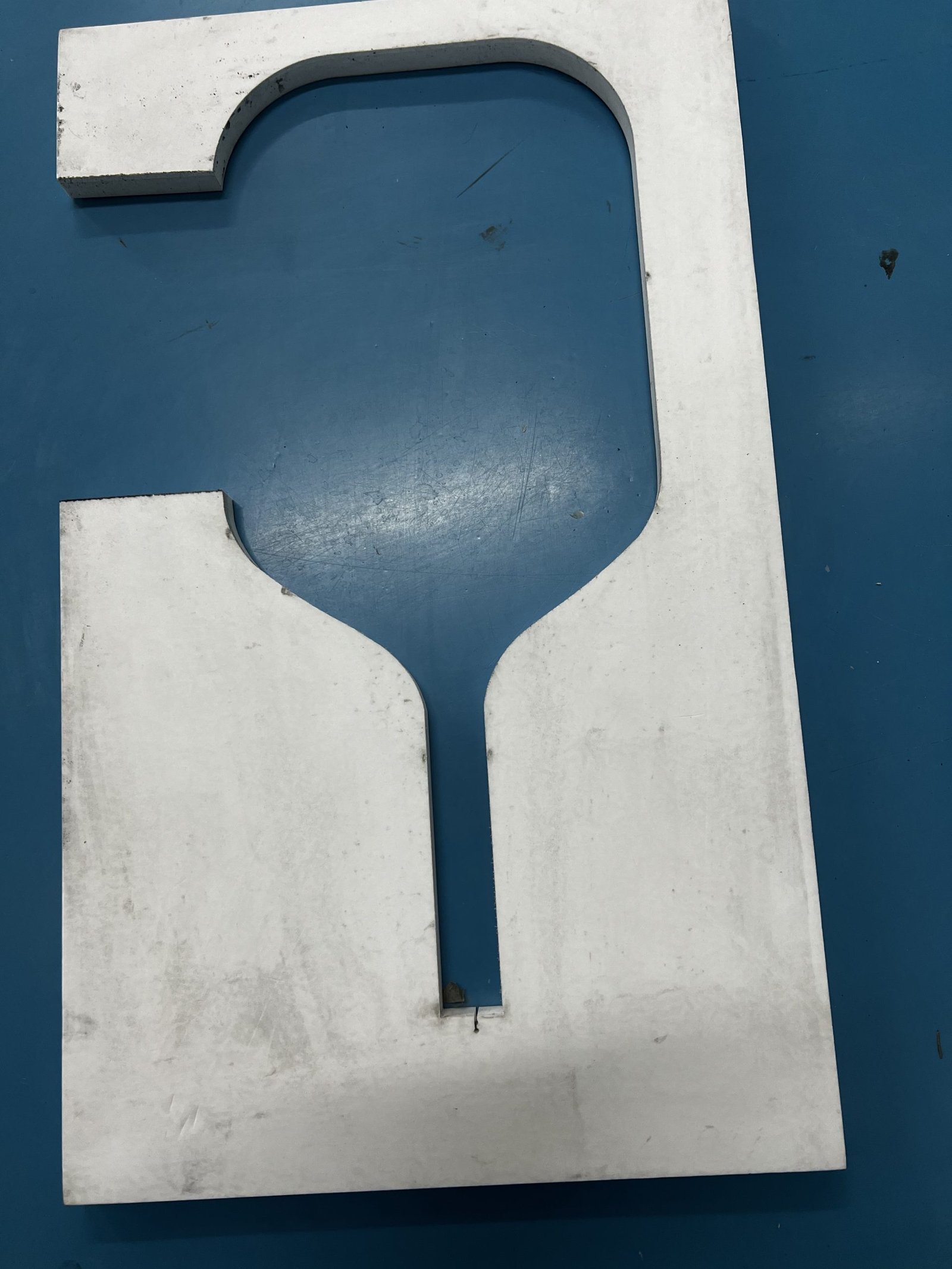
Key Benefits
3.1 Core Density & Thickness → Control, Power, Sweet Spot
The core density directly influences how the paddle responds to ball impact.
Soft outer foam (50–60 kg/m³): Improves dwell time and touch for control shots.
Denser inner foam (70–80 kg/m³): Provides stability and power on aggressive strokes.
Thickness (14–16 mm): Thicker cores increase sweet spot size and durability but can slightly reduce maneuverability.
3.2 Surface Material (Carbon / Fiberglass) → Spin & Feel
The MPP core is compatible with both carbon fiber (T700, 3K, 12K) and fiberglass surfaces:
Carbon fiber: Increases rigidity and response, enhancing spin potential and pop.
Fiberglass: Slightly softer feel, better for control-focused paddles.
The interaction between core deflection and surface elasticity is critical; the right combination allows brands to tune paddle performance for specific player profiles.
3.3 Manufacturing Process
Hot Press: Faster production, slightly higher density, but may introduce minor warping or variability if not carefully controlled.
For OEM production, hot pressing is preferred for consistency across large batches, especially with complex MPP cores.
3.4 Weight Distribution & Balance → Swing Speed & Stability
Typical MPP paddles weigh 7.8–8.5 oz (220–240 g).
Proper weight distribution ensures high swing speed without compromising stability.
Balance points (handle vs head) can be engineered by adjusting polymer layer density and thickness.
3.5 less nois during playing
- less noise than EPP/PP paddle
Specification Table
| Parameter | Typical OEM / Industry Range | Why It Matters |
|---|---|---|
| Paddle thickness (mm) | 14–16 mm | Control vs power balance, durability |
| Weight (oz / g) | 7.8–8.5 oz / 220–240 g | Swing speed & fatigue |
| Core type | MPP (multi-polymer polymer) | Feel, durability, vibration absorption |
| Surface material | T700 carbon, 3K carbon, fiberglass | Spin, touch, ball response |
| Weight tolerance | ±5–10 g | Batch consistency |
| Handle length (in) | 5.3–7.5 in | Grip style, two-handed shots |
| Pressing method | Hot press | Structural stability, deflection consistency |
Impact on Performance (KPIs)
Control Accuracy & Dwell Time: Softer polymer layers increase contact time, aiding precision placement.
Power Transfer Efficiency: Denser inner layers transmit energy efficiently, providing consistent pop.
Sweet Spot Size: Layered foam construction widens the effective hitting area, reducing mis-hits.
Vibration & Arm Comfort: Multi-layer design dampens high-frequency vibrations, reducing fatigue and risk of injury.
Durability: Resists cracking, edge impact, and core deformation under repeated ball strikes.
Batch Consistency: Hot-pressed MPP cores maintain uniform weight and thickness across production runs.
Quality Control
Incoming Material Inspection: Check foam density, surface resin quality, and fabric integrity.
Weight & Balance Measurement: Verify each paddle meets ±5–10 g target and balance point requirements.
Thickness & Flatness Tolerance: Ensure 14–16 mm thickness within ±0.2 mm, surface flatness for uniform ball response.
Bonding & Delamination Risk: Layer adhesion tests under thermal and mechanical stress.
Spin Surface Consistency: Friction coefficient measurements for carbon/fiberglass surfaces.
Sample vs Mass Production Testing: Validate first samples, then monitor batch consistency.
Purchasing & OEM Supplier Evaluation
Consumer vs OEM Paddles: OEM-grade MPP paddles focus on batch consistency and tournament compliance; consumer paddles often prioritize appearance.
MOQ Considerations: Custom MPP cores may require 300–500 units per mold for economic viability.
Tooling & IP: Brands should confirm mold ownership to protect design IP.
Customization Options: Core density, thickness, surface material, edge guard, and handle length are adjustable but affect lead time and cost.
Quality Risks: Low-cost factories may compromise layer uniformity, pressing method, or surface prep, impacting durability and playability.
FAQ
What thickness is best for control-focused paddles?
14–15 mm with slightly softer polymer layers for extended dwell time.Is MPP core more durable than PP honeycomb?
Yes, multi-layer polymer design resists cracking and edge damage better than single-layer honeycomb.Can I customize the feel of an MPP paddle?
Yes, by adjusting core density, polymer layers, and surface material.Does hot pressing improve consistency?
Yes, it reduces density variation, delamination risk, and warping.What weight tolerance is acceptable for OEM orders?
±5–10 g ensures uniform swing feel across production batches.Are MPP paddles tournament legal?
Yes, if manufactured within USA Pickleball thickness (≤16 mm) and weight limits.How do factories control paddle-to-paddle variation?
Through strict core density testing, pressing methods, and sample monitoring before mass production.
Final Practical Checklist
Confirm target paddle specs (thickness, weight, surface, handle length).
Define acceptable weight tolerance and balance point.
Verify pressing method (hot pressed recommended).
Clarify customization impact on MOQ and lead time.
Request QC data from mass production, not only from sample units.
Ensure core and surface materials meet USA Pickleball compliance.
Check layer adhesion and delamination resistance through sample tests.
Recent Comments