
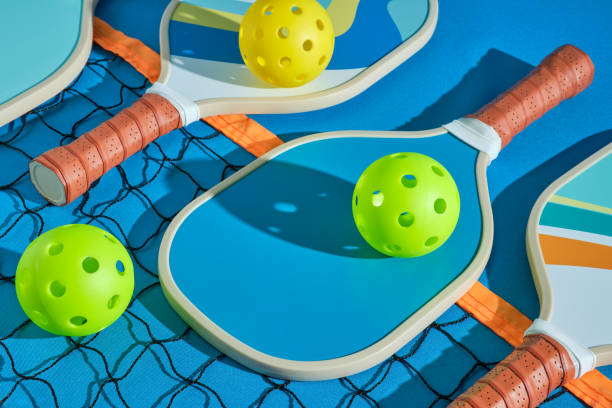
Pickleball paddles are the unsung heroes of every match. They absorb powerful slams, execute delicate dinks, and endure endless hours of play. But like any sports equipment, they don’t last forever. A common question among players—especially competitive ones—is: How long does a pickleball paddle actually last? While the lifespan varies based on usage and quality, most paddles show clear warning signs when they’re nearing retirement. Let’s explore three critical indicators that your trusty paddle might need replacing.
The Average Lifespan of a Pickleball Paddle
Before diving into the red flags, it’s helpful to understand what determines a paddle’s longevity. Most mid-tier to high-end paddles last 6–12 months with regular play (8–10 hours weekly). However, this timeline depends on:
- Material quality: Carbon fiber and polymer cores tend to outlast cheaper composites.
- Playing style: Aggressive players who frequently “slug” the ball wear down paddles faster.
- Maintenance: Proper storage and cleaning extend a paddle’s life.
- Environmental factors: Extreme heat or cold can weaken adhesives and materials.
For casual players, a paddle might last years. But competitive athletes pushing their gear to the limit should inspect their equipment regularly. Let’s break down the three unmistakable signs your paddle is past its prime.
1. Visible Cracks: The Obvious Death Sentence
Where to look:
- Face/edge cracks: Inspect the paddle’s surface and perimeter.
- Throat/handle damage: Check where the handle meets the paddle head.
Why it matters:
Cracks compromise structural integrity. A fractured paddle face loses its “pop,” reducing power and control. Worse, cracks can spread mid-game, leading to sudden failure. I once watched a tournament player’s paddle split during a third-game tiebreak—it wasn’t pretty.
Quick test:
Hold the paddle under bright light and tilt it to spot hairline fractures. Run your fingers along the edges to feel for irregularities.
2. The “Crunch” Test: Hidden Internal Damage
What to do:
Gently squeeze the paddle face between your hands. If you hear a crunching or creaking sound, it’s bad news.
What’s happening:
This noise often signals delamination—the separation of the paddle’s core from its outer layers. Modern paddles use honeycomb polymer cores bonded to composite faces. When these layers detach, energy transfer becomes inconsistent. Shots that used to feel crisp suddenly turn mushy.
Pro tip:
Compare the sound to a new paddle. Healthy paddles should feel solid and silent under pressure.
3. The Rattle of Doom: Loose Components
The test:
Shake your paddle near your ear. Hearing something bounce inside? That’s a death rattle.
What’s loose:
- Core fragments: Broken pieces of the honeycomb core.
- Adhesive debris: Dried glue chunks from degraded bonds.
- Handle components: Loose weight inserts (in some paddles).
Impact on play:
A rattling paddle behaves unpredictably. Off-center hits vibrate excessively, and power distribution becomes erratic. Advanced players notice this immediately—it’s like swinging a baseball bat with a loose knob.
Why Retire a “Dying” Paddle?
A. Performance Drop-offs
Aging paddles lose their sweet spot effectiveness. Shots that once landed deep now fall short, and precision drops. In a sport where games are often decided by 2–3 points, unreliable gear is a liability.
B. Injury Risks
Delaminated or cracked paddles vibrate abnormally, increasing arm fatigue and elbow strain. Over time, this can contribute to pickleball elbow (similar to tennis elbow).
C. Tournament Compliance
USAPA-approved paddles must pass strict deflection and surface tests. A warped or damaged paddle might technically become illegal, risking disqualification in sanctioned events.
Extending Your Paddle’s Life
While replacement is inevitable, these practices can buy extra time:
- Avoid temperature extremes: Don’t leave paddles in hot cars or freezing garages.
- Rotate paddles: Use alternate paddles during practice to distribute wear.
- Clean gently: Wipe with a damp cloth—no harsh chemicals.
- Use edge guards: Protective tape minimizes impact damage.
When in Doubt, Upgrade
Technology evolves rapidly. New paddles offer improved spin textures, lighter weights, and better vibration dampening. If your paddle shows even one of the three warning signs—and you’re serious about your game—it’s time to shop.
Final checklist:
✅ Cracks on face, edges, or throat? → Replace.
✅ Crunchy sounds when squeezed? → Replace.
✅ Mysterious rattles? → Replace.
Your paddle is more than just gear; it’s an extension of your strategy. Don’t let a failing tool hold back your skills. Recognize the signs, retire with confidence, and step onto the court with equipment worthy of your A-game.
So… is your paddle still a trusted ally, or is it quietly sabotaging your plays? The answer might be in your hands—literally.
Recent Comments