Choosing the right manufacturing model is crucial for any pickleball paddle brand. OEM and ODM affect product cost, uniqueness, time to market, and overall brand positioning. Selecting the right approach early can save money, reduce risks, and help establish a competitive edge in the fast-growing pickleball market, which is projected to reach $1.1765 billion by 2031, growing at nearly 10% annually.
II. What Is OEM (Original Equipment Manufacturer)?
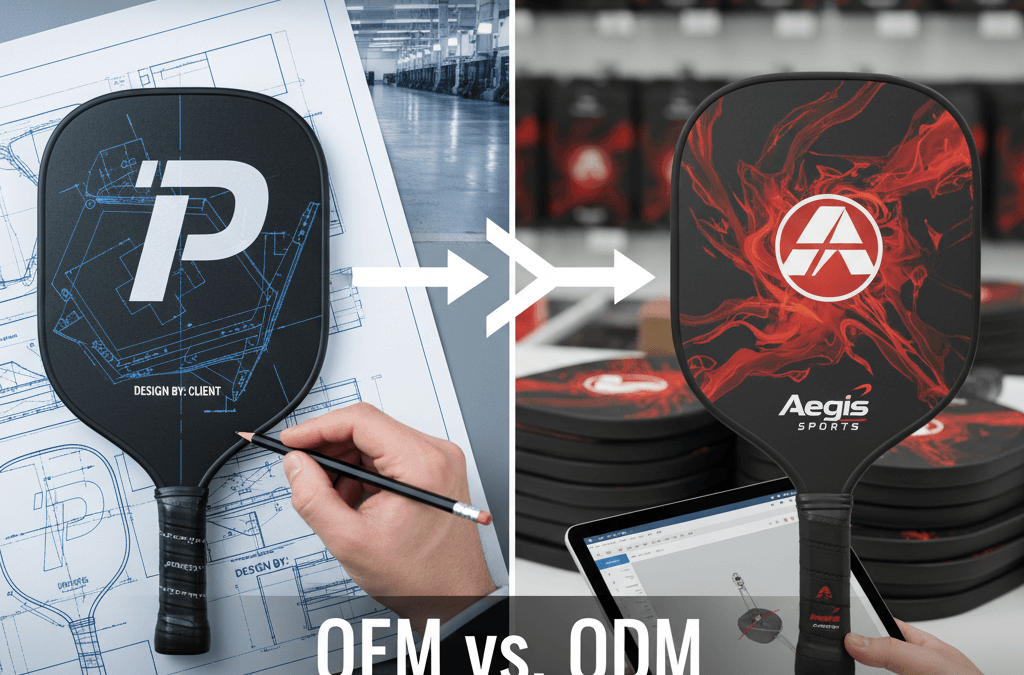
OEM refers to manufacturing where the brand provides design specifications, and the factory produces the paddle using existing molds or templates. Brands can customize materials, surface graphics, and accessories, but the base mold already exists.
Customization Options in OEM:
Surface Materials: Fiberglass, carbon fiber, Kevlar, with optional textured finishes or granular coatings.
Core Materials: PP (polypropylene) or EPP (expanded polypropylene) cores.
Graphics/Printing: UV designs, logos, or custom patterns.
Accessories: Edge guard color/logo, handle leather/logo, rubber ring/logo (minor mold adjustment may be required).
Advantages of OEM:
Lower upfront costs, ideal for startups.
Faster time to market, using existing molds.
Maintains control over branding and aesthetics.
Challenges of OEM:
Limited product uniqueness.
Some design effort required from the brand.
Reliance on manufacturer quality.
Data Example:
MOQ is typically 200–500 units, suitable for testing new designs in the market.
III. What Is ODM (Original Design Manufacturer)?
ODM involves working with the factory to develop new molds, cutting-line templates, and sometimes new material combinations. Brands collaborate on design, materials, and performance specifications to create a completely unique paddle.
Customization in ODM:
Design & Mold Development: Brand and manufacturer co-develop molds and paddle structures.
Material Innovation: New surface/core combinations to achieve desired control, power, or durability.
Packaging & Branding: Complete customization to reflect brand identity.
Advantages of ODM:
Fully unique products that stand out.
Higher potential profit margins due to premium positioning.
Stronger brand recognition and loyalty.
Challenges of ODM:
Higher upfront cost due to mold and material development.
Longer production cycles (several months).
Requires design and R&D expertise from the brand.
Example:
ODM allows a brand to launch a paddle no other competitor has, justifying higher pricing and market differentiation.
IV. OEM vs ODM: Key Differences
| Feature | OEM | ODM |
|---|---|---|
| Mold & Cutting Template | Existing | Newly Designed |
| Surface/Material Customization | Yes | Yes |
| Core Material Customization | Yes | Yes |
| Graphics/Printing | Yes | Yes |
| Accessories (edge guard, handle, rubber) | Yes | Yes |
| R&D & Design Requirement | Low | High |
| Time to Market | Shorter | Longer (months) |
| Product Uniqueness | Moderate | High |
| Potential Price Premium | Moderate | High |
This table clearly illustrates that OEM is faster and more cost-effective, while ODM offers high uniqueness and brand differentiation, but requires more investment and expertise.
V. Which Model Fits Your Pickleball Brand?
Recommendations Based on Brand Stage & Goals:
New or small brands with limited design resources → OEM
Leverage existing molds to reduce costs and shorten time to market.
Customize surface materials, graphics, and accessories.
Brands targeting high differentiation and premium positioning → ODM
Invest in new molds, materials, and design to create a unique product.
Justifies higher pricing and strengthens brand identity.
Hybrid Approach:
Start with OEM to test market demand, then transition to ODM for premium, fully customized products.
Other Considerations:
Production Volume: OEM suits medium-scale orders; ODM better for large-scale or long-term strategic planning.
Team Expertise: ODM requires design/R&D capabilities; OEM has lower technical requirements.
Brand Strategy: Consider long-term brand positioning, pricing strategy, and product differentiation goals.
VI. How to Choose the Right Factory for OEM/ODM
Selecting the right factory is critical for quality and market success. Consider:
Production Scale & Capacity: Ensure the manufacturer meets your order volume and delivery schedules.
R&D & Technical Strength: Strong R&D teams can assist with ODM development.
Quality Control Standards: PBCOR values, weight, surface roughness, and consistency are critical for USAPA approval.
Service & Flexibility: Responsive factories facilitate smoother OEM/ODM processes.
Case Example:
lixi Sports specializes in carbon fiber and fiberglass paddles. They offer customization starting from 200 units and a monthly capacity of 20,000 paddles , making them ideal for both OEM and ODM projects.
VII. Conclusion: Making an Informed Choice
Choosing between OEM and ODM depends on brand goals, budget, and market strategy.
OEM: Cost-effective, faster, suitable for startups or small brands.
ODM: Unique, high-value, suitable for brands emphasizing differentiation and premium positioning.
Evaluating your team capabilities, production volume, and long-term strategy will help determine the best approach. Many successful brands start with OEM to enter the market quickly, then transition to ODM for higher-end products.
VIII. FAQ
Q1: What is the typical MOQ difference between OEM and ODM?
OEM: 200–500 units, ideal for small brands.
ODM: Higher MOQ due to custom mold and material development.
Q2: Can I switch from OEM to ODM later?
Yes, starting with OEM is common, then transitioning to ODM based on market feedback.
Q3: How much does it cost to develop an ODM paddle?
Costs vary by mold complexity, material choice, and design requirements; generally higher than OEM.
Q4: Which model is better for small vs established brands?
Small brands: OEM for cost efficiency and faster market entry.
Established brands: ODM for uniqueness and premium positioning.
Recent Comments