MPP: the foam that behaves like a solid
MPP is polypropylene foamed with supercritical carbon dioxide until the cells measure 1 to 100 microns across. In a paddle it works as the core layer, the perimeter wall, or both. It holds stiffness and impact strength in the same material, and it costs several times what honeycomb costs.
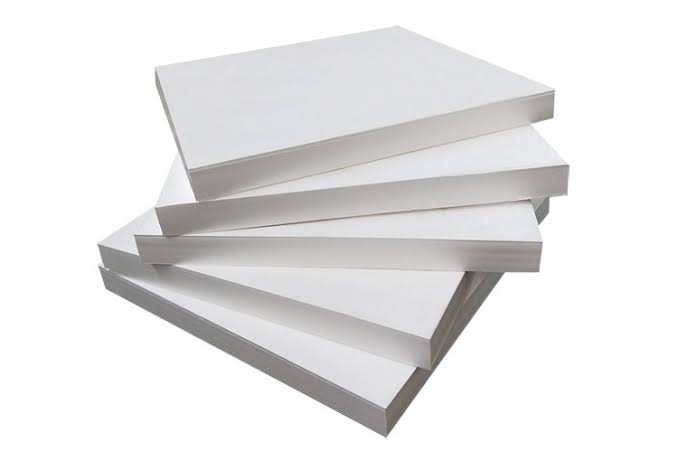
What it is
- Polypropylene expanded with supercritical CO₂, not steam-fused beads.
- Cells run 1 to 100 microns across. Thousands fit in one millimetre.
- Made as sheet or plank, then cut and bonded into a core.
Where it wins
- Cells under 10 microns crush in place instead of buckling like a wall.
- One material gives both stiffness and impact strength.
- No open channels, so no dead spot forms after months of play.
Where it loses
- Needs high melt strength PP. Standard resin will not hold closed cells.
- The foaming window is about 15 °C wide, so scrap rates run high.
- Sheet stock adds a cutting and bonding step before molding.
What MPP stands for, and what it does not
The name describes the cell structure. It does not describe a different polymer.
MPP is short for microcellular polypropylene. Marketing copy sometimes spells the M as "molded," but the material term is microcellular. Both MPP and EPP are polypropylene. The difference is how the gas gets into the plastic and how big the bubbles end up.
The definition
A polypropylene foam whose cells measure under 100 microns. A stricter definition asks for cells under 10 microns and more than 109 cells per cubic centimetre.
Both numbers describe the same idea. Smaller cells, packed closer together.
How EPP differs
EPP starts as beads. Each bead is expanded on its own, then the beads are fused together with steam.
That leaves cells in the tens to hundreds of microns, plus a fused seam between every bead.
How MPP differs
MPP dissolves a gas straight into the polymer melt, then drops the pressure. Bubbles nucleate everywhere at once.
There are no beads, so there are no seams. The foam is one continuous matrix.
The origin of the idea. MIT researcher Nam P. Suh proposed microcellular plastics in the early 1980s. The goal was not a softer foam. The goal was a foam that loses as little strength as possible for the weight it removes.
How the cells get that small
Six steps turn standard polypropylene into a sheet with micron-scale closed cells.
Pick the resin
Standard polypropylene is a linear, semi-crystalline polymer. Its melt is too weak to hold a cell wall, so the bubbles pop. MPP needs high melt strength PP, a grade with long-chain branching built into the molecule.
Dissolve the gas
Under heat and pressure, supercritical carbon dioxide or nitrogen is pushed into the polymer melt. The gas dissolves into the plastic and forms a single phase. No chemical blowing agent is involved.
Drop the pressure
The pressure falls fast. Gas solubility collapses in an instant, so bubbles nucleate across the whole volume at the same time. More nucleation sites means a denser cell structure later.
Grow and freeze
Temperature controls how far the cells grow. The sheet is held at the foaming temperature until the cells reach the target size, then cooled so the structure locks in place.
Hold the window
The usable foaming range is roughly 155 to 170 °C. That is a window about 15 degrees wide. Drift a few degrees and cell diameter, cell density and sheet density all move together.
Cut and bond
The plank is sliced to the core thickness, machined to the paddle outline, then bonded to the face sheets under heat and pressure. This is the step that a honeycomb core skips.
Open channels versus solid cells
A honeycomb core holds load in its walls and carries air in the middle. An MPP core carries load everywhere.
What the published data says
These ranges come from public MPP sheet specifications and foaming studies. Exact values move with density and grade.
The cut-off that defines the material. The strict version of the definition asks for cells under 10 µm.
Cells are counted per cubic centimetre, so the number runs into the billions. More cells means less stress on any single wall.
One process covers a wide band. Low density for touch, high density for stiffness, no change in chemistry.
Higher than PE, PS and PU foams. A paddle core rarely sees this heat, but the number matters for molding.
Every cell is closed. Water has almost nowhere to go, which keeps the core weight stable in humid climates.
About 15 degrees wide. A narrow window is the main reason MPP costs more than honeycomb.
Ranges reflect published MPP sheet data and supercritical foaming research. They describe the material class, not one supplier's grade.
MPP, EPP and honeycomb are three different answers
All three are polypropylene. All three make a paddle lighter. They fail in different places, so they suit different players.
| Property | MPP foam | EPP foam | PP honeycomb |
|---|---|---|---|
| Cell structure | Closed microcells, 1–100 µm, continuous matrix | Closed bead cells, tens to hundreds of µm, fused seams | Open hexagonal channels, usually 6–10 mm across |
| Typical core density | 45–90 g/L | 40–200 g/L | 60–90 g/L |
| How it carries load | The cell matrix carries load in every direction at once | Beads compress and spring back, absorbing energy | Walls carry load. The air inside carries nothing |
| How it fails | Slow crush at the impact point, distributed across many cells | Softens and takes a set after long hard use | A wall buckles and that spot goes dead for good |
| Feel on contact | Crisp and firm. Fast energy return | Muted and soft. Slower return | Firm and loud. Most raw power per gram |
| Relative core cost | Highest. Special resin plus a supercritical line | Middle. Bead molding is a mature process | Lowest. Extrusion runs fast and cheap |
| Where it fits | Flagship builds that need power and a long service life | Control builds and comfort-first players | Entry and mid builds where price drives the brief |
Density and cell-size ranges are industry figures for each material class. A specific paddle can sit anywhere inside them.
Density is the grade
Sellers quote MPP by expansion ratio. Four grades cover most of the range, and each one moves the stiffness numbers with it.
| Expansion | Density | Compressive strength | Flexural modulus | Hardness |
|---|---|---|---|---|
| 10x | 90 g/L | 0.45 MPa | 30 MPa | 81 HC |
| 15x | 60 g/L | 0.30 MPa | 25 MPa | 70 HC |
| 20x | 45 g/L | 0.25 MPa | 20 MPa | 66 HC |
| 25x | 36 g/L | 0.18 MPa | 15 MPa | 55 HC |
Figures come from published MPP sheet specification tables. They describe the material class at each expansion ratio, not one factory's output.
Bead cells versus microcells
Same polymer in both panels. Only the cell size and the cell count change.
Density drives stiffness
Doubling the density roughly doubles the load the foam can carry before it yields.
Where MPP goes in a paddle
Two placements are common. Most flagship builds use one of them, and some use both at once.
As the core layer
The foam sits between the two face sheets and carries the ball impact. A single grade is the simple version. A dual-density build stacks a higher-density layer under the face for power and a lower-density layer in the centre for touch.
Ronbus takes this one step further on its Refoam line. The MPP foam is combined with 3D carbon fibre lattice segments placed at chosen points, so stiffness can be added locally without raising the density of the whole core.
As the perimeter wall
The foam forms a ring around the edge instead of filling the centre. The ring stiffens the rim, widens the sweet spot and damps the vibration that reaches the hand on off-centre hits.
This is the same job the EVA wall does in a Gen 5 build. MPP is the firmer alternative when the brand wants edge stability without a soft rim feel.
How the layers stack in a thermoformed build
A foam core lets the rim be molded as part of the body. A honeycomb core needs a separate edge guard.
Specifications we build to
Core
Microcellular polypropylene, single density or dual density. Standard grade 60 g/L. Higher density on request for heavier power builds.
Perimeter
EVA or TPE foam ring, 5–6 mm wall. Replaces the separate edge guard used on cold-pressed paddles.
Face
Raw carbon T700, 3K, 12K or 18K. Ceramic sand or painted face optional.
Thickness
14 mm or 16 mm standard. Custom thickness on request.
Weight
225 g ±5 g standard. A ±2–3 g Precision Program is available on request.
Process
Thermoformed in one piece. The core, the wall and both faces bond in a single cycle.
MOQ
200 pcs per design. Samples run 10–15 days. Production of 2,000 pcs runs about 35 days.
Capacity
80,000+ thermoformed paddles per month across our Shenzhen and Vietnam lines.
Brands that put MPP in a shipping paddle
Each entry below is quoted from the brand's own product page. Where a brand uses different words, we say so.
Ronbus
Refoam R1.14 · USD 99.99 · also sold as a wholesale build at USD 119.00
The clearest material statement we found in the category. The company spells out the acronym, the foaming method and the reinforcement in one paragraph.
“4th Generation foam core technology featuring MPP (Microcellular Polypropylene) foam and 3D carbon fiber lattice segments. MPP foam is produced using supercritical foaming technology, creating micro level cell structures that enhance the rebounding and strength to weight ratios.”
Why it matters: this is a shipping flagship, not a concept. It shows the material is production-ready at a competitive retail price.
ronbus.com — Refoam R1.14AIREO Sports
Cyclone 16 mm · USD 199.00 · NanoGraph surface on T700 carbon
AIREO pairs the foam with a second idea. The core is deliberately decoupled from the frame so it can move a little on impact. The company calls this a floating suspension.
“PulseFoam™ Core – High-resilience microcellular polypropylene delivers faster rebound, fatigue resistance, and consistent elasticity.” — and — “Floating Foam Suspension – Core is elastically decoupled from the frame, extending dwell time and enabling cleaner, faster rebounds.”
Why it matters: a high-resilience grade is doing the work, not a low-density one. This is the power end of what the material can do.
aireo-sports.com — CycloneRonbus
Quanta R2.16 · USD 119.99
Ronbus also sells EPP cores wrapped in an elastomer ring. The two lines sit side by side in the same catalogue at a similar price, which tells you the company treats them as two answers, not one upgrade path.
“4th Generation foam core technology featuring EPP foam core and EVA+TPE elastomer ring. EPP foam is light weight to optimize power and pop. EVA ring and TPE elastomer inserts enhance power and pop while improving stability and dampening vibration.”
Why it matters: if a brand that sells MPP also sells EPP at the same price, then MPP is a design choice, not a ranking.
ronbus.com — Quanta R2.16Bread & Butter Pickleball
The Filth 16 mm · USD 165.00 · USAP approved
The spec block lists a high-density polypropylene core and a T700 raw carbon face. It never says whether that core is foam or honeycomb, and it never uses the word microcellular.
“16mm High-Density Polypropylene Core. Face Material: T700 Raw Carbon Fiber face. Patented Thermoformed Construction (U.S. Patent No. 11,597,169).”
Why it matters: "high-density polypropylene" covers both a dense foam and a fine-cell honeycomb. Buyers cannot tell the difference from this copy, so they have to ask.
bnbpickleball.com — The FilthMaterial references: published MPP sheet specifications from topolocfrt.com, and a category overview of core construction at pickletip.com. Brand quotes were taken from each brand's own product page.
Is MPP right for your program?
Buy MPP if your player complains about dead spots. Do not buy MPP if your brief is price or plush feel. Match the core to the brief before the sample stage, because the core is the one part you cannot change after the mold is cut.
| Your buying situation | What an MPP core actually gives you | Our advice |
|---|---|---|
| You are building a flagship that must retail above USD 180 | A real material story with real numbers behind it, not a relabelled honeycomb core | Buy MPP. |
| Your customers report a dead zone after a few months | No open channels, so there is no wall to buckle and no spot that dies | Buy MPP. |
| Your players want heavy dwell and a plush, slow feel | Shallow deformation and a fast return. The ball does not sink in | No. Specify EPP. |
| You need a promotional or entry price point | Special resin and a supercritical line put the core well above honeycomb cost | No. Use PP honeycomb. |
| You want maximum rebound speed per gram | Firmer than EPP and more forgiving than honeycomb, but not the stiffest option | Close. Compare against a carbon rib core. |
| Your order is under 300 pcs | The resin and setup still cost the same, so the per-unit premium gets steep | Buy only above 300 pcs. |
Alternatives we quote the most: PP honeycomb with an EVA wall for entry builds, EPP with an EVA ring for control builds, and a carbon rib core when the brief is raw power.
What MPP gives up
A material this good at one job is usually paying for it somewhere. Here is where MPP pays.
Five things to weigh before you specify MPP
- It costs several times what a honeycomb core costs. The resin is a specialty grade and the foaming line is not standard press equipment. Entry-price programs cannot absorb that.
- It needs its own production line. Supercritical foaming is a separate process. A factory that only runs honeycomb extrusion and hot pressing cannot simply switch over.
- The process window is narrow. Around 155 to 170 °C. Drift a few degrees and cell diameter, cell density and sheet density all shift at once. Scrap rates run higher than on a honeycomb line.
- It is still a foam. At 30 to 120 g/L it is far softer than solid polypropylene. If the brief is maximum stiffness, a honeycomb core or a carbon rib structure gets there more directly.
- The vocabulary is a mess. Paddle listings use MPP, microcellular, high-density PP and polymer core almost interchangeably, and often without saying whether the core is foam or honeycomb at all.
A paddle can use the word “foam” and still have a honeycomb core. ProXR lists its Zane Navratil Signature paddle with the core material as PP Honeycomb, and separately advertises a Shock Foam Edge Guard. The foam in that paddle is in the edge guard, not in the core. Read the specification block, not the headline.
We ask brands for the core material in writing before we quote a build. If a client's own product page and their spec sheet disagree, that gap shows up again in the sample review.
What an MPP core does to your landed cost
An MPP core pushes a paddle into our upper price bands. The core is not the only reason, but it is the part that cannot be swapped later without cutting a new mold.
| Item | What to expect |
|---|---|
| Core cost band | Upper end of our FOB ladder. A build with an MPP core and a premium face typically quotes between USD 35.00 and USD 65.00 per piece at MOQ 200. |
| Flagship builds | Ceramic sand or custom graphics with a tunable MPP core quote between USD 50.00 and USD 100.00 per piece at MOQ 100+. |
| MOQ | 200 pcs per design. |
| Sample lead time | 10–15 days for a new core build. |
| Production lead time | About 35 days for 2,000 pcs. |
| Capacity | 80,000+ thermoformed paddles per month across our Shenzhen and Vietnam lines. |
| Packing | PE bag plus bubble film, 50 pcs per carton. Custom colour boxes and FBA labels available. |
Quotes depend on face material, graphics and target weight. A rough density and a target swing weight are enough for us to price a build.
How we check a foam core before it ships
A foam core has no walls to inspect by eye. These are the checks we actually run.
X-ray inspection
We scan a sample from each run to confirm the cell structure is uniform and that there are no voids or resin-rich patches where the core did not expand.
Bulk sample compression test
Coupons cut from the production sheet are compressed to a set strain. We record the load curve and compare it against the approved sample.
Compression set re-test
Samples are held under load, released, and measured again. This is the test that catches a foam that will take a permanent set in the field.
Ball impact rig
A pneumatic rig fires balls at a mounted paddle at set speeds. We check for localised crush and for any change in rebound speed after repeated hits.
In-house USAP and PBCoR pre-check
We measure the paddle against the current dimensional and surface rules and run an internal PBCoR test. The brand still files the approval.
Per-batch QC report
Each production batch ships with its own report: density, thickness, weight and the compression results for that run.
Common questions about MPP cores
What does MPP stand for?
Microcellular polypropylene. Paddle marketing sometimes spells the M as “molded,” but the material term is microcellular. The name describes the cell size, not a different polymer.
Is MPP the same material as EPP?
Both start as polypropylene. EPP is expanded into beads and fused with steam, which leaves cells in the tens to hundreds of microns plus a seam between every bead. MPP is foamed with a supercritical gas so the cells stay under 100 microns in one continuous matrix.
Same polymer family, different cell structure, noticeably different feel.
Is MPP better than polypropylene honeycomb?
Neither one wins outright. MPP does not crush, it damps shock better, and it lets the rim be molded as part of the body. Honeycomb is stiffer, cheaper and gives more raw power per gram.
Pick based on what your player complains about. Dead spots point to MPP. Budget and raw stiffness point to honeycomb.
What density is used in a paddle core?
Most builds land between 45 and 90 g/L. The 15x grade at 60 g/L is the usual starting point. Higher density adds stiffness and weight. Lower density adds touch but gives up some rebound speed.
Does an MPP core add pop?
Less than honeycomb and more than EPP. The microcells return energy quickly, so the rebound feels crisp rather than springy. How much pop a player actually gets still depends on the face material and the core thickness.
Can MPP be combined with EVA?
Yes. A common build puts an EVA or TPE ring around the MPP core to stiffen the rim and damp edge vibration. That is the same perimeter-wall idea used in EPP builds, with a firmer foam doing the work.
Is MPP recyclable?
Yes. The foaming process does not cross-link the polypropylene, so the sheet can go back into a mechanical recycling stream. That is a real difference from cross-linked PE and EVA foams.
How much does an MPP core add to the unit cost?
The sheet costs several times what a honeycomb core costs, and the foaming line runs in a narrow temperature window. Expect a build with an MPP core to land in the upper half of our FOB ladder, not the entry band.
What is the minimum order?
MOQ 200 pcs per design. Samples run 10–15 days for a new core build. Production of 2,000 pcs runs about 35 days.
Which brands actually use an MPP core?
Ronbus names MPP directly on its Refoam line, and AIREO names microcellular polypropylene on the Cyclone. Plenty of other paddles use foam somewhere in the build and never say which foam, so the specification block is the only place to check.
Prototype an MPP core for your brand
Send us the paddle you want to beat and your target retail price. We will come back with a core density, a layer stack and a sample quote.
MOQ 200 pcs per design. Samples 10–15 days. We reply to every enquiry within 24 hours.