We manufacture pickleball paddle shapes: elongated, widebody and hybrid
Three footprints, one tooling cycle each: elongated at 16.38 × 7.52 in, widebody at 16.00 × 8.00 in, hybrid at 16.30 × 7.68 in. Every one of them ships cold-pressed or thermoformed with a PP honeycomb, EPP or MPP core and a fiberglass to 18K carbon or ceramic sand face. MOQ is 200 pcs per design.
The length decides
- How far the tip reaches on a stretch volley, in inches, at the same foot position.
- How high the contact point sits on a serve toss you already own.
- How much mass sits away from your hand, which is the swing weight you feel.
The width decides
- Face area: 123.18 sq in on the elongated head against 128.00 on the widebody.
- How far off-centre a hit can land before the head starts to twist.
- Whether a shanked ball still clears the net or dies into it.
The sum decides
- Length plus width has to stay at or under 24.00 in. That is the only hard number.
- The widebody sits exactly on 24.00, so it has 0.00 in of room to grow.
- The other two keep 0.10 in and 0.02 in in reserve.
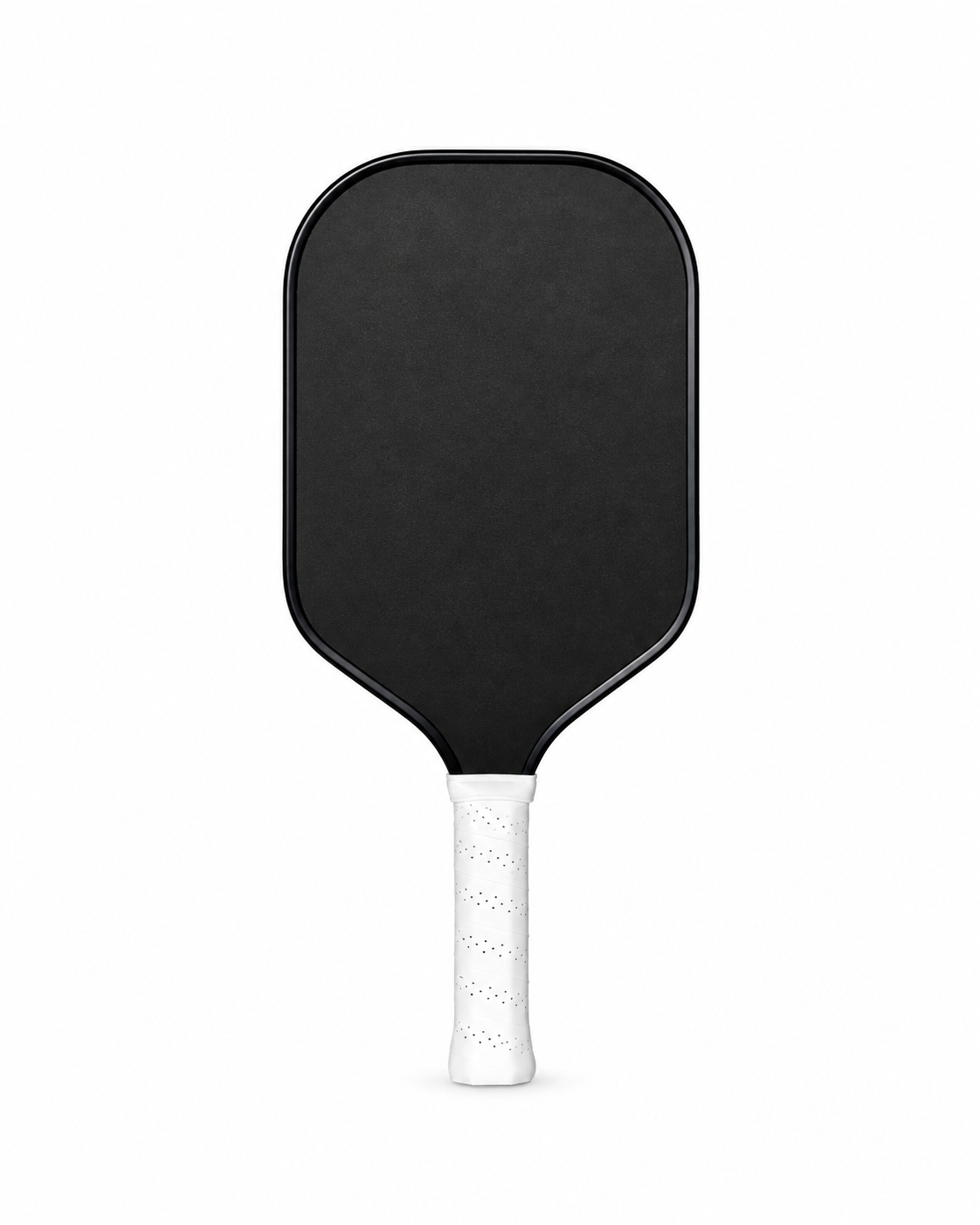
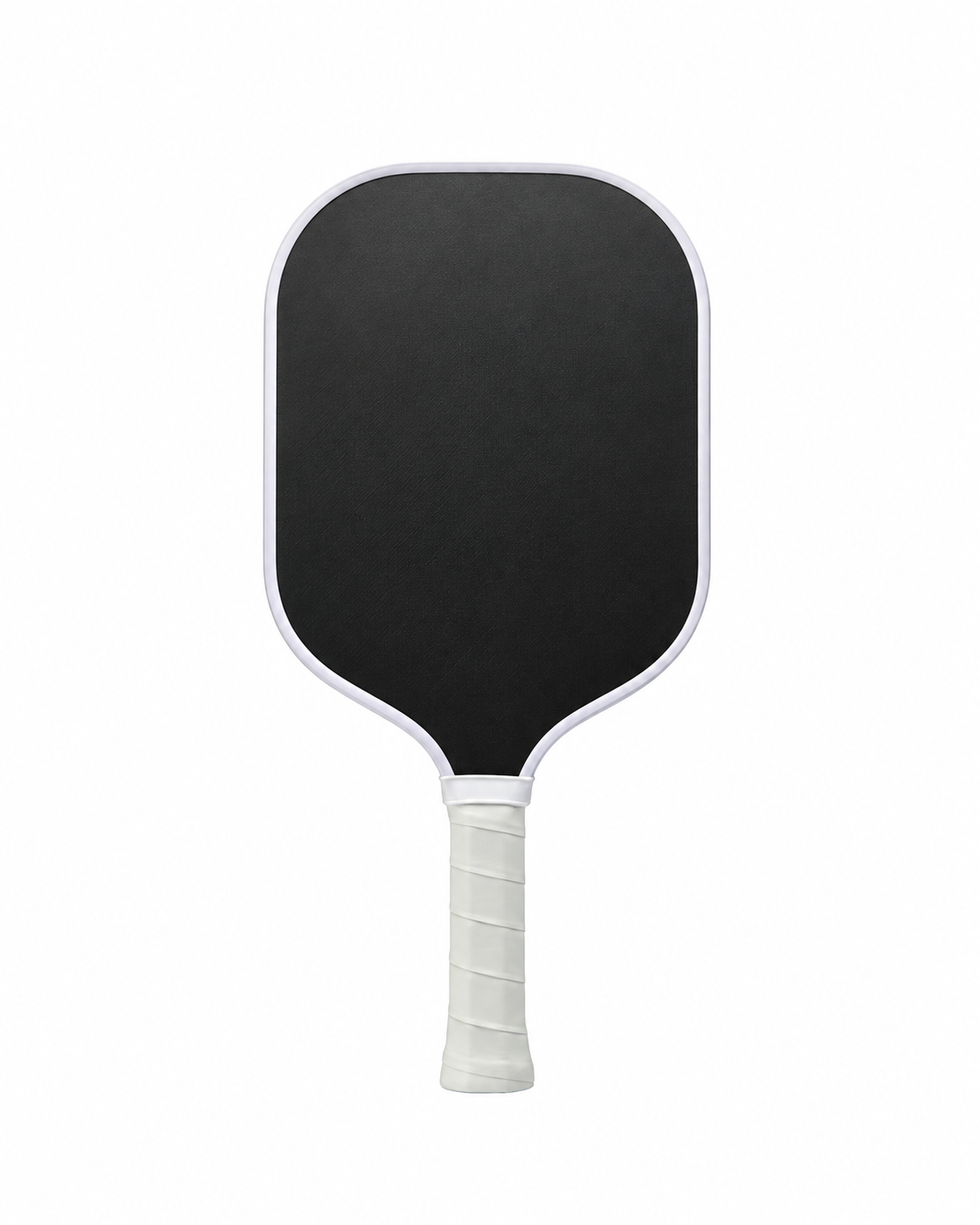
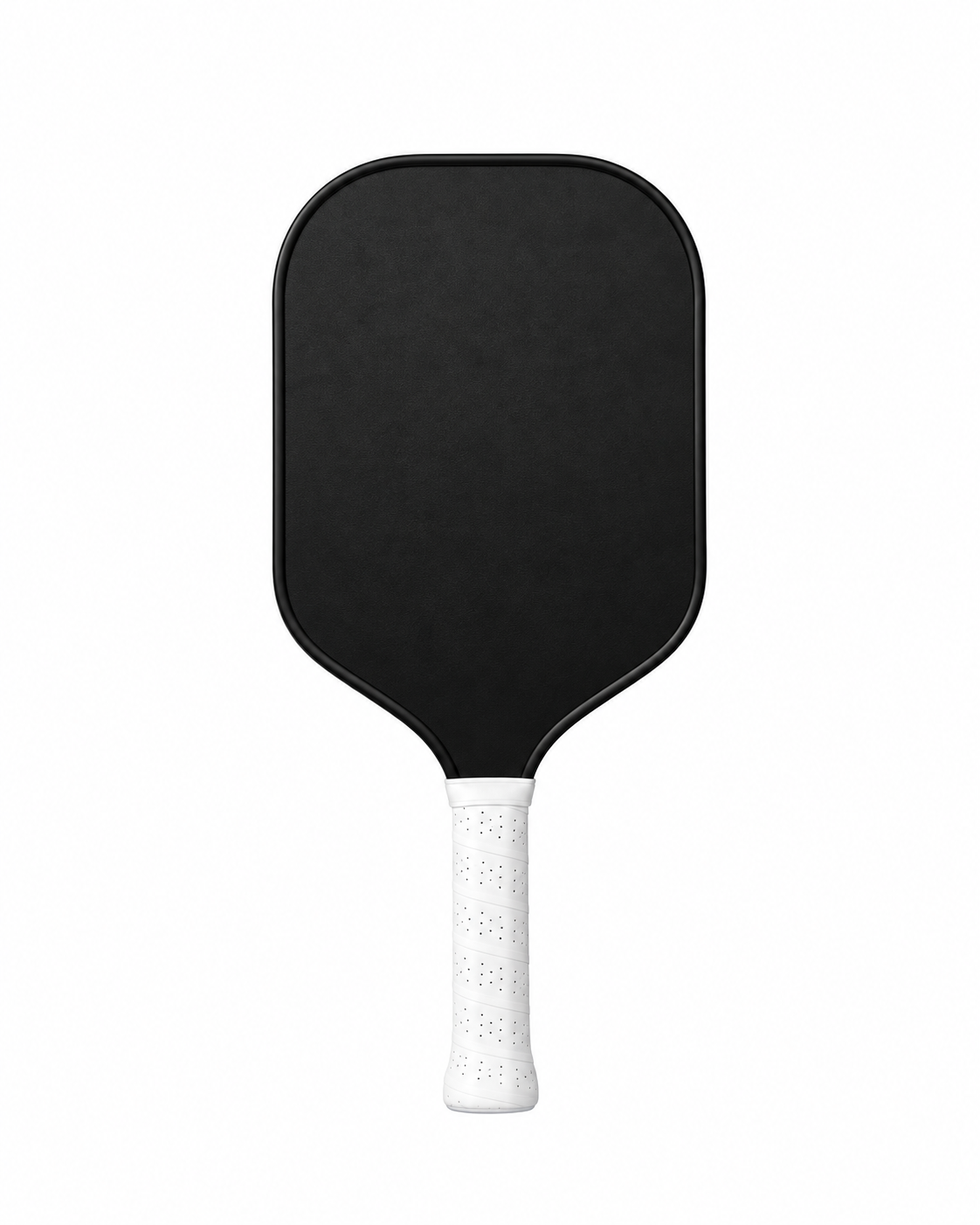
All three shapes ship from the same line, and only the mold changes
Cold press and thermoform run both ways, so the difference between these three paddles is a footprint and a drawing, never a separate supplier. Reach comes from length, forgiveness comes from width, and the mold decides which of the two a buyer gets.
Elongated
16.38 × 7.52 in- Length plus width
- 23.90 in
- Headroom to 24.00
- 0.10 in
- Face area
- 123.18 sq in
- Grip / handle
- 5.50 / 4.25 in
- Core
- 16 or 13 mm
The head that reaches the ball your feet give up on. Buyers ask for it when their market talks about power and attack, and the tip speed from a longer arc is what answers that.
See the elongated page → Widest faceWidebody
16.00 × 8.00 in- Length plus width
- 24.00 in
- Headroom to 24.00
- 0.00 in
- Face area
- 128.00 sq in
- Grip / handle
- 5.00 / 4.25 in
- Core
- 16 or 13 mm
The largest face we cut, and the one that answers a miss the most. It also sits on the 24.00 in ceiling with nothing in reserve, so this footprint has no room to grow in either direction.
See the widebody page → Between the twoHybrid · P31-14/16
16.30 × 7.68 in- Length plus width
- 23.98 in
- Headroom to 24.00
- 0.02 in
- Face area
- 125.18 sq in
- Grip / handle
- 5.71 / 4.25 in
- Core
- 16 or 14 mm
The footprint for a brand that can only afford one head but wants to answer both requests. It is 0.08 in shorter than the elongated head and 0.16 in wider, which is where the 5.71 in grip comes from.
See the hybrid page →Every footprint carries its own mold, its own QC drawing and its own carton dimension. The mold is the pair of plates the head outline is machined into, so no two shapes share one. Three shapes means three of each, which is the part of the quote buyers underestimate. The cores and faces we run behind the outlines are shared across all three.
Drawn at one scale, the three heads sit within 0.48 in of each other
This is the part buyers tend to get wrong from a spec sheet alone. The three footprints are closer to each other than the marketing language suggests.
23.90 in combined
24.00 in combined
23.98 in combined
The figure is drawn with one inch equal on every axis, so the outlines are in true proportion to each other. Read the numbers in the table below for anything you have to quote.
| Shape | Length in | Width in | Length + width | Headroom | Face area sq in | Grip / handle in | Core mm |
|---|---|---|---|---|---|---|---|
| Elongated | 16.38 | 7.52 | 23.90 in | 0.10 in | 123.18 | 5.50 / 4.25 | 16 or 13 |
| Widebody | 16.00 | 8.00 | 24.00 in | 0.00 in | 128.00 | 5.00 / 4.25 | 16 or 13 |
| Hybrid P31-14/16 | 16.30 | 7.68 | 23.98 in | 0.02 in | 125.18 | 5.71 / 4.25 | 16 or 14 |
Face area is length times width, before edge radius. The widebody head is 4.82 sq in larger than the elongated head, which is about 3.9% more area. That gap is the whole of what the outline buys you, and the other two sit 2.00 and 2.82 sq in apart.
The outline is a smaller lever than the pitch makes it sound. Between the narrowest and widest head in this range there is 0.48 in of width. Between the shortest and longest there is 0.38 in of length. Once you pick a footprint, the balance point and the core spend the rest of the difference.
The cap is 24.00 in of length plus width, and the widebody sits on it
USAP publishes two dimensional limits that matter here, and one of them is doing all the work.
A paddle must measure 17.00 in or less in length, and its length plus its width must come to 24.00 in or less. There is no separate cap on width, and no cap on thickness. That is why an 8.00 in face and a 16 mm core can both be legal at the same time.
The combined figure is the one that bites. For a brand, that means the length you add has to come out of the width, unit for unit. For the player, it means the two faces differ by 0.48 in of width, and the head with the longer face gives that 0.48 in back in length.
Elongated, widebody and hybrid all have to add up to this line or less. There is no exception for a premium tier.
The 16.00 × 8.00 head reaches the cap exactly. At that size there is no room to lengthen it, so this footprint has to stay where it is.
The 16.38 × 7.52 head keeps a tenth of an inch in reserve, which is what lets us cut a 7.52 in face rather than a 7.50 in one.
The 16.30 × 7.68 head leaves about half a millimetre. Any change to that head has to be measured off the drawing first.
Why our elongated reads 16.38 in and not 16.50 in
At 16.50 in long, the widest legal head is 7.50 in, because 16.50 plus 7.50 lands on 24.00 with nothing left. Our drawing is 16.38 in long and 7.52 in wide, which buys 0.02 in more face width and still keeps 0.10 in of headroom. Both are legal. They are simply two different drawings, and ours is 16.38 × 7.52 in.
The published limits, including the rest of the equipment rules, sit in the dimensional limits USAP publishes. Approval is filed by the brand, per model.
The core inside a shape is a separate decision from the outline
Two paddles with the same 16.00 × 8.00 in head and two different cores are two different products. Neither the drawing nor the model code tells a buyer which one they got.
PP honeycomb
Stiffness comes from the cell geometry rather than the material, so the head feels crisp and the density is set by the wall thickness. It is the cheapest way to hold a footprint.
EPP foam
You are buying consistency more than a number. A molded foam core repeats its own density from unit to unit, which matters once a brand ships the same SKU for a year.
MPP microcellular
The core holds stiffness and toughness in the same block, at the cost of resin and cycle time. It is the one we quote when a brand wants a soft face without losing shape under load.
Core and face choice belongs to the materials side rather than the shape side. The cores and faces behind every footprint are compared on their own page, including the densities and the price bands.
A second shape is a second mold, not a second part number
Brands often assume a second footprint is a paperwork change. It is a tooling change, and it runs through the same six steps as the first one.
Confirm the two footprints in writing
Length, width and the combined figure for each shape, signed off against the 24.00 in rule before anything is cut. We re-measure from a competitor paddle photo if that is all you have.
Machine one mold per footprint
Two shapes is two molds. There is no shared blank between a 7.52 in head and an 8.00 in head, because the outline is the mold.
Sample each shape on its own
Samples run 10 to 15 days per shape. A padded sample of the second shape is a different build from the first, so both get tested.
Write a QC drawing per shape
One drawing per footprint, with the tolerance band on length, width and the combined figure. This is the document your inspector works from.
Set a carton dimension per shape
50 paddles per 650 by 500 by 350 mm carton at about 12.5 kg holds for all three footprints, but the inner packing has to be drawn per shape.
Reorder the two shapes separately
MOQ is 200 pcs per design. A second shape carries its own 200 pcs, and the two orders stay separate.
Our advice on the first order: launch one footprint, ship it, and add the second after the first reorder. Tooling, sampling and the QC drawing are fixed costs per shape. The second shape is easier to justify once the first one has a sales number attached to it.
Your line-up decides which of the three earns the mold
Four situations cover most of the enquiries we get. The row that matches the line-up you are building is the only one you need.
| Your line-up | Which shape to order | Why that one | What to skip |
|---|---|---|---|
| One SKU, widest player coverage | Widebody 16.00 × 8.00 in | The largest face in the range at 128.00 sq in, so it answers a mishit better than the other two. | Elongated. Same tooling cost, 4.82 sq in less face. |
| One SKU, a market that asks for power | Elongated 16.38 × 7.52 in | A longer arc from hand to tip travels faster at the same hand speed, and the contact point sits higher. | Widebody. It answers a forgiveness question your market is not asking. |
| Two SKUs, premium and volume | Elongated plus widebody | The two ends of the range, with a 0.48 in width gap and a 0.38 in length gap between them. No overlap in the pitch. | Hybrid. It would sit directly between your own two products. |
| Two SKUs, one budget for tooling | Hybrid P31-14/16 plus one end | 0.02 in under the cap and 0.08 / 0.16 in off the elongated head, so one mold covers both requests for most players. | Nothing. This is the compromise build and it is the right one when cash is the constraint. |
Face area and combined figures are measured on the drawing rather than on a finished paddle. Finished length and width run inside the tolerance band we agree with you per shape.
The words do not match the drawings, so we quote two numbers
Five words come up in almost every enquiry, and three of them point at more than one footprint. This table is the one we work from on a call.
| The word | What it usually means | What we cut | Confirm these |
|---|---|---|---|
| Standard | A 16 × 8 in outline in most US catalogues, and also a 15.50 × 8.50 in one in others. | The same 16.00 × 8.00 in head, filed under widebody on our drawing. | Length, width |
| Elongated | Anywhere from 16.25 to 16.50 in long, with the width taking the rest of the cap. | 16.38 × 7.52 in, which leaves 0.10 in under the cap. | Length, width |
| Widebody | 15.50 × 8.50 in in one reading, 16.00 × 8.00 in in the other. Both come to 24.00 in. | 16.00 × 8.00 in, on the cap with 0.00 in in reserve. | Length, width |
| Hybrid | A shape one time and a core build the next. The same word carries both senses. | P31-14/16 at 16.30 × 7.68 in, and separately a mixed core inside one head. | Length, width, and which sense you meant |
| Control | A marketing tier rather than a footprint. It describes feel, and feel comes from the build. | Nothing. A control paddle is a spec set we apply to any of the three heads. | Core thickness, face, balance |
We quote a length and a width on every order line, with the combined figure beside them. A word on a purchase order is a description, and the drawing is the specification. For the player-side comparison of the four shapes the market sells, see what each shape does for the player.
The outline decides less than the market tells you
Five claims we see attached to shape, and we make none of them.
Five things a footprint does not fix
- A slow swing does not get faster. Power follows total mass and where the balance point sits. A longer head moves the mass further out, and that is the whole of the effect.
- Spin does not come from the outline. It comes from the face texture and the core underneath it. Two shapes with the same face spin the same.
- A wide head does not delete off-centre loss. It moves the loss further out, which is useful, and it is not the same as removing it.
- A shape does not change certification. Approval is filed by the brand, per model, and a legal footprint is only the starting condition.
- A shape does not survive a mid-program change. A new footprint means a new mold and a fresh sample cycle, and we will not retool around stock that has already shipped.
What buyers ask before they commit to a footprint
Ten questions that come up in the first two emails, answered with the numbers we build to.
Which shape should a new brand order first?
Start with the widebody at 16.00 × 8.00 in. It has the largest face in the range at 128.00 sq in, so it flatters more players, and a brand with no sales history gets its strongest first review from the paddle that is hardest to miss with.
Can you cut all three shapes from one tooling set?
No. The outline is the mold, and these are three different outlines with three different combined figures. Three shapes means three molds, three sample cycles and three QC drawings, and we quote them separately.
Are all three shapes legal under the 24.00 in rule?
Yes, with different amounts of room to spare. Length plus width comes to 23.90 in for the elongated head, 24.00 in for the widebody and 23.98 in for the hybrid. The widebody is on the line rather than under it, so nothing about that footprint can be lengthened.
What does adding a second shape cost?
A second mold, a second sample cycle and a second QC drawing, quoted as one tooling line. Samples run 10 to 15 days per shape, and MOQ is 200 pcs per design, so the second shape also carries its own 200 pcs order.
Does the shape change the swing weight?
Yes, and the scale will not show it. All three footprints are built to a 225 g ±5 g target, so the static weight barely moves. What moves is how far the mass sits from your hand, and the elongated head carries more of it towards the tip than the widebody does.
Why is your elongated head 16.38 in and not 16.50 in?
Because at 16.50 in the widest legal face is 7.50 in. Our drawing is 16.38 × 7.52 in, which gives a 7.52 in face and still leaves 0.10 in of headroom on the combined figure. Two drawings, both legal, and 16.38 × 7.52 in is the one on our mold.
Is a widebody the same thing as a standard shape?
The market uses widebody for two different footprints. Our 16.00 × 8.00 in head comes to 24.00 in combined, and the other common reading at 15.50 × 8.50 in also comes to 24.00 in, so both are legal and both are called a widebody. Confirm the length and width on the drawing before you order, not the word.
Does the hybrid head take a different core?
It takes the same cores as the other two, with one exception on thickness. The hybrid head is quoted at 16 mm or 14 mm, while the elongated and widebody heads are quoted at 16 mm or 13 mm. Everything else, from the PP honeycomb to the 18K carbon face, is shared.
Can I mix two shapes in one carton?
You can, and we draw the inner packing per shape so the two do not rub. It does not change the outer carton: 50 paddles per 650 by 500 by 350 mm carton at about 12.5 kg holds for every footprint. A mixed carton is marked with both shape codes.
How long does a shape change take once we are in production?
Treat it as a new model rather than a change. A new footprint needs a new mold, a 10 to 15 day sample cycle, and a fresh QC drawing, and the running order at 2000 pcs or less sits at about 35 days. We do not modify a footprint that has already been approved.
Send the line-up. Get a tooling plan and a quote.
The line-up you send us decides the answer. We will put the three combined figures next to the 24.00 in rule, name the mold count, and quote the tooling and the paddles as separate lines.
Email goes to lixifirm@outlook.com, and we answer within 24 hours.