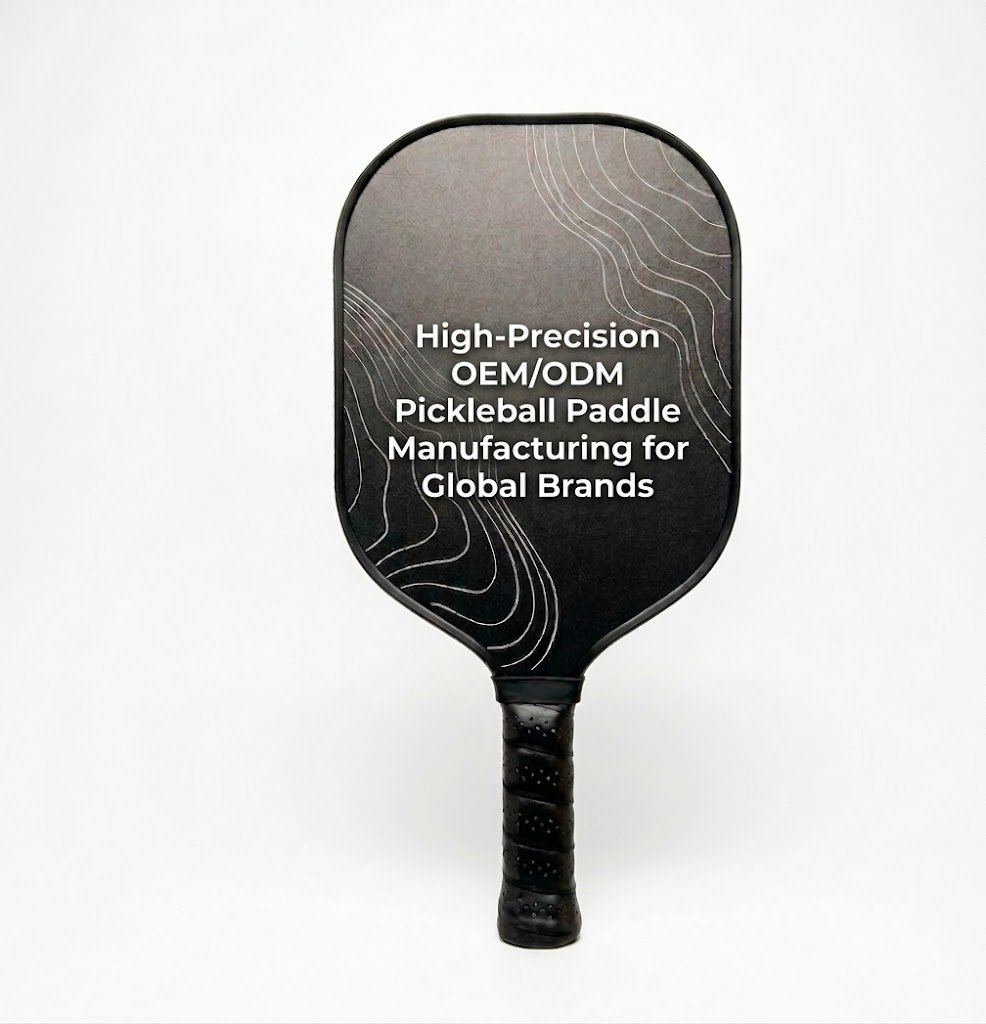
High-Precision OEM/ODM Pickleball Paddle Manufacturing for Global Brands
LixiSports is the precision manufacturing partner behind established racket-sport and pickleball brands worldwide. We combine tight-tolerance production (weight ±2–3g, balance point ±2mm), co-R&D with exclusive private tooling, foam-injection edge technology, strict NDA-governed IP protection, and an audit-ready, fully documented supply chain .
Product Description
- Precision-tolerance manufacturing — weight held to ±2–3g (precision program; standard program ±5g) and balance point within ±2mm, with per-batch dynamic balance testing before shipment
- Full QC reporting — every production lot ships with test data covering dynamic balance, surface friction decay, and impact resistance — evidence, not promises
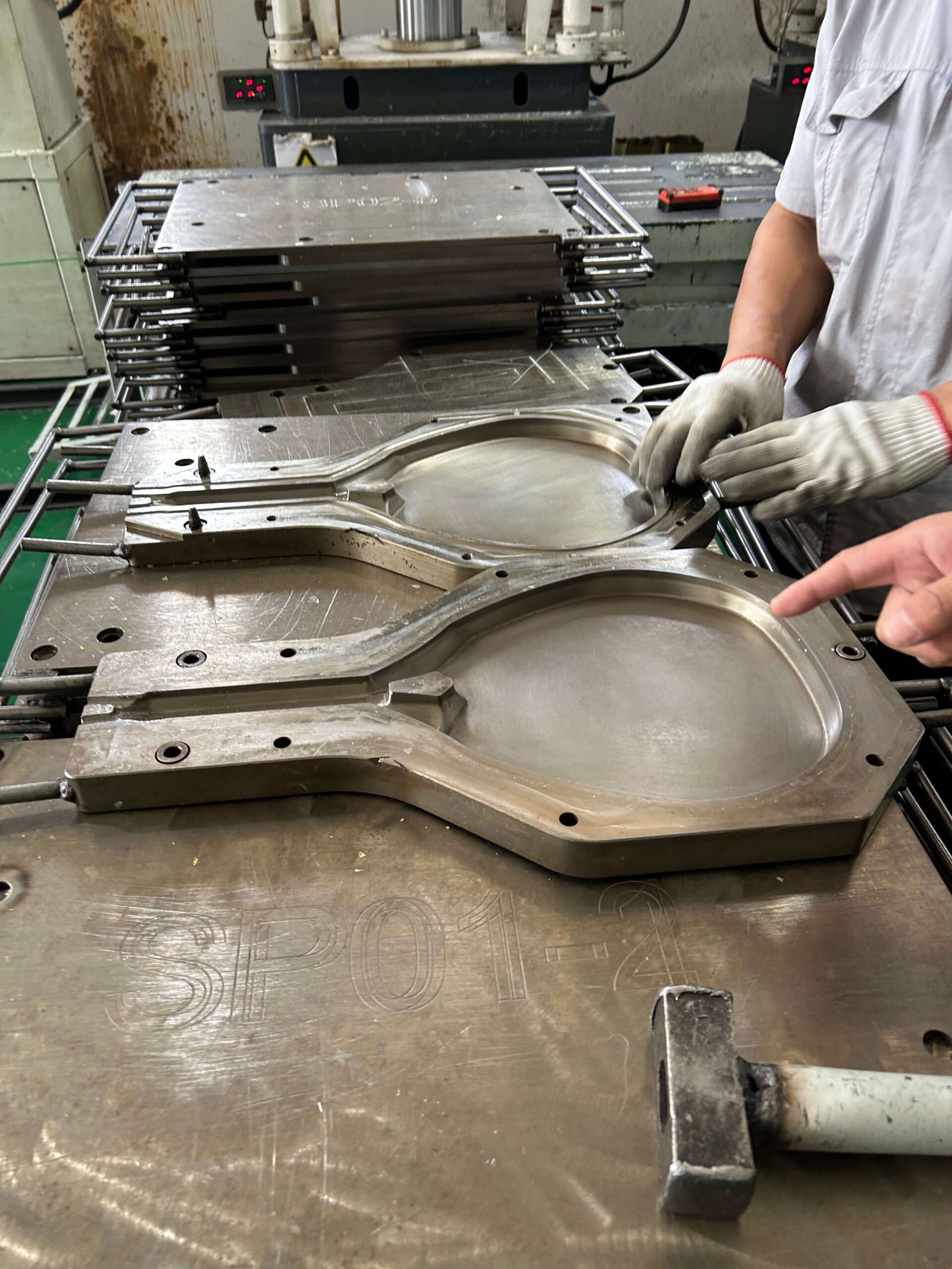
- Co-R&D & private tooling — dedicated structural engineering team to develop exclusive paddle shapes, unique edge structures, foam-injected edges (Foam Injection), proprietary composite faces and custom handle geometries — under exclusive, sealed tooling
- 55+ patents in racket technology, in-house R&D led by a professor with 20 years of composites experience, partnered with a university composite research center
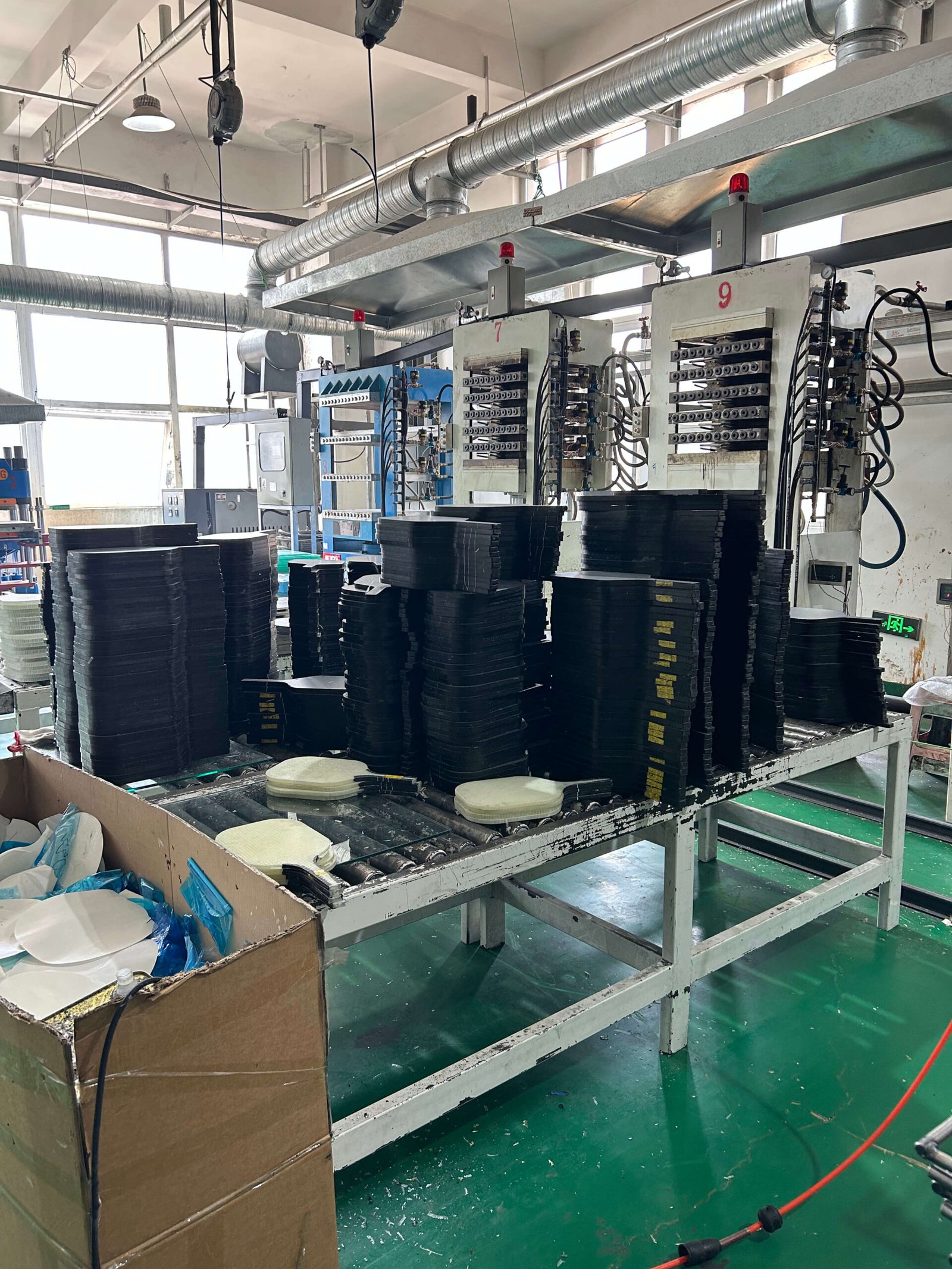
- Full construction range — cold pressed, thermoformed (automatic fabric cutting, vacuum thermoform tanks, molded production lines), T700 raw carbon / 3K / 12K / 18K / Kevlar faces, PP / EPP / MPP cores, ceramic sand infused surface technology
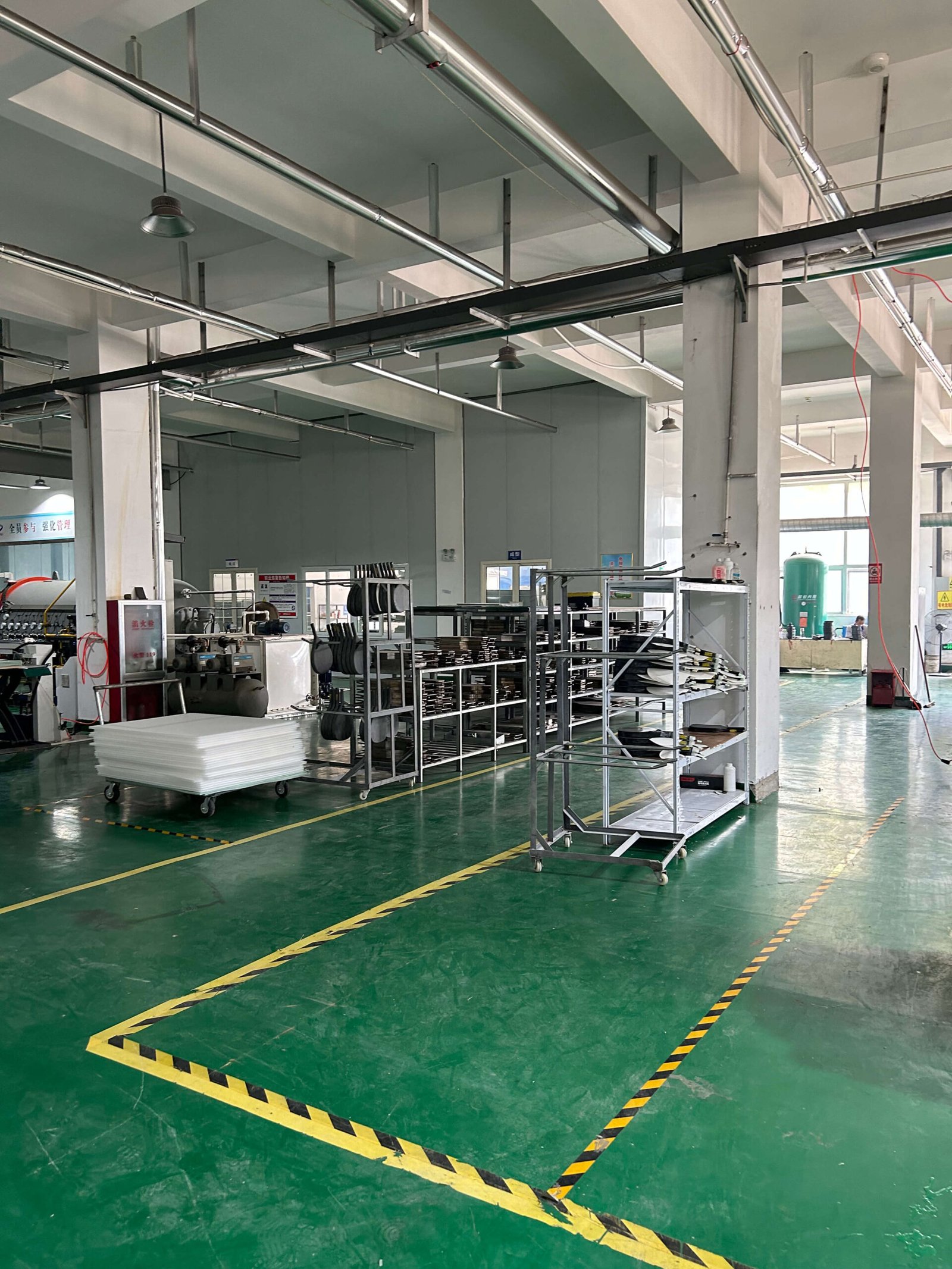
- Capacity with lead-time guarantees — 180,000 pcs/month across ~100,000 cold press + ~80,000 thermoformed lines, dual production bases (China + Vietnam), peak-season surge scheduling and split-shipment programs
- NDA & IP protection as standard — customer-exclusive molds are sealed and archived, never circulated; artwork, tooling and co-developed designs stay yours
- Audit-ready compliance — BSCI / ISO9001 / SGS third-party audit support; Toray carbon fiber, environmentally compliant PP honeycomb and non-toxic adhesives with full MSDS and environmental documentation
- Ideal for: global racket-sport brands, premium pickleball labels, distributor private brands, retail house brands expanding into pickleball
Specifications
| Parameter | Specification |
|---|---|
| Core Material | PP Honeycomb (8/10mm), EPP, MPP; custom core development available |
| Construction | Cold Pressed, Thermoformed (automated cutting, vacuum thermoform, molded lines) |
| Face Material | Toray T700 Raw Carbon, Carbon Fiber 3K/12K/18K, Fiberglass, Kevlar hybrids |
| Surface Technology | Sandy texture, raw carbon weave, proprietary ceramic sand infused (licensable exclusively) |
| Edge Technology | Standard edge guard, custom edge structures, foam injection (Foam Injection) perimeter |
| Weight Tolerance | ±2–3g (Precision Program) / ±5g (Standard Program) |
| Balance Point Tolerance | ±2mm |
| Thickness | 13mm / 14mm / 16mm (customizable) |
| Grip Sizes | #0 (101mm) / #1 (105mm) / #2 (108mm); custom handle geometry development |
| Shape | Standard / Wide Body / Elongated / Exclusive custom molds (private tooling) |
| QC Documentation | Dynamic balance report, surface friction decay test, impact resistance test — per lot |
| R&D Capability | Co-R&D, DFM engineering, exclusive structure & tooling development, exclusivity agreements |
| IP Protection | NDA-governed; customer molds sealed & archived, never shared |
| Certifications & Audits | USAP / UPA-A compliant designs; BSCI / ISO9001 / SGS audit support; MSDS & eco-compliance documents for all key materials |
| Sample Lead Time | 7–15 days (playable); custom tooling projects quoted individually |
| Production Lead Time | 30–40 days per 2,000 pcs; urgent peak-season scheduling available |
| Monthly Capacity | 180,000 pcs (~100,000 cold press + ~80,000 thermoformed), China + Vietnam |
| Payment Terms | T/T, L/C, Western Union |
| Port of Shipment | Shenzhen / Shanghai / Ningbo, China |
Key Features
1. Tight Tolerances & Consistent Quality Control — Batches That Play Identically
For an established brand, inconsistent batches are not an inconvenience — they are returns, warranty claims and lost shelf space. Our Precision Program is built to eliminate that risk:
| Control Point | Tolerance / Test | Method |
|---|---|---|
| Paddle weight | ±2–3g (vs industry-typical ±5–8g) | Calibrated scale check per batch |
| Balance point | ±2mm | Balance beam measurement per batch |
| Dynamic balance | Pass/fail per lot | Spin & symmetry testing |
| Surface friction decay | Measured vs spec before shipment | Standardized friction wear test |
| Impact resistance | Pass/fail per lot | Repeated-impact durability test |
Every production lot ships with a QC report documenting dynamic balance, friction decay and impact results — so your quality team can verify consistency with data, and your warranty claims drop because your paddles actually match each other. Paddle #1 and paddle #20,000 in a container order play the same.
2. Co-R&D & Private Tooling — Build a Performance Moat, Not Another Me-Too Paddle
When every brand buys from the same catalog, every brand ships the same paddle. Our co-development capability exists to make sure that doesn’t happen to yours:
- Dedicated structural engineering team — paddle geometry, weight distribution, swing dynamics and layup design developed to your performance brief
- Exclusive custom molds (private tooling) — your shape belongs to you, full stop; molds are sealed and archived under your project number
- Foam injection edge technology (Foam Injection) — injected perimeter foam for a larger sweet spot, better dwell feel and edge durability than glued edge guards
- Proprietary composite faces — including our ceramic sand infused surface (spin retention ~2× conventional textures after 100-hit durability testing); licensable exclusively to your line
- Custom handle structures — grip geometry, stiffness profiles and reinforced PU handle systems engineered for your target player
- Strict exclusivity agreements — co-developed structures, graphics and tooling are contractually excluded from any other customer, in any market
From performance brief to first playable prototype: engineering-led, documented, and defensible.
3. Scalable Monthly Capacity & Lead-Time Guarantees — Built for Peak Season
A brand that sells out in March and restocks in July loses its season. We engineer capacity so that doesn’t happen:
- 180,000 pcs/month combined — approximately 100,000 cold press plus 80,000 thermoformed, across multiple parallel production lines
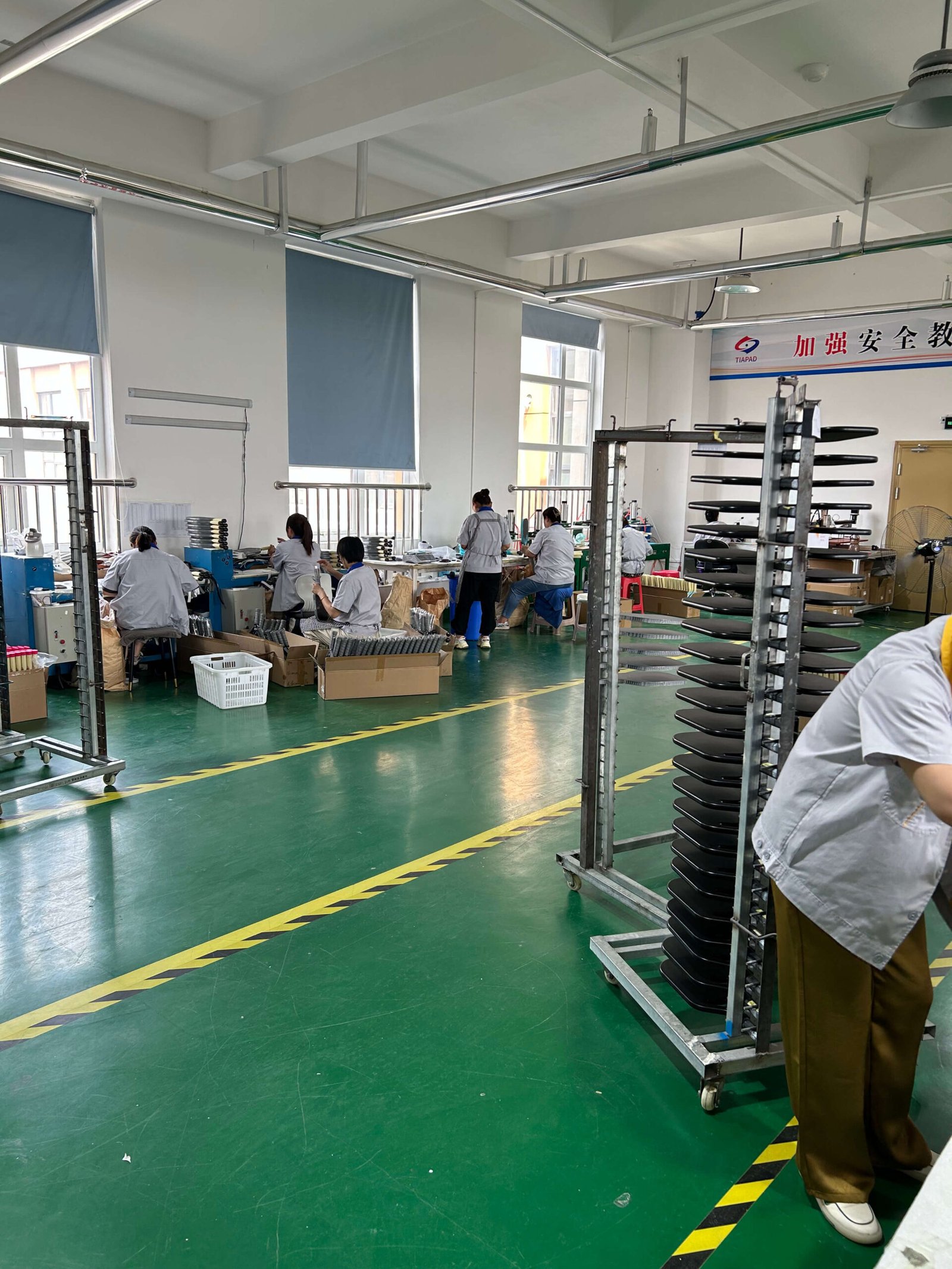
- Dual production bases — China (6,000 m², Shenzhen) and Vietnam (3,500 m²), giving geographic redundancy for tariffs, logistics and regional demand
- Peak-season surge scheduling — dedicated capacity slots reserved for seasonal peaks; urgent production runs can be slotted into line changeovers
- Split-shipment programs — partial shipments aligned to your DC replenishment calendar instead of one all-or-nothing container
- Transparent lead-time commitments — 30–40 days per 2,000 pcs baseline, confirmed against a shared production schedule before order placement
Your replenishment planner gets a schedule they can actually put into the ERP.
4. Strict NDA & IP Protection — Your Tooling Never Feeds a Competitor
The fastest way to lose a brand’s trust is to leak its tooling. Our IP discipline is contractual, physical and procedural:
- NDA before any technical discussion — drawings, specs and performance briefs are covered from first contact
- Customer-exclusive molds sealed and archived — private tooling is stored under project numbers, accessible only to the assigned production team
- Artwork & graphic segregation — customer designs are filed in isolated project folders with access control; rejected and legacy graphics are never reused or resold
- No second-customer circulation — co-developed structures, exclusive surface technologies and custom geometries are never offered to other buyers, in any market, under any label
- Supply-chain confidentiality — your material specs and vendors are treated with the same protection as your tooling
Nine years of OEM work for international brands — with zero tooling or artwork leakage. We intend to keep that record.
5. Factory Audit Readiness & Tier-1 Certifications — Pass Your Compliance Review the First Time
Global brands don’t just audit the paddle — they audit the factory, the materials and the paperwork. We’re built for that scrutiny:
- Third-party audit support: BSCI, ISO9001 and SGS factory audits supported and pre-scheduled; documentation packages ready before your auditor arrives
- Traceable Tier-1 materials: Toray carbon fiber fabrics, environmentally compliant PP honeycomb cores, and non-toxic, low-VOC adhesive systems
- Full MSDS and environmental compliance documentation for all key raw materials — available in your compliance format on request
- USAP / UPA-A compliant engineering with in-house pre-testing and certification submission support
- Transparent multi-point QC from incoming material inspection through layup, molding, finishing and packaging
Your compliance team gets a supplier that answers document requests in days, not quarters.
What to Consider
| Consideration | Detail | Our Solution |
|---|---|---|
| Precision tolerance cost | ±2–3g programs require tighter process control and add unit cost vs ±5g | We quote both tolerance tiers so you can assign precision to hero SKUs and standard tolerance to volume SKUs |
| Custom tooling investment | Exclusive molds and co-R&D structures carry NRE cost and longer development cycles | NRE quoted transparently upfront; tooling ownership and exclusivity are contractual |
| Certification timelines | New custom models need USAP submission time and fees | Pre-tested compliant designs + submission support built into the project plan |
| Peak-season capacity competition | High-demand months are booked early across all clients | Reserved capacity slots and early production commitments for recurring programs |
Package
Standard Packaging
| Item | Details |
|---|---|
| Inner | PE bag + bubble bag (individual protection) |
| Carton Size | 65 × 50 × 35 cm |
| Quantity | 50 pcs per carton |
| Gross Weight | ~12.5 kg per carton |
Full-Brand Kit & Retail Packaging Options
- Full-color lid-and-base / magnetic gift box (retail-ready)
- Custom zipper paddle cover with logo (embroidered or printed)
- Custom end cap logo and colored silicone band
- Custom grip tape + branded sweat band
- Custom edge guard colors matched to your brand palette
- Hang tags, warranty cards, and branded instruction inserts
- UPC barcode / Amazon FNSKU labeling
- FBA-ready packaging with prep service
- Launch bundles — paddle + cover + 2 balls in one retail-ready gift set
Customization
Engineering & Co-Development
- Exclusive paddle shapes — private tooling development from performance brief to first article
- Foam injection edge structures — expanded sweet spot and edge durability
- Custom layup & composite faces — torque, stiffness and feel tuned to your spec
- Ceramic sand infused surface — proprietary spin technology, available exclusively
- Custom handle systems — geometry, stiffness profile, reinforced PU construction
Branding & Logo Application
- Silkscreen printing, heat transfer, UV printing
- Deboss / emboss logo on end cap
- Custom grip, edge guard, end cap and silicone band
Customization Process
- NDA execution & performance brief discussion
- Engineering proposal & DFM review
- Design confirmation (artwork + spec sheet)
- Prototype / sample making (7–15 days; custom tooling quoted per project)
- First article approval & QC standard sign-off
- Mass production (30–40 days per 2,000 pcs) with in-line QC
- Final QC & test reporting (dynamic balance, friction decay, impact)
- Shipping — split-shipment programs available
FAQ
Q1: What weight and balance tolerances can you guarantee in production?
A: Our Precision Program holds weight to ±2–3g and balance point to ±2mm, measured and recorded per batch. A Standard Program at ±5g is available for price-sensitive SKUs — many brands split the two across their line.
Q2: What QC documentation ships with each order?
A: Each production lot includes a QC report covering dynamic balance, surface friction decay testing and impact resistance testing, plus weight/balance batch data. Reports are issued before shipment so your team can verify against spec.
Q3: Can you develop an exclusive paddle shape or structure that no other brand has?
A: Yes — that is the core of our co-R&D program. We develop exclusive paddle geometries, foam-injected edge structures, custom composite layups and handle systems under private tooling with contractual exclusivity. Your structure is never offered to another customer.
Q4: How do you protect our molds, artwork and co-developed technology?
A: NDAs before technical discussions, customer-exclusive molds sealed and archived under project numbers, access-controlled artwork filing, and contractual non-circulation of any co-developed structure, graphic or tooling. In 9+ years of international OEM work we have never leaked customer tooling or designs.
Q5: What is your actual monthly capacity, and can you handle peak-season surges?
A: Approximately 100,000 cold press + 80,000 thermoformed paddles per month (180,000 total) across dual production bases in China and Vietnam. For peak seasons we offer reserved capacity slots, urgent surge scheduling and split-shipment programs aligned to your replenishment calendar.
Q6: Do you support third-party factory audits like BSCI, ISO9001 or SGS?
A: Yes. We support and pre-schedule BSCI, ISO9001 and SGS audits, with compliance documentation packages prepared in advance. Key materials — Toray carbon fiber, eco-compliant PP honeycomb cores, non-toxic adhesives — carry full MSDS and environmental compliance documentation.
Q7: Are the paddles engineered for USAP / tournament compliance?
A: Yes. Dimensions, weight distribution and surface roughness are engineered within USA Pickleball standards with in-house pre-testing (surface roughness, deflection, size/weight), and we support the full certification submission for custom models.
Q8: Can we split a large order into multiple shipments?
A: Yes — split-shipment programs are standard for recurring brand programs. We align production and shipment waves to your DC replenishment schedule rather than forcing single-container deliveries.
Q9: What does a co-development project look like from start to finish?
A: NDA → performance brief → engineering proposal & DFM review → prototype (7–15 days, longer with new tooling) → first-article approval with QC standard sign-off → mass production with in-line QC → final test reporting → shipment. Every milestone is documented.
Q10: What are the payment and shipping terms?
A: Payment via T/T, L/C, or Western Union. We ship from Shenzhen / Shanghai / Ningbo by sea or air, with FBA-direct delivery and split-shipment options available.
Check out our full Pickleball Paddle solutions
About Us
LixiSports is a carbon fiber pickleball paddle manufacturer serving brands, distributors, and clubs worldwide through OEM, ODM, and OBM partnerships. With 9+ years of racket-sports experience, we handle everything from design to delivery under one roof.
Factory & Capacity
- Dual production bases: China (6,000 m²) + Vietnam (3,500 m²) for supply security and tariff flexibility
- 180,000 pcs/month combined capacity (cold press + thermoformed)
- Playable samples in 7 days; MOQ 200 pcs
Technology & R&D
- 55+ patents in racket technology
- In-house R&D team led by a professor with 20 years of experience, in partnership with a university composite research center
- Proprietary ceramic sand infused surface for 2× friction durability on raw carbon faces
Compliance & Quality
- USAP / UPA-A compliant designs with in-house testing
- Multi-point QC from layup to packaging
One Partner, Full Line
- Carbon fiber, fiberglass, and hybrid paddles; custom cores, grips, edge guards, and packaging
- From first sample to full-container orders — we’re your single source from concept to market.
Related products
Wholesale Fiberglass Pickleball Paddle
Wholesale thermoformed Pickleball Paddle
Wholesale Carbon Fiber Pickleball Paddle