by Edward lee | Aug 27, 2026 | Blog
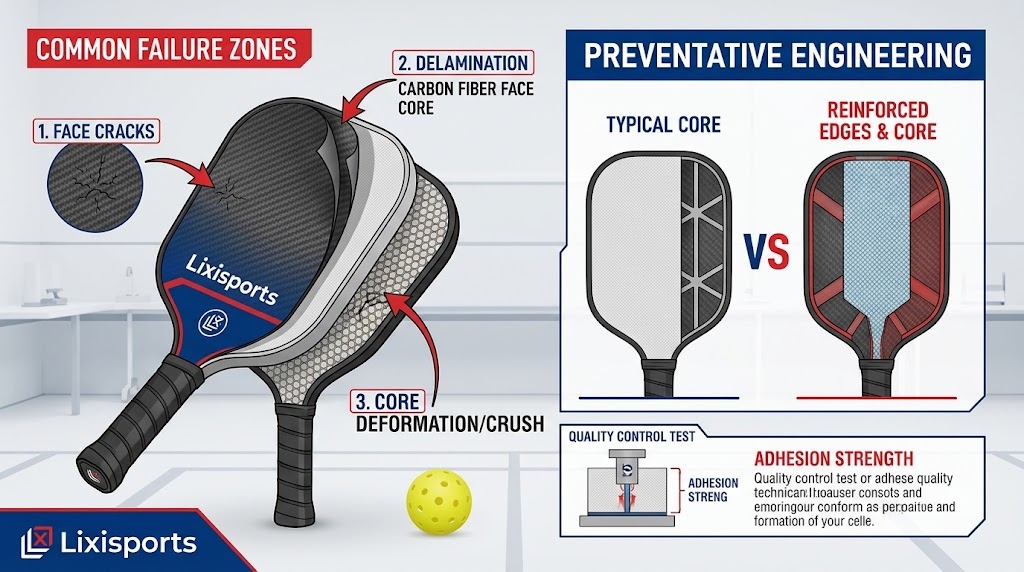
Summary: Cracks, delamination and print failure are the three defects that drive most paddle warranty claims. Each traces back to a specific production step — resin mixing, layup, pressing, surface prep, curing and printing. Cold-pressed and thermoformed builds fail... 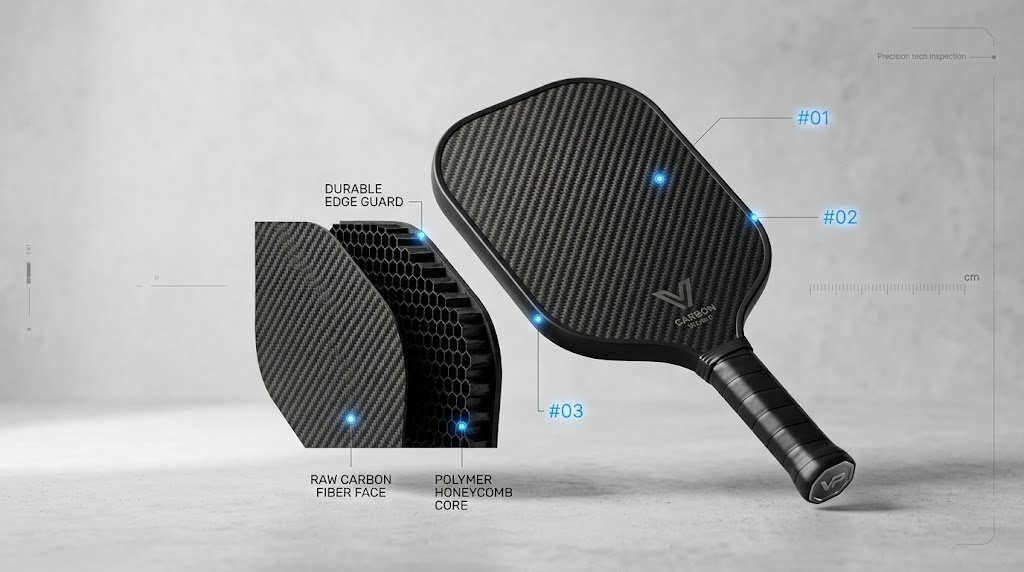
by Edward lee | Aug 26, 2026 | Blog
Key Takeaways Defects cluster into three families: surface, structural, printing and assembly. Pinholes, puffs and coating failures are surface process signals. Delamination, weak edges and dead spots are structural rejections. Repeating defects reveal process control... 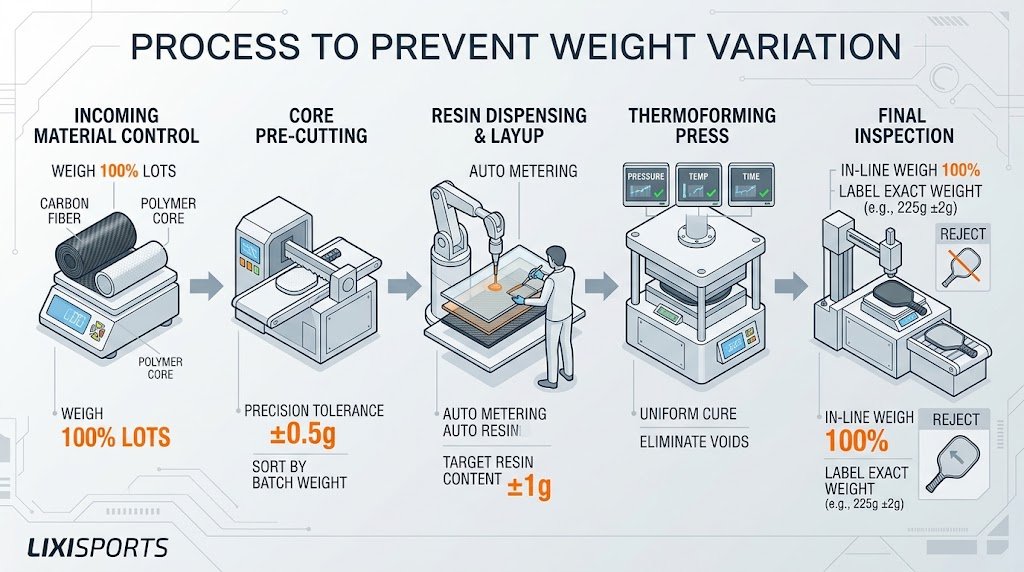
by Edward lee | Aug 26, 2026 | Blog
Key Takeaways Weight variation starts in materials, process and assembly — three different sources. Fabric weight, resin ratio and core density set the base weight. Layup, pressing and curing decide how consistently that base repeats. Grip, end cap and edge band... 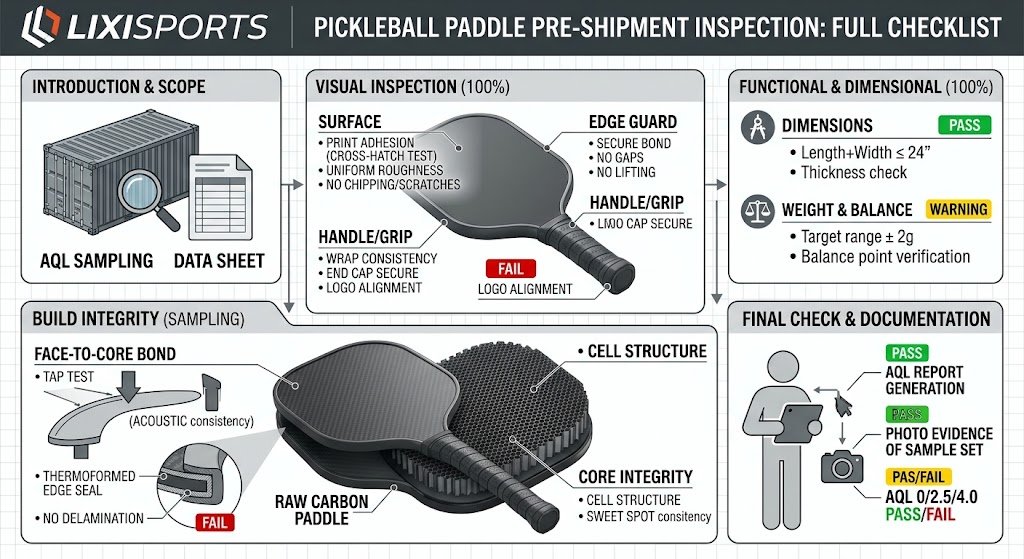
by Edward lee | Aug 26, 2026 | Blog
Key Takeaways Pre-shipment inspection is the last line of defense before the container leaves. Inspect inline and pre-shipment: inline catches drift, pre-shipment catches the batch. AQL sampling: general level II, 125 units for a 2,000-unit lot. Visual, dimensional,... by Edward lee | Aug 26, 2026 | Blog
Key Takeaways Samples are hand-built. Bulk runs on production lines. Differences are normal. Manageable gaps: feel, weight and gloss within tolerance. Unacceptable gaps: systematic shifts in weight, balance or construction. Materials, process and line speed create the... by Edward lee | Aug 26, 2026 | Blog
Key Takeaways Sort defects into fixable and reject. Structural problems are dealbreakers; cosmetic ones are fixable. Document every problem: photos, measurements, spec sheet reference, sample number. Surface: pinholes, fiber puffs and resin pools are process defects....