Key Takeaways
- Pre-shipment inspection is the last line of defense before the container leaves.
- Inspect inline and pre-shipment: inline catches drift, pre-shipment catches the batch.
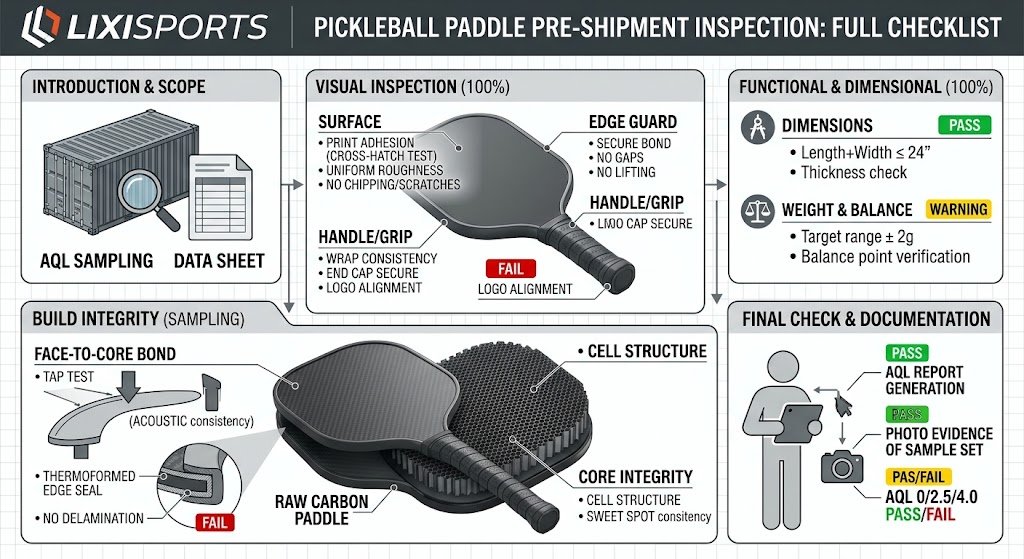
- AQL sampling: general level II, 125 units for a 2,000-unit lot.
- Visual, dimensional, weight and functional checks cover the paddle.
- Weight: 225 g ±5 g. Balance: ±0.5 cm. Thickness: within 0.5 mm.
- The contract names the acceptance criteria, the AQL level and the report format.
- Rejected goods: rework, sort or return, decided with data.
- Third-party inspection pays for itself on first orders and after defect history. Critical defects are zero-tolerance at every AQL level.
Why Pre-Shipment Inspection Is Your Last Line of Defense
The Cost of a Bad Container vs the Cost of an Inspection
A bad container costs freight, returns, chargebacks and a season; a season runs 12–16 weeks, and one bad container burns half of it. An inspection costs a fraction of the container. Returns also break the retailer relationship; trust is the real cost. One chargeback can erase the margin on the whole order; inspection is cheaper than insurance. Pre-shipment inspection also verifies the quantity you paid for. The math favors inspection every time.
When to Inspect: Inline, Pre-Shipment or Both
Inline catches drift while the line runs. Pre-shipment checks the finished batch before loading. Pre-shipment without inline data cannot explain drift; inline without pre-shipment cannot protect the batch. Both is the standard for carbon builds. Inline checks run per shift; pre-shipment runs per lot. Both use the same spec sheet and the same approved sample. Schedule both in the production calendar before the run starts.
The Inspection Checklist, Step by Step
Sampling Plan: AQL Levels and Sample Sizes
Sample per AQL tables: general inspection level II, 125 units for a 2,000-unit lot. Lot size drives sample size, so verify the inspector counted the lot correctly. Sample randomly across cartons, including the middle of the stack. Defects split into critical, major and minor. Typical acceptance: 0 critical, 2.5 major, 4.0 minor. Critical defects, such as cracks and separation, are zero-tolerance at every level. The inspector records each defect on the unit, not in a lump.
Visual Checks: Surface, Print, Edges and Assembly
Face, weave, print alignment and adhesion, edge seams, bumper fit, grip and end cap. Check both faces and both edges; defects cluster asymmetrically. Also check handle logo placement and grip seam direction consistency. Compare every unit against the approved sample under the same light; photograph the sample before the inspection so inspectors compare in real time.
Dimensional and Weight Checks: 225 g ±5 g, Balance and Thickness
Weight band: 220–230 g. Balance: within 0.5 cm of target. Thickness: within 0.5 mm. Record the max, min and mean of the weight spread, not one unit. Measure the finished unit with edge guard and end cap installed. Take thickness at three points: face center, edge and handle shoulder. USAP caps: length at or under 17 in, length plus width at or under 24 in.
Functional Checks: Dead Spots, Torsion and Impact Response
Tap the face grid for dead spots; test the same zones as your sample playtest grid. Twist the handle against the face for torsion. Strike or drop test for impact response; the paddle should not flex or crack after the drop. Twist the face against the handle; an audible creak is a defect. Dead spots fail as majors; cracks and separation fail as critical.
Packing and Shipping Checks
Retail Packaging, Barcodes and Inserts
Box art, inserts, UPC or EAN barcodes, hang tags and documentation inside the box. Scan every barcode in the sample, not one. A barcode mismatch is a major defect at retail. Inserts and foam cutouts must match the carton layout. Documentation inside the box must match the packing list.
Carton Quality, Quantity and Label Match
Carton condition, seal, quantity per carton and label match with the packing list. Standard: 50 paddles per carton, 65 × 50 × 35 cm, about 12.5 kg. Labels must include model, batch number and quantity. Check outer cartons for moisture damage and stacking strength at the floor. Pallet count, strapping and pallet labels belong in the loading check; they must match the bill of lading.
Inspection Options for Buyers
Factory QC Report vs Third-Party Inspection (SGS, Bureau Veritas)
The factory report is first-party evidence. Third-party inspection is independent evidence. A qualified carbon fiber pickleball paddle manufacturer can show both: its own QC records and its inspection history. A factory report is useful for inline data; third-party is useful for acceptance. Third-party coverage also includes the packing line, quantity count and loading supervision. Together, both reports give the complete picture of the batch.
What to Require in the Contract: Acceptance Criteria and Reports
Write the AQL level, defect classes, check items and report format into the contract. Name the inspector: factory QC, third party or both. Define who pays for re-inspection after rework and the re-inspection window: how many days after rework. Acceptance is decided by the report, not by phone calls. Reports are signed by the inspector, not the sales team, and arrive before the balance payment.
How to Read the QC Report
Pass/Fail Criteria, Defect Classification and Photos
The report lists samples, defects by class, pass/fail per check and photos of defects. Verify the sample count matches the lot size and the inspection date matches production dates. Reject counts per defect class reveal the dominant failure mode. Ask for the raw data table, not just the summary. A report without photos is a summary, not evidence. File the report with the batch records.
What to Do With Rejected Goods: Rework, Sort or Return
Rework for fixable defects under inspection. Sort for mixed quality, but only when the sorter is independent of the factory. Return when structural failures or systematic drift dominate. Never release rejected goods to the retail channel; they return as chargebacks. Document the disposition decision in the report. Return decisions need the factory’s written acceptance of the claim before you arrange freight.
Frequently Asked Questions
What Is a Standard AQL Level for Pickleball Paddles?
General inspection level II is the standard: 0 critical, 2.5 major and 4.0 minor. Tighten to 1.5 major for premium lines. Sample size grows with lot size; never fix one number for all lots. Level II balances cost and confidence; level I suits low-risk lots. Critical is always zero.
Should I Always Use Third-Party Inspection?
Not always. First orders, new suppliers and after defect history: yes. Long-term partners with clean records: factory reports plus your own sampling may be enough. Use third-party inspection whenever your team cannot travel. Inspection is priced per man-day; two inspectors can cover packing and loading. Ask for the inspector’s report template before booking.
Final Checklist: Before You Approve Shipment
Inspection Results, Report in Hand and Acceptance Criteria Met
- AQL level and sample size per contract.
- Defect classes recorded per check.
- Visual, dimensional, weight and functional checks passed.
- Inline records reviewed alongside the report.
- Packing, barcode and carton checks completed.
- QC report with photos and raw data reviewed.
- Rejects dispositioned: rework, sort or return.
- Balance payment released only after acceptance.