Summary: A 7-day playable prototype lets brands test paddle feel, weight, and balance before committing to bulk production. Cold press manufacturing enables this speed because no mold is needed — only a dieline file. This article covers the 7-day process, material options, and how fast prototyping reduces launch risk for new pickleball paddle brands.
Why Sample Development Speed Matters for Pickleball Paddle Brands
The Challenge of Long Prototype Cycles in Sports Equipment Development
Traditional thermoformed paddle samples take 2–3 weeks. Mold machining alone takes 7–10 days. For a brand testing a new shape or construction, that delay adds 3–4 weeks to the product development cycle.
Cold press eliminates the mold step. Sample production starts from a dieline file — not a steel mold. The result: a playable paddle in 7 days instead of 21.
How Faster Samples Help Brands Validate Product Ideas Quickly
A 7-day sample cycle allows a brand to:
- Test three variations of weight, thickness, or face material within one month
- Gather playtester feedback before committing to the final spec
- Iterate on graphic design without delaying the production timeline
Reducing Time-to-Market in a Competitive Pickleball Industry
The pickleball equipment market is growing rapidly. New brands launch every quarter. A 3-week faster sample cycle means a brand can go from concept to market-ready product in 5–6 weeks instead of 10–12. That timing advantage matters when retail shelf space and online launch windows are competitive.
What Overseas Brands Expect From a Professional Pickleball Paddle Manufacturer
Fast Response From Initial Design Concept to Physical Sample
The first sample should validate: shape, weight, thickness, handle feel, and graphic placement. Brands should not have to wait 3 weeks to see whether their dieline produces a paddle that feels right.
Accurate Prototype Performance Before Bulk Production
A visual-only sample is not enough. The prototype must be playable — same materials, same layup sequence, same pressing parameters as the production version. Only a playable prototype confirms swing weight, balance, and surface feel.
Reliable Communication Between Brand Teams and Factory Engineers
The factory engineering team should understand the brand’s target market. A beginner paddle needs different weight distribution than a tournament paddle. The factory’s recommendations during prototype development — core density, face material, thickness — directly affect the product’s market fit.
| Brand Requirement | Why It Matters | Factory Response |
|---|---|---|
| Fast prototype turnaround | Shortens development cycle | 7-day cold press sample |
| Playable sample, not visual only | Confirms performance before MOQ | Full construction sample |
| Engineering consultation | Optimizes spec for target players | Material and layup recommendations |
Our 7-Day Playable Pickleball Paddle Sample Development Process
Day 1: Reviewing Paddle Specifications and Design Requirements
The brand submits: dieline file (.dxf or .ai), target weight, core thickness (13, 14, or 16 mm), face material preference, and graphic design file. The engineering team reviews the spec against available material combinations.
Day 2–3: Material Selection and Prototype Preparation
PP honeycomb core is cut to the specified thickness. Fiberglass or carbon fiber fabric is cut to the dieline outline. Resin system is prepared based on the face material — standard epoxy for fiberglass, toughened epoxy for carbon fiber.
Available face materials from stock:
| Material | Fabric Weight | Typical Use |
|---|---|---|
| Fiberglass | 180 g/m² | Entry-level, beginner paddles |
| 1 carbon + 2 fiberglass hybrid | — | Mid-range balanced feel |
| 3K carbon fiber | 200 g/m² | Mid-range performance |
| 12K carbon fiber | 220 g/m² | Premium stiffness |
| 18K carbon fiber | 240 g/m² | Maximum stiffness |
| T700 carbon (cloth weave) | 200 g/m² | High-end, raw carbon appearance |
Day 4–5: Cold Press Manufacturing and Paddle Assembly
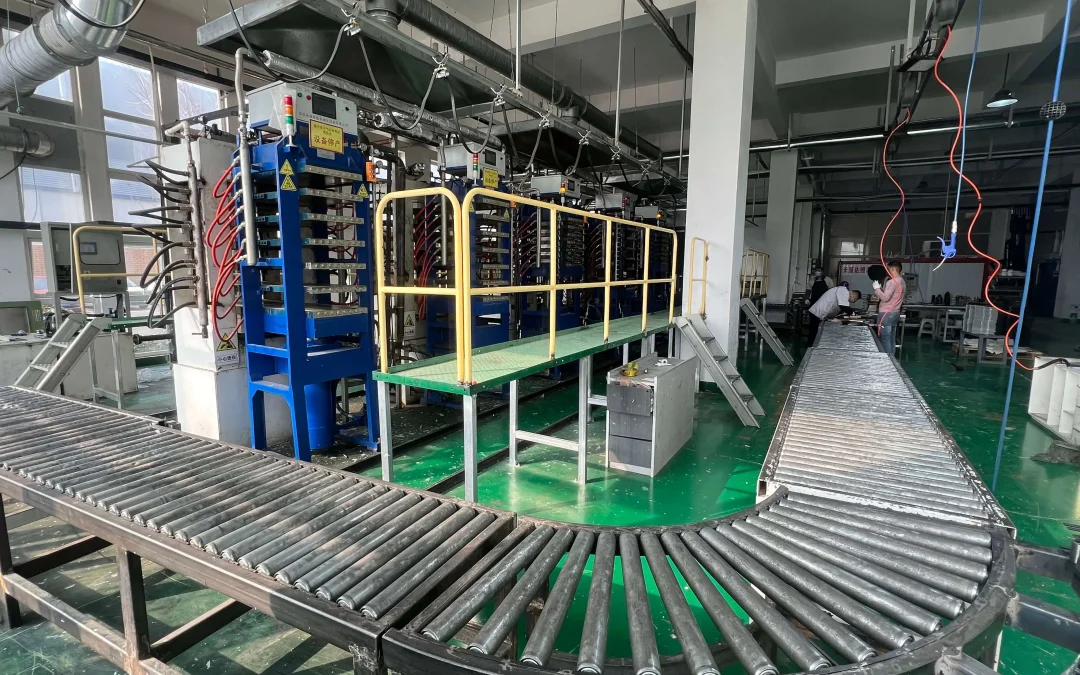
Layup: face sheet + resin + PP honeycomb core + resin + face sheet. Pressed at 80–150 tons, room temperature. Panel cures for 8–12 hours. After cure, the CNC machine cuts the paddle shape from the panel following the dieline.
Edge guard and PU handle are installed. The PU handle prevents the common cold press issue of handle breakage.
Day 6: Surface Finishing, Graphics, and Quality Inspection
Surface sandblasting prepares the face for UV graphic printing. Graphics are printed directly on the prepared surface. For fiberglass: primer + UV ink + protective clear coat. For raw carbon: direct UV print or primer + UV ink.
QC checks: weight (225 g ±5 g target), thickness, balance point, edge quality, graphic adhesion.
Day 7: Final Testing and Sample Shipment Preparation
Final measurements recorded. Sample is packed and shipped via express courier. Estimated delivery: 3–5 days to US addresses.
Why a Playable Prototype Is More Valuable Than a Visual Sample
Testing Real Performance Before Mass Production
A visual sample is a non-playable display piece — often made with different materials or a simplified construction. It shows colors and shapes but does not confirm how the paddle plays.
A playable prototype uses the same materials, same layup, and same pressing process as the final production version. The brand can test power, control, and vibration dampening before scaling to 200+ units.
Evaluating Power, Control, Balance, and Swing Feel
| Performance Factor | Visual Sample | Playable Prototype |
|---|---|---|
| Weight | Approximate | ±2 g of final spec |
| Balance point | Not measurable | Confirmed |
| Swing weight | Cannot test | Measured |
| Face stiffness | Not representative | Same as production |
| Graphic adhesion | Not tested | Cross-cut verified |
Identifying Design Improvements Before Large Orders
Playtest feedback often reveals: the handle is too short, the swing weight is too high, or the surface texture needs adjustment. These changes cost nothing to fix at the prototype stage. Fixing them after a 1,000-unit production run costs thousands.
Key Factors That Enable Fast Pickleball Paddle Prototype Production
Ready Access to Carbon Fiber, Fiberglass, and Core Materials
Stock materials include fiberglass (180 g/m²), 3K/12K/18K carbon fiber, T700 raw carbon, PP honeycomb core (8 mm and 10 mm cell sizes), and standard/toughened epoxy systems. No special orders needed for standard prototypes.
Experienced Engineering and Production Teams
The engineering team reviews every prototype specification against production feasibility. Recommendations are provided before material cutting begins — not after a failed sample.
Flexible Manufacturing Systems for Custom Paddle Development
Cold press production is dieline-based, not mold-based. Changing the paddle shape requires a new dieline file only. This flexibility enables quick iteration on shape, handle contour, and weight reduction without retooling.
Materials and Specifications We Can Customize During Prototype Development
Carbon Fiber, Fiberglass, and Hybrid Surface Options
| Construction | Typical Wholesale (200–2000 pcs, USD) | Sample (USD) |
|---|---|---|
| Fiberglass | $6.50/paddle | $9.50 |
| 1 carbon + 2 fiberglass | $8.50/paddle | — |
| 3K carbon | $12.50/paddle | — |
| 12K carbon | $14.00/paddle | — |
| 18K carbon | $14.50/paddle | — |
| T700 raw carbon | $12.00/paddle | — |
Note: Prices are indicative and vary by specification. Contact for current pricing on your specific configuration.
PP Honeycomb Core Options
PP honeycomb is the standard core for cold press. Thickness options: 13 mm, 14 mm, 16 mm. Cell size: 8 mm standard, 10 mm available.
EPP core is typically associated with thermoformed (hot press) paddle construction. It can also be used in cold press but is uncommon — most cold press production uses PP honeycomb for cost efficiency and reliable bonding.
Paddle Thickness, Weight, Balance, and Handle Design
| Custom Parameter | Range |
|---|---|
| Core thickness | 13 / 14 / 16 mm |
| Target weight | 210–240 g (±5 g tolerance) |
| Balance point | Adjustable via core density and layup |
| Handle length | 4.5–5.5 inches |
| PU handle | Standard option (prevents handle breakage) |
| Surface treatment | Sandblasting, UV printing, ceramic sand infusion |
How Fast Prototyping Reduces Risks Before Bulk OEM Orders
Avoiding Costly Design Mistakes
A paddle design that looks good in 3D renderings may play poorly. The handle may be too thick. The balance point may be too head-heavy. A 7-day prototype catches these issues before production.
Confirming Product Performance Before Production Investment
A sample costing $10–$15 validates a production order worth several thousand dollars. The risk reduction ratio is approximately 100:1.
Improving Communication Between Brands and Manufacturers
A physical sample eliminates miscommunication. “The handle feels too thick” is clear when both parties hold the same paddle. Without a sample, “225 g target weight” can mean different things to the brand team and the factory.
From Prototype Approval to Mass Production: The OEM Development Journey
Sample Testing and Modification Process
Brand receives the prototype within 7 days plus shipping. Playtesting: 1–2 weeks. Feedback sent to factory. If modifications are needed, a revised sample is produced within 5–7 days. Typical iteration: 1–3 rounds.
Production Preparation After Sample Approval
Once the sample is approved, the factory prepares production materials. Lead time for 200–2,000 units: 25–30 days. PP honeycomb core, face fabric, epoxy, and packaging materials are ordered to match the approved spec.
Scaling From Small MOQ to Large Volume Orders
Starting MOQ: 200 units. From the same production line, orders can scale to 10,000+ units without requalifying materials or processes. The 7-day prototype process works the same for a first-time startup as for an established brand launching a new model.
Common Mistakes When Developing Custom Pickleball Paddles
Choosing Suppliers Based Only on Price
The lowest sample price often reflects the lowest quality materials. A paddle that costs $1 less per unit but delaminates after 3 months costs more in returns and brand damage than the saving.
Skipping Physical Prototype Testing
A brand that approves production based on renderings and spec sheets alone takes a significant risk. Physical testing reveals issues that cannot be captured in drawings: weight distribution, edge feel, vibration response.
Ignoring Manufacturing Capability During Product Development
Some designs look good but cannot be produced consistently at scale. Work with the factory’s engineering team during the prototype phase to ensure the design is manufacturable within cold press constraints.
Why Choose a China Pickleball Paddle Manufacturer for OEM Development
Advantages of China’s Composite Material Supply Chain
we are a pickleball paddle factory that operates dual production bases in China and Vietnam. Cold press material supply is local — PP honeycomb, fiberglass, carbon fiber, and epoxy are sourced within close proximity. This short supply chain reduces material lead time and cost.
Faster Product Development Compared With Overseas Manufacturing
A China-based factory with in-house cold press lines, CNC finishing, and UV printing can produce a playable prototype in 7 days. Manufacturers that rely on external mold makers and laminators typically take 3–4 weeks for the same output.
Supporting Global Brands From Concept to Commercial Production
The factory supports brands from the first dieline file through to container loading. Services include: dieline optimization, material selection, graphic design review, weight tuning, packaging design, and logistics planning.
FAQ About Custom Pickleball Paddle Prototype Development
How long does it take to make a custom pickleball paddle sample?
7 days from specification approval for cold pressed paddles. This includes material preparation, lamination, CNC cutting, surface finishing, graphics, and QC.
Can manufacturers create playable paddle prototypes before bulk orders?
Yes. Cold press prototypes are fully playable — same materials, same construction, same process as the final production version. Not visual-only samples.
What information is needed to start a paddle prototype?
Dieline file (.dxf or .ai format), target weight, thickness preference (13/14/16 mm), face material choice, and graphic design file. The engineering team can recommend the spec based on your target market.
What is the MOQ after sample approval?
200 units for cold pressed paddles. The same production line handles 200-unit orders and 10,000-unit orders with identical material and quality specifications.
This article is for informational purposes. Actual specifications and pricing may vary. Contact Lixisports for current sample and bulk pricing.
About Lixisports
Lixisports is a pickleball paddle OEM/ODM supplier , serving B2B buyers across the United States and global markets. We offer cold-pressed, thermoformed, and hybrid manufacturing with 7-day prototype capability and 200-unit MOQ.