by Edward lee | Oct 14, 2026 | Blog
A durable grit face is a paddle surface built to keep its grip through repeated play. Grit reaches that surface through the cloth weave itself, through a coating on top, or through grains cured into the resin. The material sets the route, and the resin, the cure and... by Edward lee | Oct 14, 2026 | Blog
A raw carbon face is a paddle surface where the cloth weave and the resin skin do the gripping. A coated face is a paddle surface that carries a separate layer of particles over the resin skin. Each one fails in its own shape. The better choice depends on the kind of... by Edward lee | Oct 13, 2026 | Blog
Two production batches can look the same and wear differently. An average hides that difference. Consistency means that the same test on the same face gives the same number twice. The Short Answer: Consistency Is a Repeat, Not an Average Grit retention is a ratio. It... by Edward lee | Oct 13, 2026 | Blog
A durable grit face is a paddle surface where the grit stays in place through repeated play. A factory can build one of these faces once. Far fewer factories can repeat the result across a full production run. Five kinds of evidence separate the two groups:... 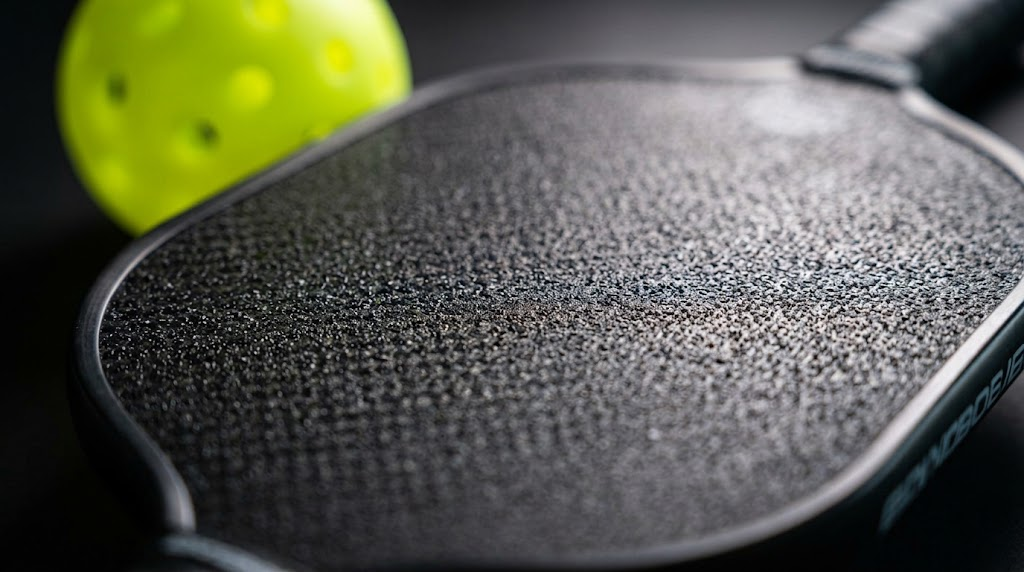
by Edward lee | Oct 13, 2026 | Blog
Durable grit is a paddle face that is built to keep its texture through repeated play. It combines hard particles with a resin system and a molding process that hold those particles in place. A paddle face fails in one of three ways, and the way it fails sets how long... 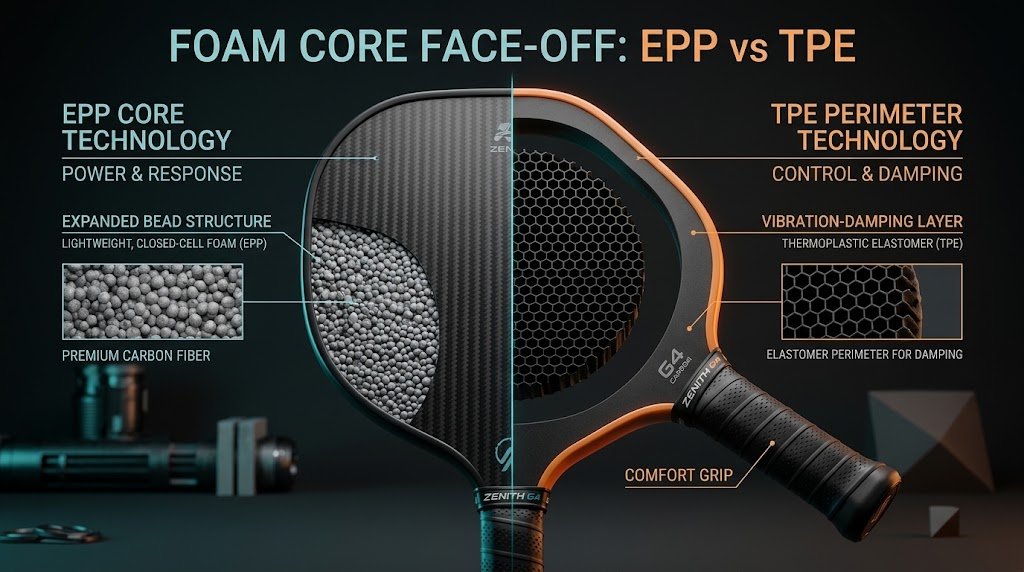
by Edward lee | Sep 28, 2026 | Blog
EPP and TPE rarely compete for the same job. EPP is almost always the answer when the foam is the whole core. TPE is almost always a ring or layer around a honeycomb core. Only a few brands sell a TPE full core — that niche is the only head-to-head matchup. So ask...