Custom Pickleball Paddle Factory in China
Lixi Sports is a reliable pickleball paddle factory in China. We manufacture pickleball paddles engineered to meet USAPA / UPA-A standards for brands, distributors, clubs, schools, events, and training programs. With 9+ years of racket-sports manufacturing experience and 55 patents in paddle technology, we offer existing mold options, OEM, ODM, and OBM development, and private label solutions — with flexible customization across core materials (PP, EPP, MPP), paddle face materials (fiberglass, carbon fiber, T700 raw carbon, 3K/12K/18K), shapes, cold press and thermoformed molding methods, logo printing, graphics, and packaging.
Ongoing R&D on next-generation paddle structures, including our proprietary ceramic sand infused surface technology (2× friction durability), supported by a 12-person R&D team and a university composite research partnership.
MOQ from 200 pcs per model, 180,000 pcs/month capacity.
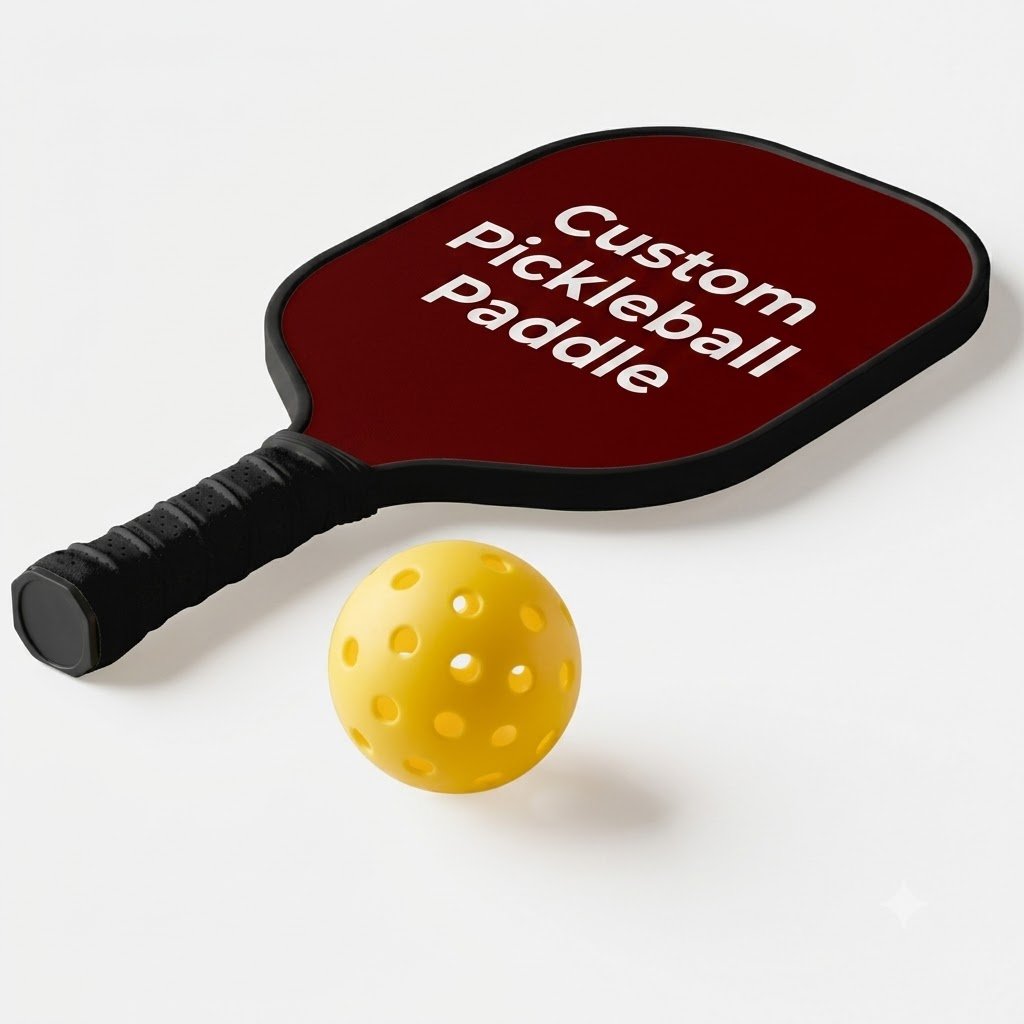
Custom Pickleball Paddle Configuration Overview
Build your paddle from three independent dimensions — core, face, and construction method. Every combination below is available for custom bulk orders.
By Core Material
| Core | Feel & Performance | Best For | Key Notes |
|---|---|---|---|
| PP Honeycomb | Crisp, powerful, consistent | Entry to competitive tiers | Industry standard; 8mm / 10mm cell; low cost; prone to collapse over time |
| EPP Foam | Soft, plush, vibration-damping | Comfort & control lines | Lightweight, high-strength, recyclable; no core crushing; keeps structure long-term |
| MPP | Optimized density & resilience | Premium / tournament lines | Modified polypropylene; better energy return than standard PP |
| Hybrid / Floating Core | Larger sweet spot, reduced vibration | Mid-to-premium tiers | EVA edge ring reinforcement or suspended-core construction |
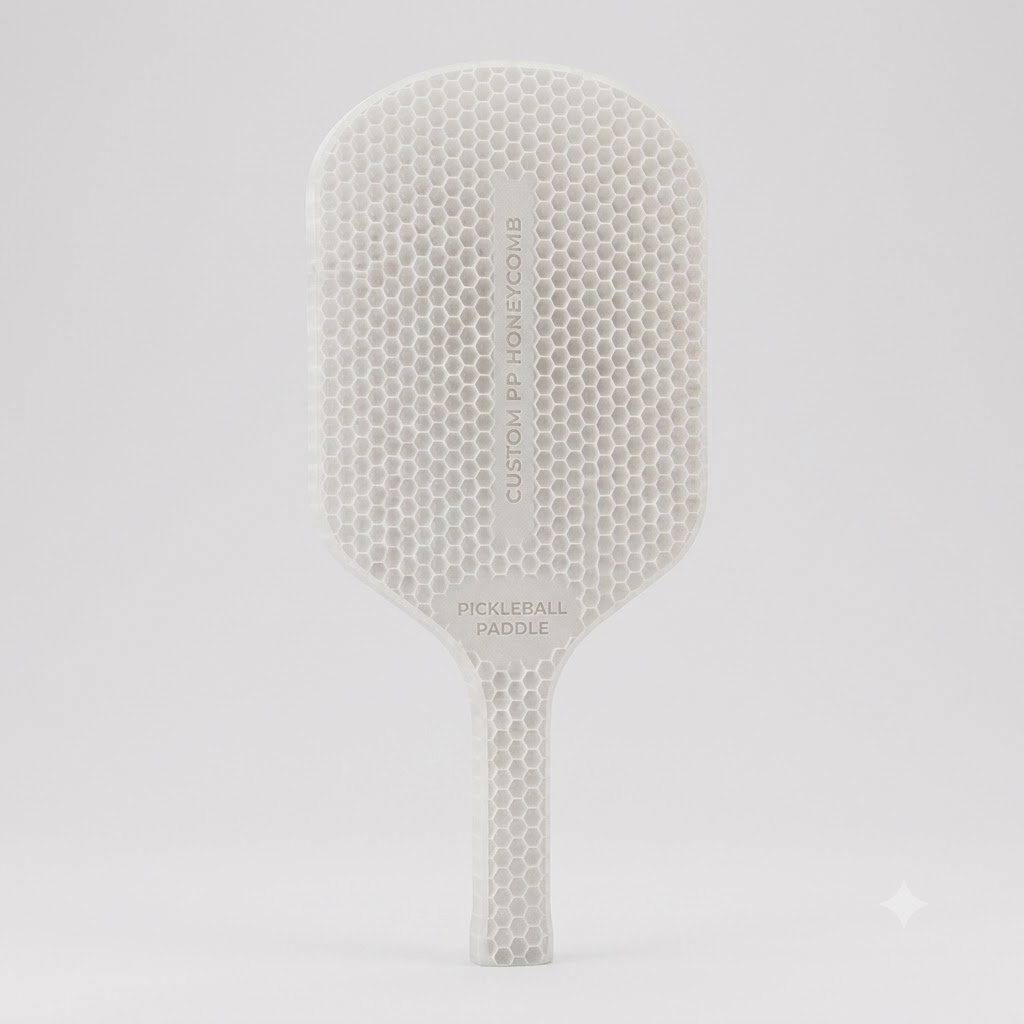
PP Honeycomb
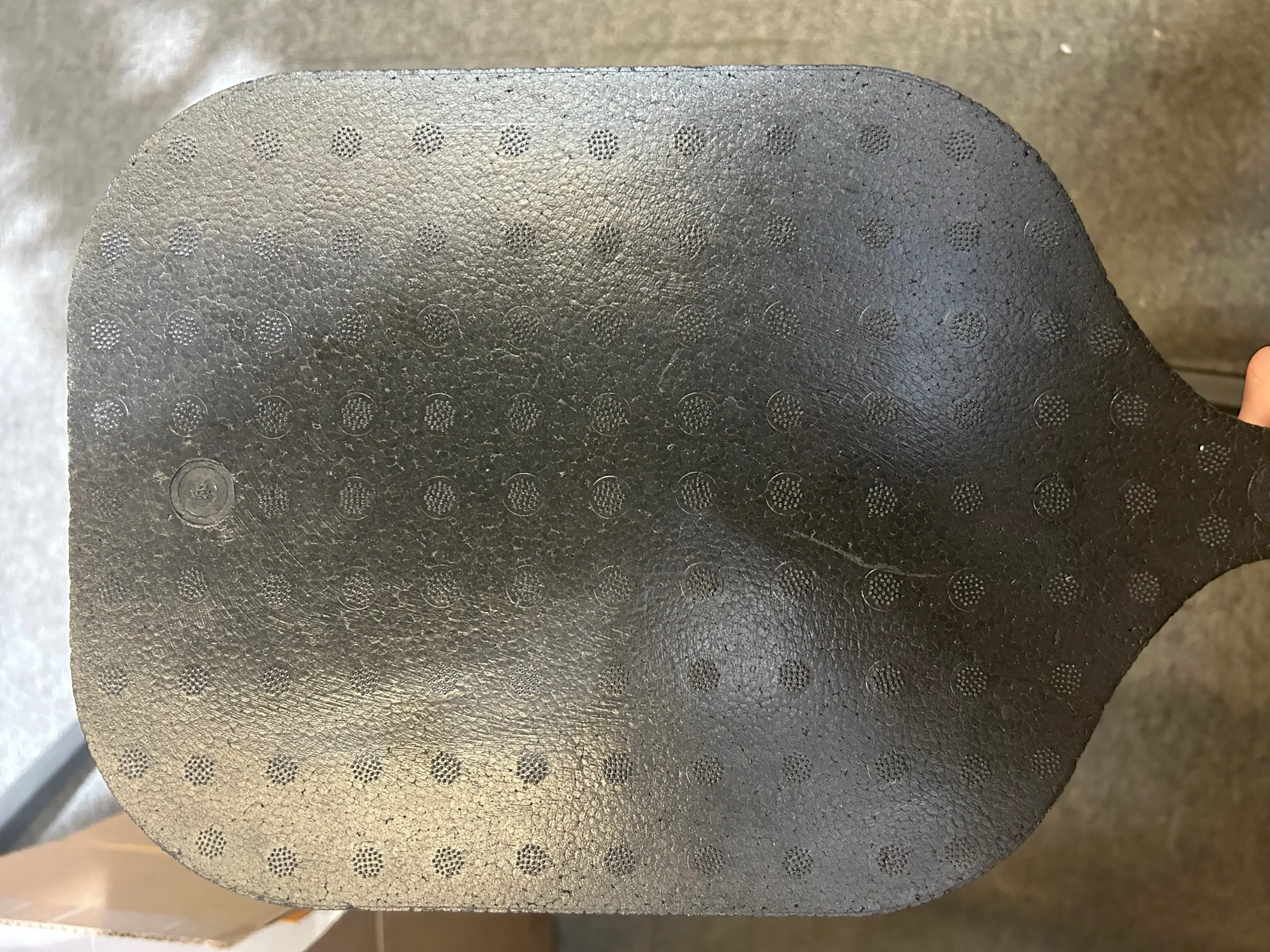
EPP foam
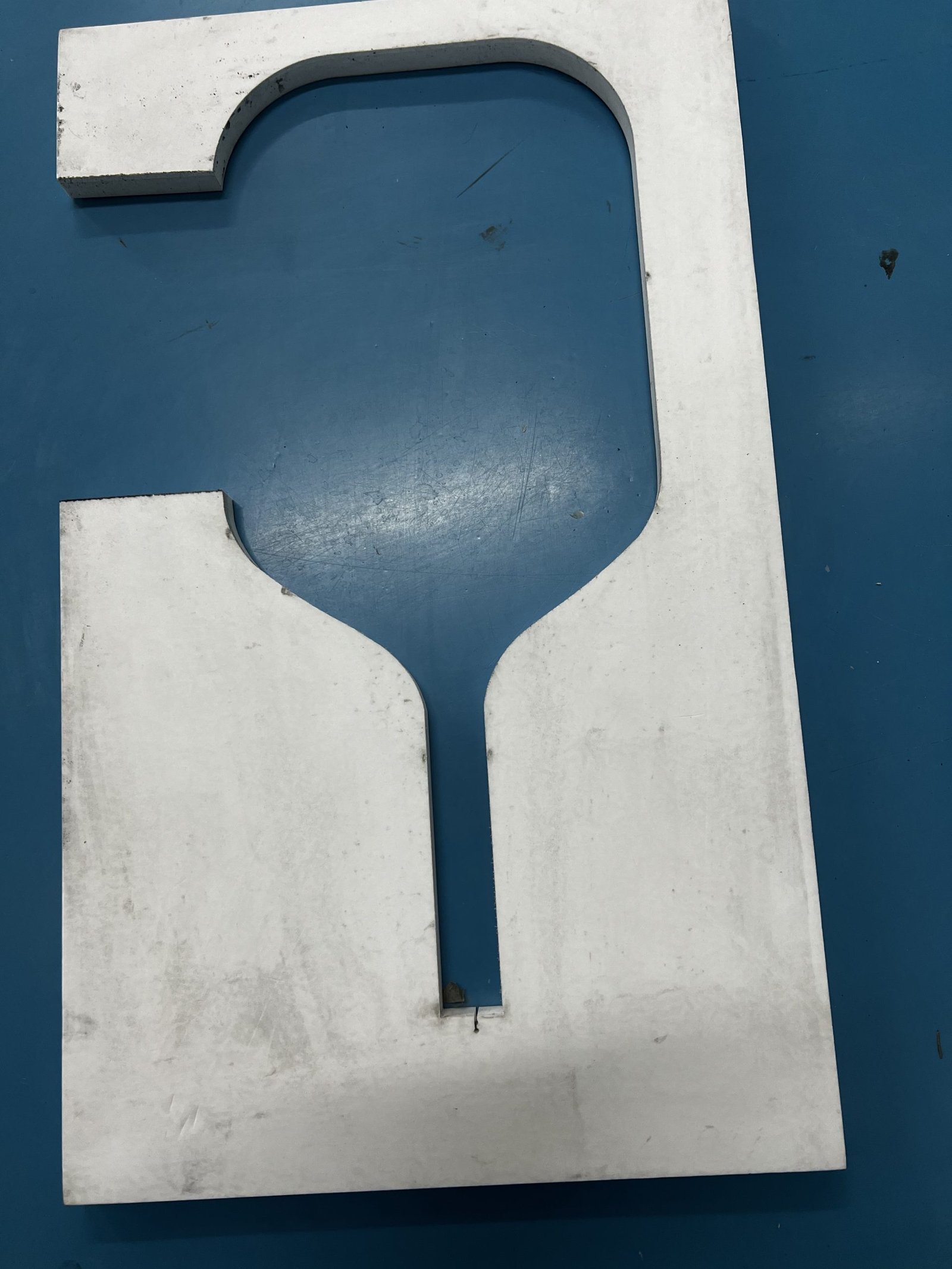
MPP foam
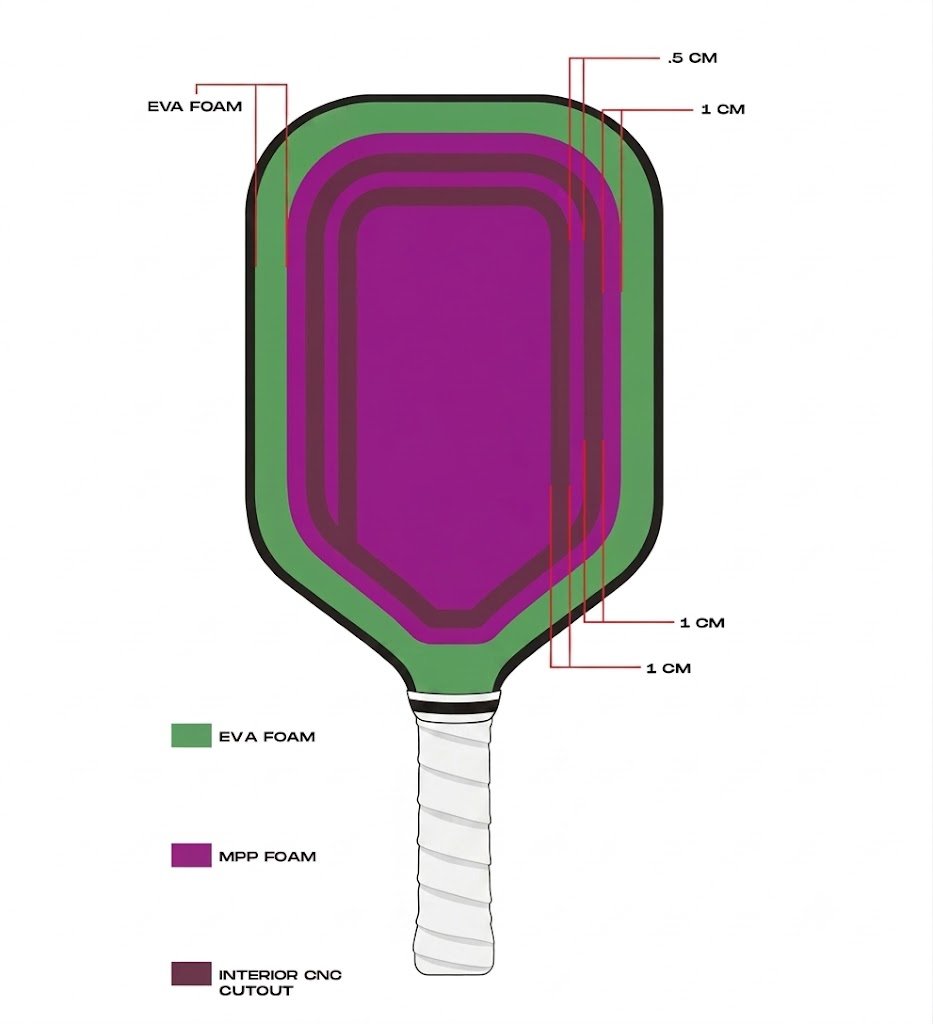
hybrid floating
By Face Material
| Face | Price Tier | Strength | Spin | Typical Use |
|---|---|---|---|---|
| Fiberglass | Entry | Good | Low-moderate | Beginner & junior paddles; promotional programs |
| Carbon Fiber (generic) | Mid | High | Moderate | Market-standard performance paddles |
| T700 Raw Carbon | Premium | High | Moderate+ | High-end raw carbon look; biggest market demand |
| 3K / 12K / 18K Carbon | Mid–Premium | Varies by tow | Varies | Tune stiffness, weave aesthetics, and price |
| Kevlar | Premium | Highest | Good | High end paddle |
| Ceramic Sand Infused | Premium add-on | — | Max, long-lasting | 2× friction durability on carbon or fiberglass faces |
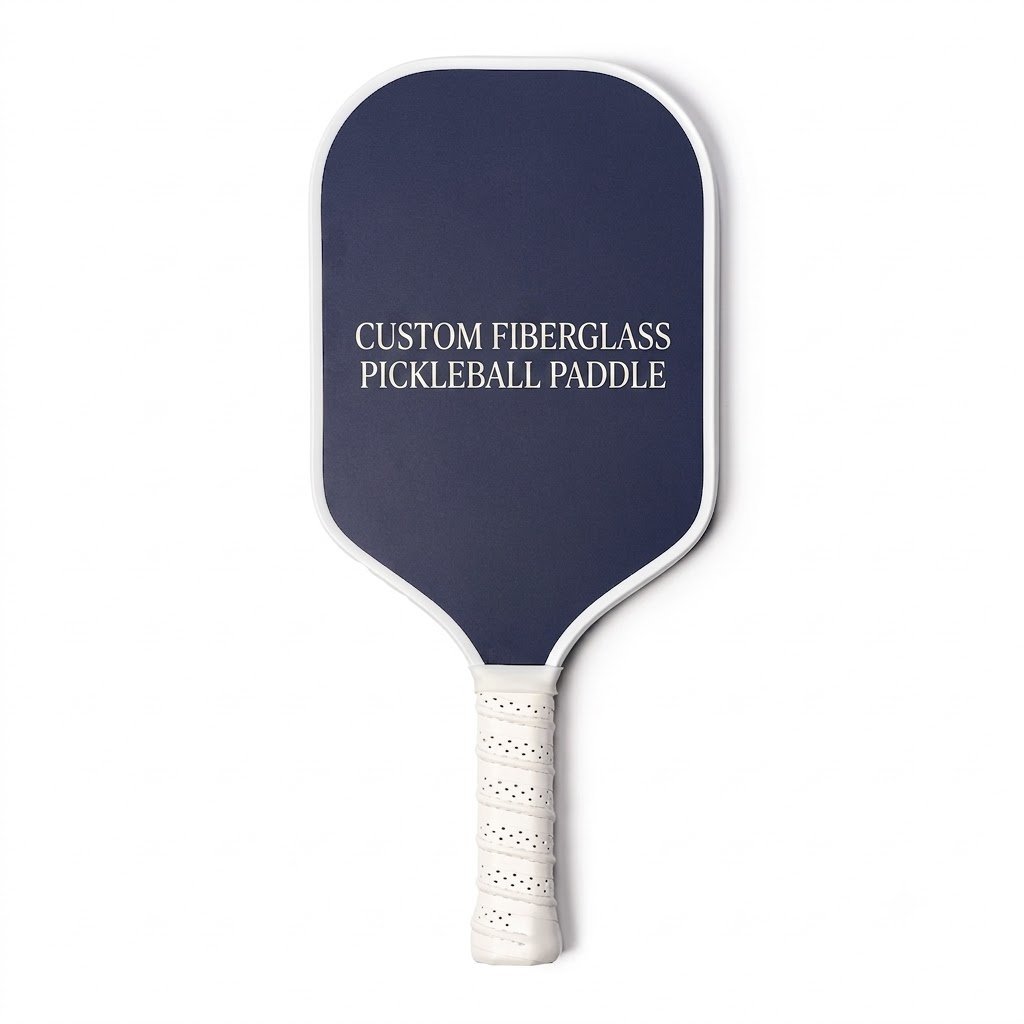
Fiberglass
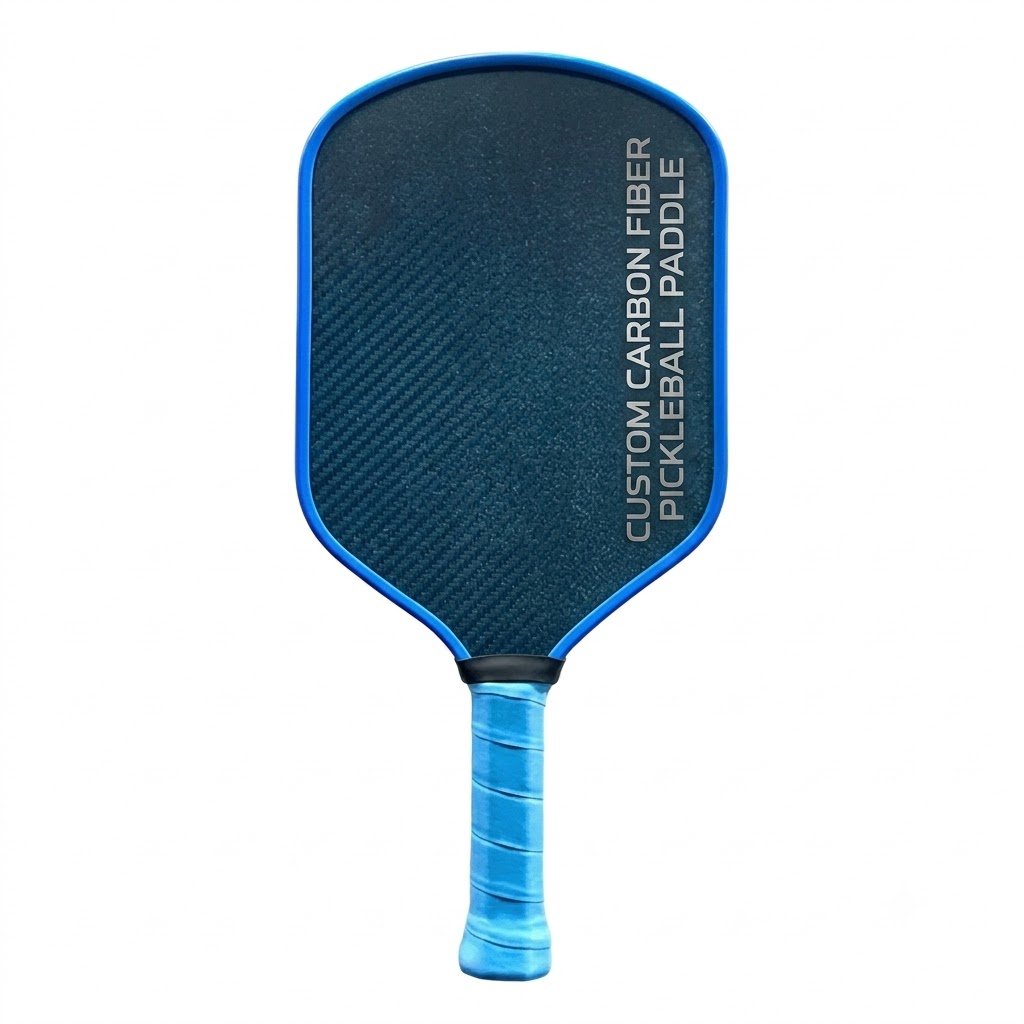
3k/12k/18k carbon fiber
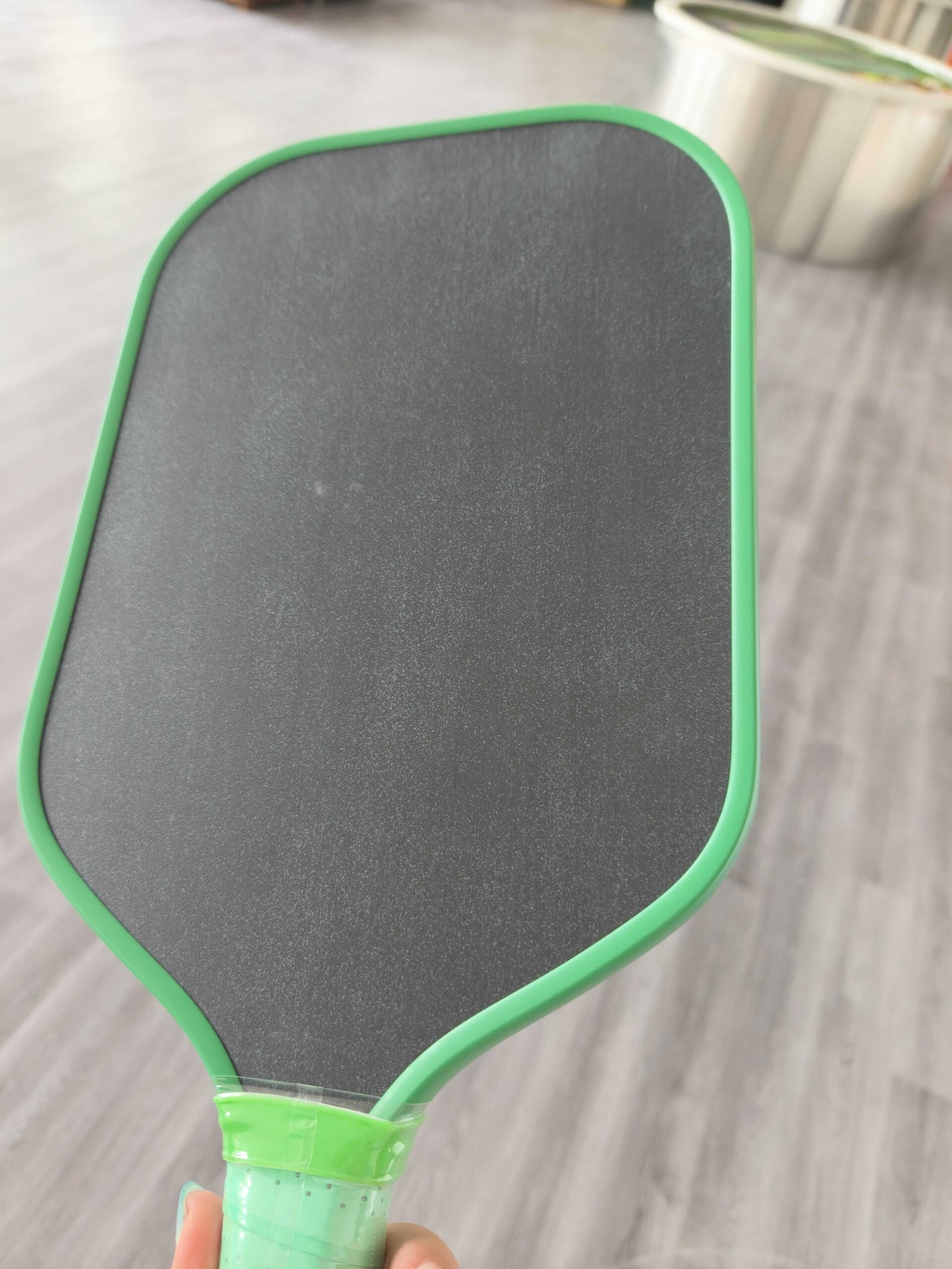
ceramic sand infused
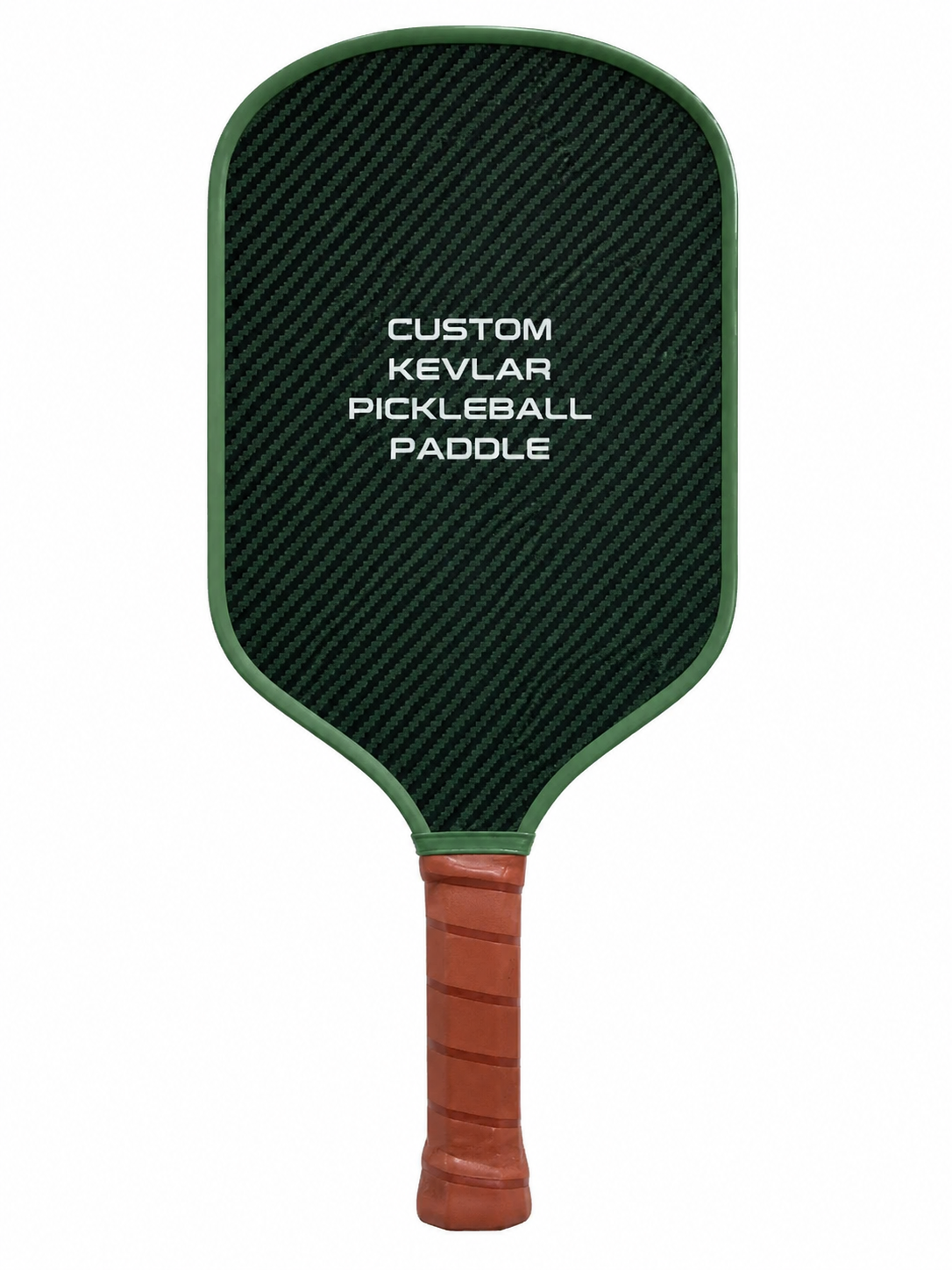
Kevlar
By Construction Method
| Method | Cost | Lead Time | Strength | Brand Moat | Capacity |
|---|---|---|---|---|---|
| Cold Pressed | Low | Fast (7-day sample) | Good | Low-moderate | 100,000 pcs/month |
| Thermoformed (Hot Press) | Higher | 10–15 day sample | Superior | High | 80,000 pcs/month |
| Unibody / Edgeless | Highest | Mold-based | Superior | Highest | On-demand |
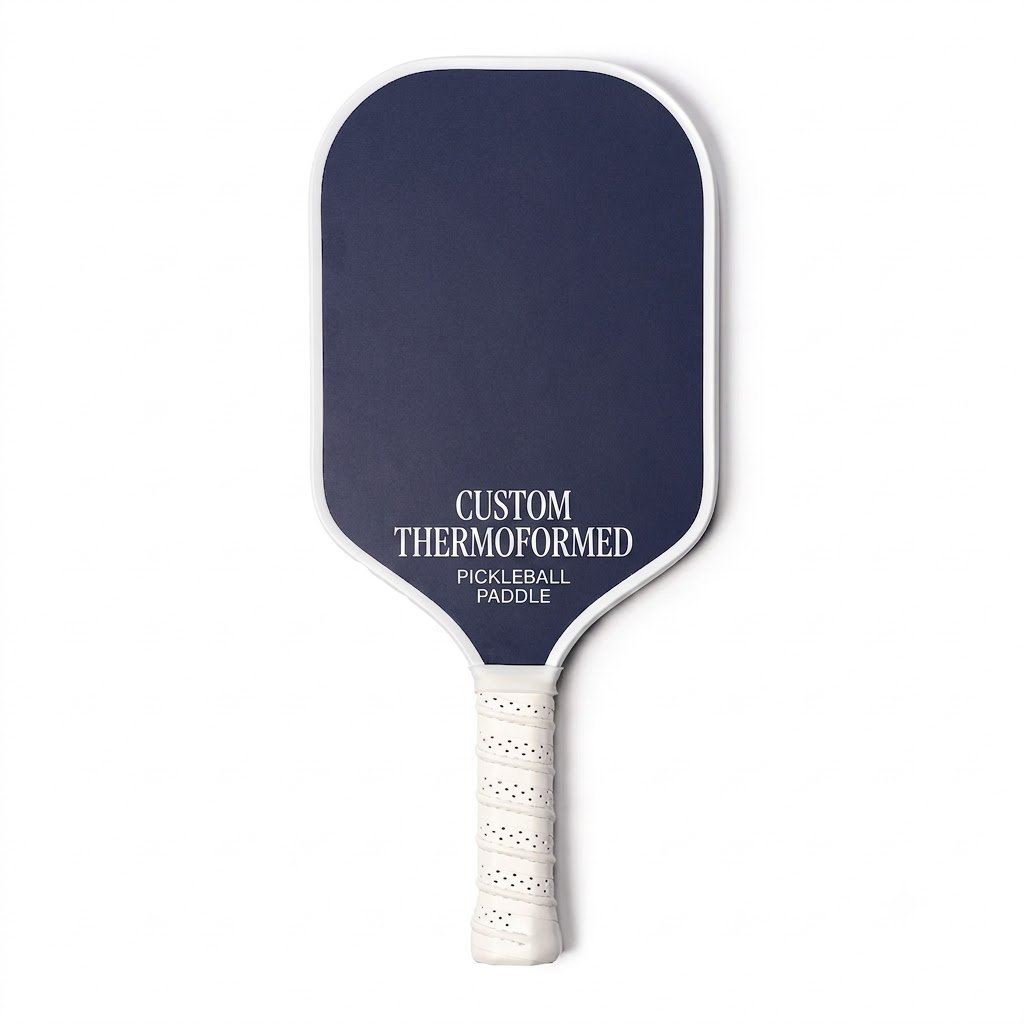
thermoformed/unibody
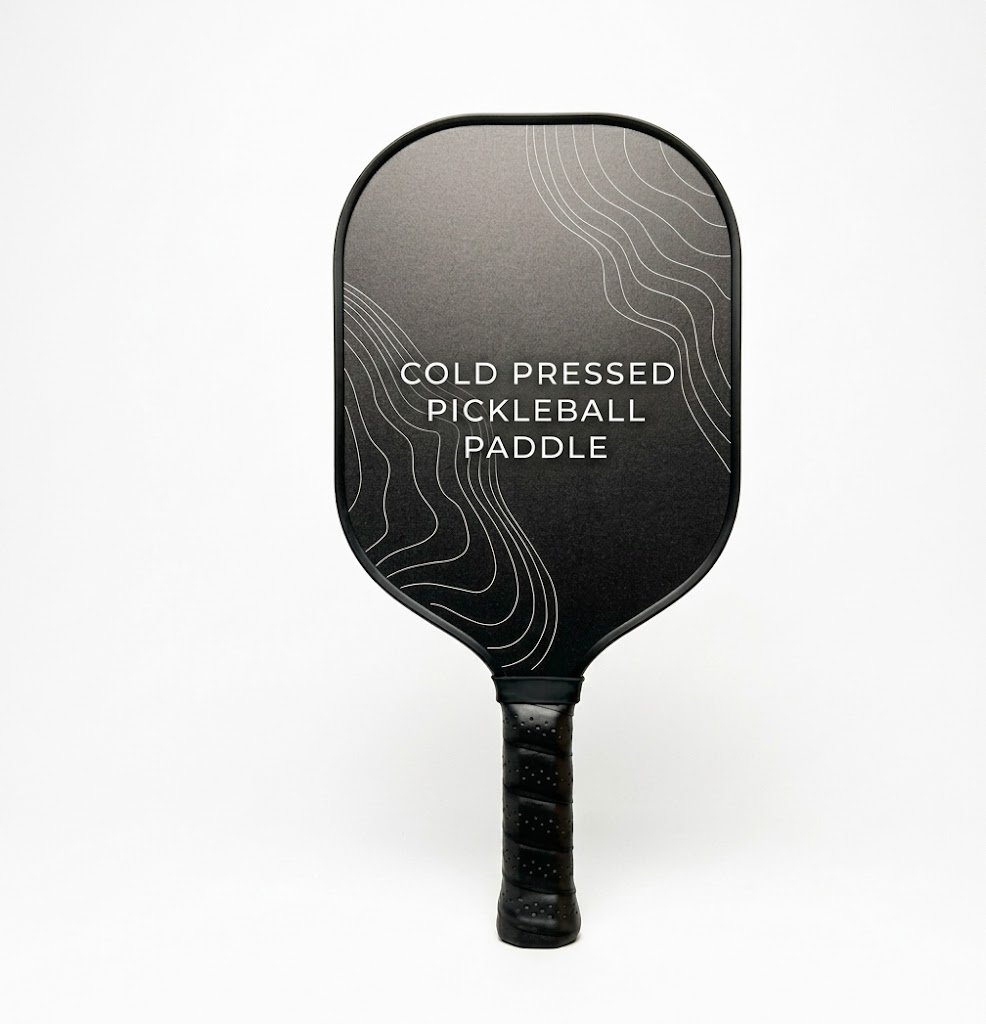
cold pressed
By Generation
| Generation | Cost | Lead Time | Strength | Brand Moq | Capacity |
|---|---|---|---|---|---|
| Gen 3 (PP honeycomb + EVA wall) | Moderate | 10-day sample | High | 200 pcs | 80,000 pcs/month |
| Gen 4 (PP honeycomb + throat foam) | Higher | 10-day sample | Very high | 200 pcs | 80,000 pcs/month |
| Gen 5 (EPP core + EVA wall) | Highest | 10–14 day sample | Highest | 200 pcs | 80,000 pcs/month |
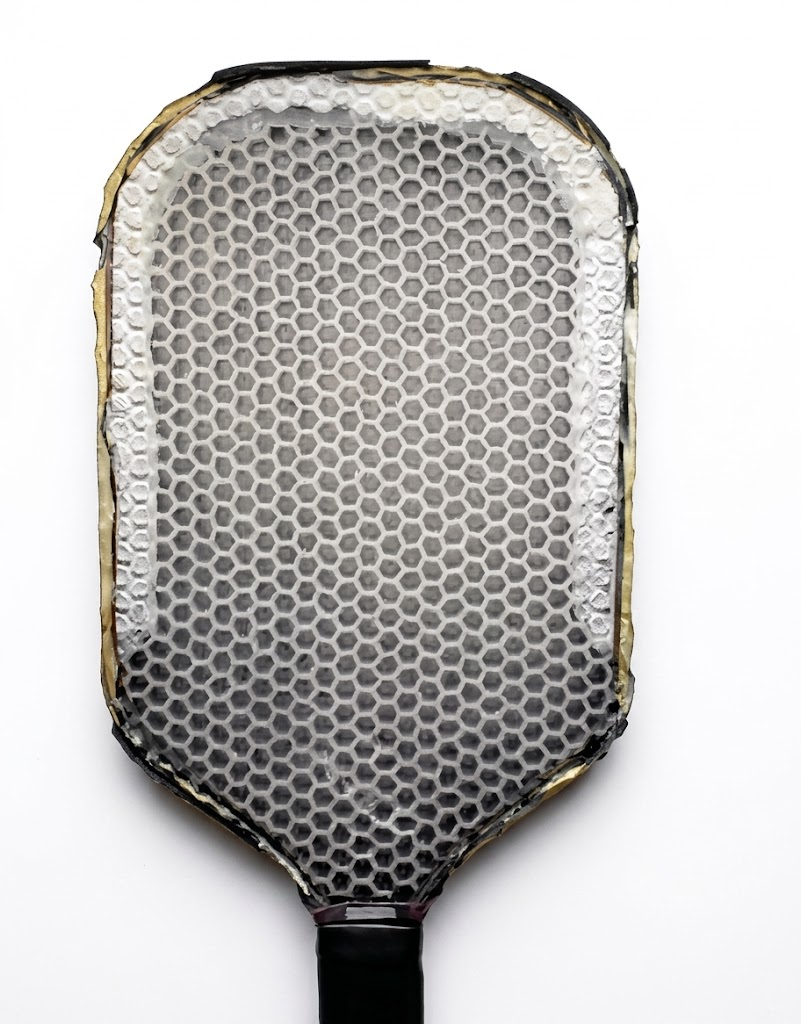
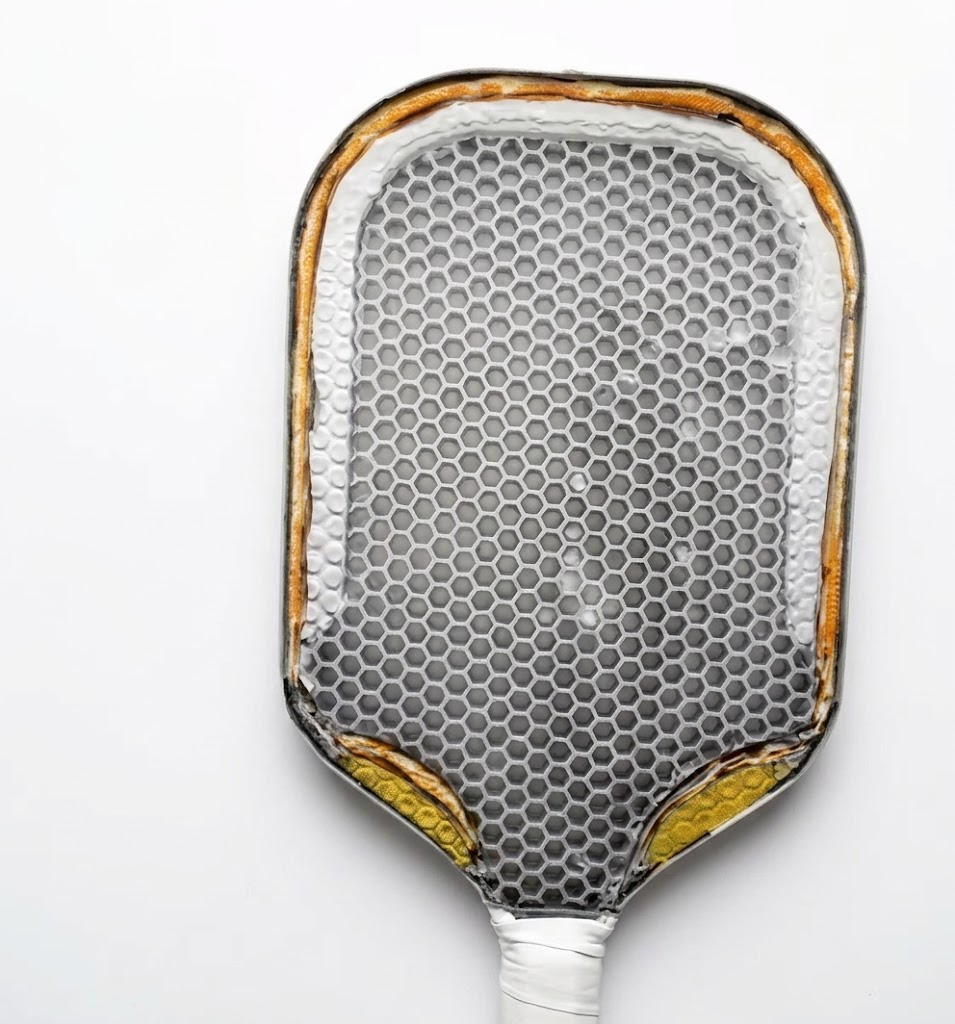
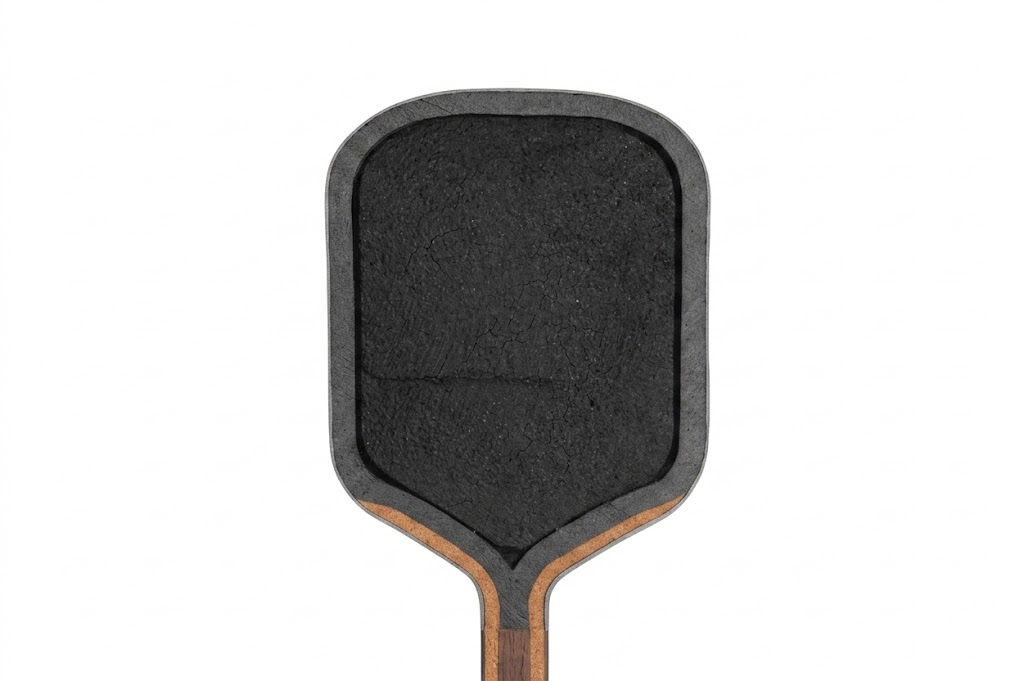
All three generations run on the same thermoforming line and share the same tolerance programs (standard ±5g, Precision ±2–3g) and USAP submission support.
Three Ready Product Tiers — Matched to Your Target Market
We don’t just build paddles — we recommend the right spec for your brand positioning, based on our in-house product recommendation framework.
| Tier | Target Player | Construction | Face & Treatment | Core Options | Recommended Models |
|---|---|---|---|---|---|
| Beginner / Entry-Level | New & recreational players, first-time brands, promotions | Cold Pressed | Fiberglass (smooth or spray-particle) | PP honeycomb / EPP | CP01, CP03 |
| Intermediate / Mid-Range | Club players & regular competitors | Thermoformed | Carbon fiber cloth weave (textured) | PP 2nd gen / EPP / MPP | P14A, P16, P22, P31 |
| Competitive / Pro-Tournament | Tournament & professional players, premium brands | Thermoformed | T700 carbon + diamond sand grit coating | PP 3rd/4th gen, EPP / MPP floating | P14A, P16, P22, P31 |
Tier highlights:
- Beginner — Most cost-effective, forgiving sweet spot, fast production, ideal for market testing and bulk promotional orders
- Intermediate — Superior feel and touch, balanced power-to-control, premium visible carbon weave, best value tier with strong margins
- Competitive — Tournament-grade USAPA-eligible performance, T700 maximum strength-to-weight, maximum spin, suspended core for reduced vibration, highest margin tier
Why Choose Us as Your Pickleball Paddle Manufacturer
9+ Years of Racket-Sports Manufacturing Experience
We have manufactured padel, pickleball, and beach tennis equipment for over 9 years. Our team combines deep technical expertise with modern manufacturing to meet the standards of professional athletes and recreational players alike.
55 Patents in Racket Technology
Patents cover frame construction, surface treatments, core structures, and manufacturing processes — a decade of innovation you benefit from the moment we start your project.
Dual Production: China (6,000 m²) + Vietnam (3,500 m²)
| Advantage | What It Means for You |
|---|---|
| Tariff flexibility | “Made in Vietnam” benefits ASEAN & EU markets; “Made in China” maximizes capacity |
| Supply-chain resilience | Dual sourcing protects your program against single-site disruption |
| Same quality standard | Both facilities produce to identical QC and process specs |
Low MOQ — 200 PCS
Start with 200 pcs per model for standard OEM configurations. Test a market before committing to scale — then grow with us through volume pricing.
12-Person R&D Team + University Partnership
Led by a professor with nearly 20 years of industry expertise, we continuously gather market feedback loops keep our R&D aligned with what players actually buy.
Short Lead Time — Samples in 7 Days
| Stage | Cold Press | Thermoformed |
|---|---|---|
| Sample | ~7 days | 10–15 days |
| Bulk (≤2,000 pcs) | ~30 days | 35–40 days |
Full OEM / ODM / OBM Capability
Manufacture your design (OEM), co-develop from scratch (ODM), or take ready-to-sell products under your brand (OBM) — one partner, complete product line including grips, edge guards, tapes, and packaging.
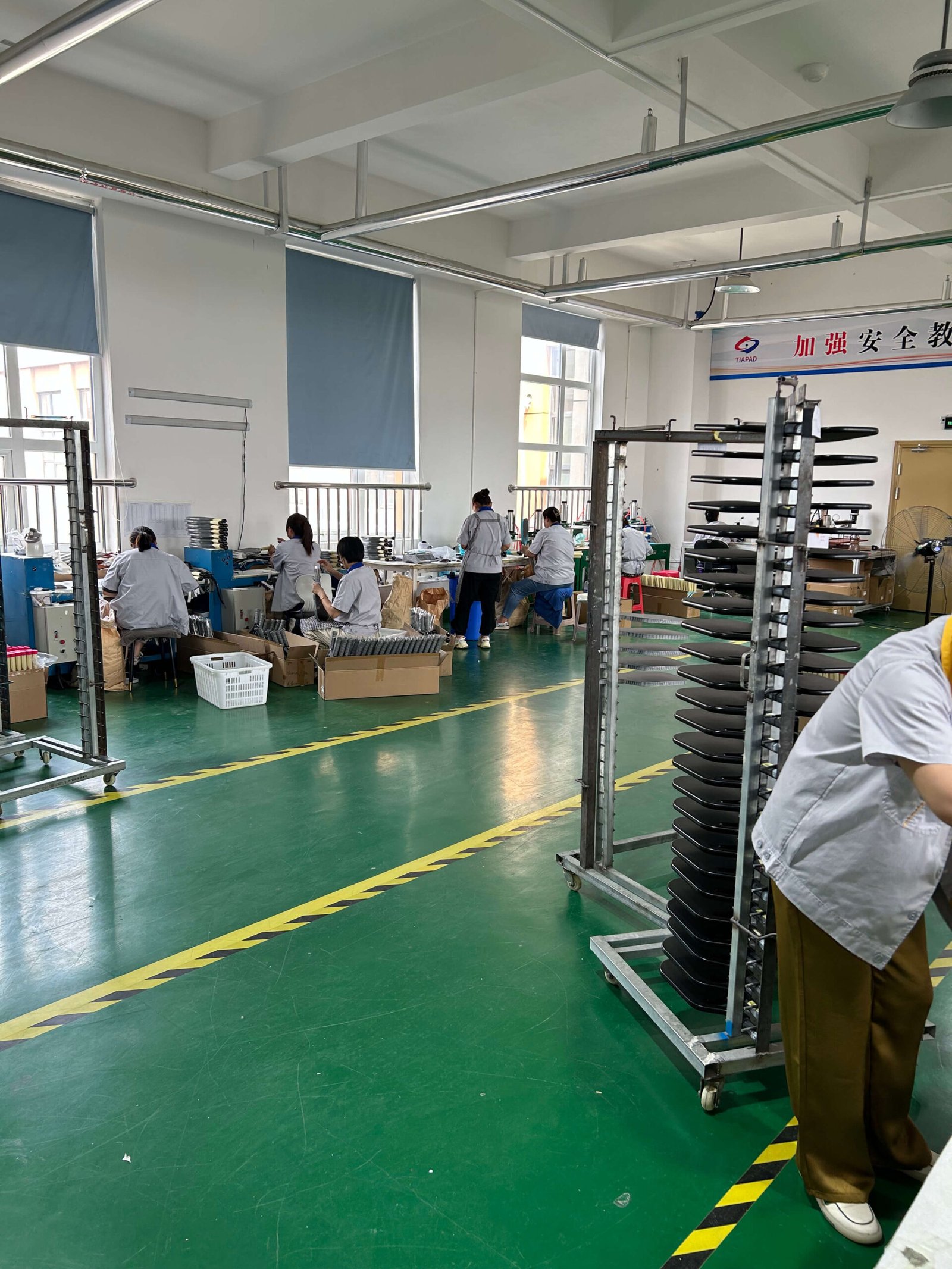
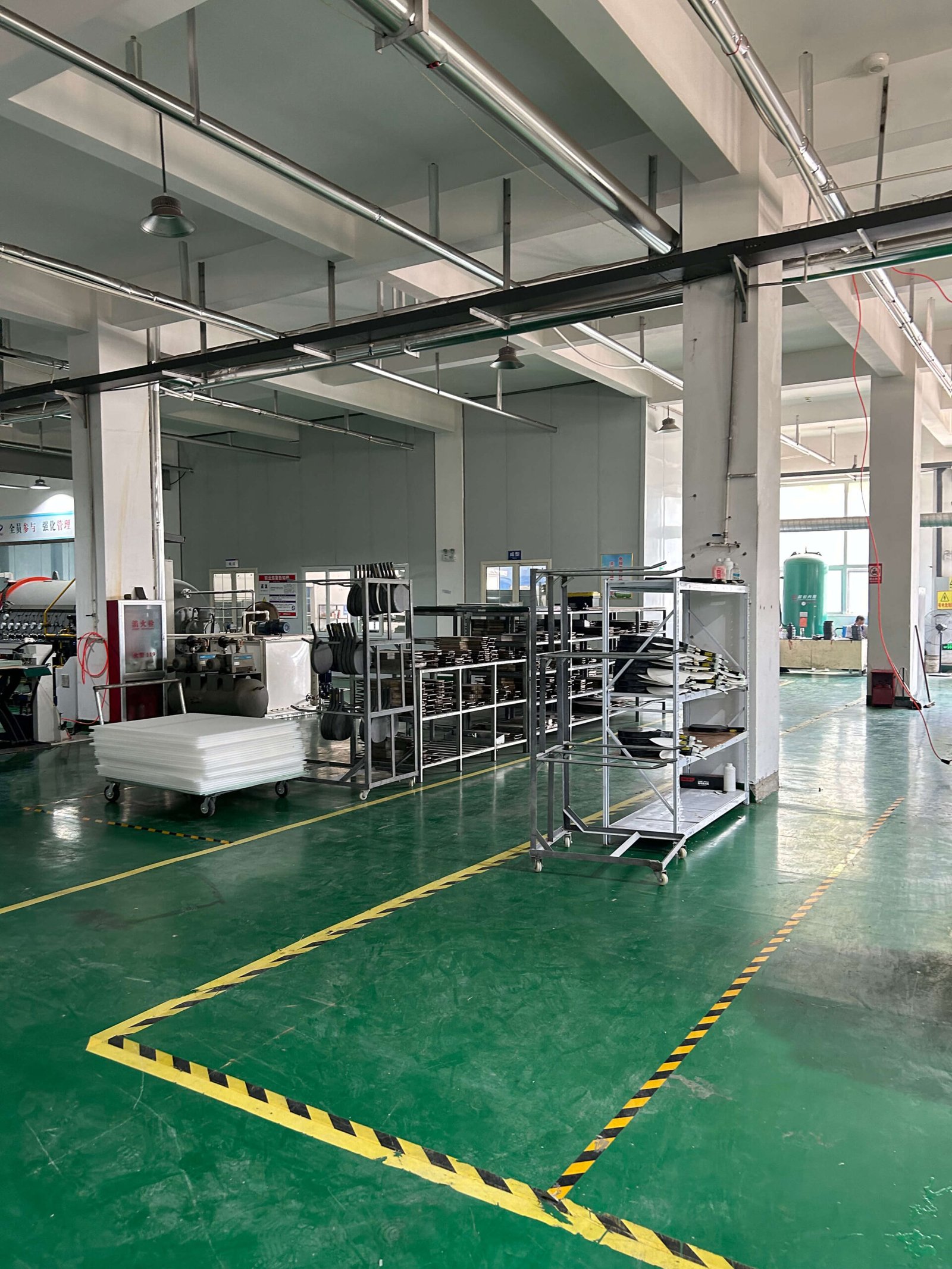
See How Our Pickleball Paddles Are Made
1. Material Preparation — Carbon fiber (T300/T700), fiberglass, or Kevlar face sheets cut to spec; cores (PP/EPP/MPP) prepared to thickness.
2. Layup — Face sheet + resin + core + resin + face sheet. Standard epoxy for fiberglass; toughened epoxy for carbon fiber.
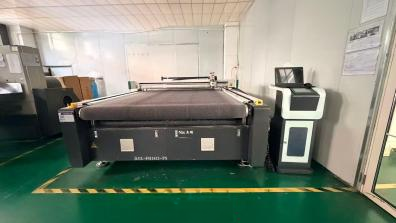
3. Cold Press — Room-temperature pressing (80–150 tons), 8–12 hour cure, then CNC cutting from dieline. Custom shapes need no mold — only a dieline file.
4. Thermoformed — Heat + high-pressure mold bonding creates a stronger, more uniform structure. Unibody edgeless construction available.
5. Surface Treatment — Smooth, spray-particle sandy surface, raw carbon cloth weave, or proprietary ceramic sand infused (2× friction durability).
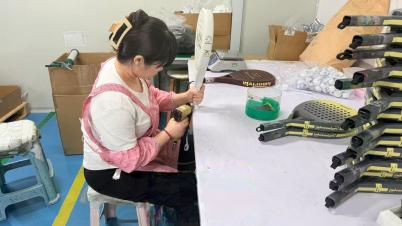
6. Assembly — PU-reinforced handle ( 101mm / 105mm / 108mm), edge guard, grip, bottom cap, silicone ring.
7. QC & Packaging — Multi-point inspection, PE bag + bubble wrap, export cartons.
Production standards we maintain:
- Cold press capacity: 100,000 pcs/month
- Thermoformed capacity: 80,000 pcs/month
- PU handle insert — eliminates the handle-breakage weak point common in cold press paddles
Testing Equipment That Supports Paddle Development
Our testing is aligned with USAPA / UPA-A technical requirements. We use the same categories of equipment as the governing organizations so your product ships certification-ready.
| Test | What It Verifies | Why It Matters to You |
|---|---|---|
| Size & Dimension Measurement | Compliance with max 24″ length + width, max 0.5″ thickness | USAPA / UPA-A eligibility |
| Surface Roughness Measurement | Texture consistency across the face | Consistent spin and grip |
| Reflection Test | Surface uniformity and gloss | Premium finish control |
| COF Fixture Test (Friction) | Friction retention over wear | Validates ceramic sand durability claims |
| PBCoR Testing Support | Ball cor performance | Tournament ball behavior |
| Paddle Deflection Test | Flex and stiffness | Power/control tuning per tier |
Competitive-tier paddles (T700 + diamond sand grit) are designed for USAPA eligibility. Compliance documentation provided; final certification is the brand’s responsibility.
How We Work on Your Pickleball Paddle Project
| Step | What Happens | Typical Timeline |
|---|---|---|
| 1. Initial Contact | Inquiry via email, WhatsApp, or trade platform | Day 0 |
| 2. Needs Assessment | Brand positioning, target players, budget, timeline | Day 1–3 |
| 3. Model Selection | OEM/ODM/OBM + tier recommendation | Day 3–5 |
| 4. Quotation | Unit price, MOQ, lead time, payment terms | Day 5–7 |
| 5. Sample Order | Playable prototype, 30% deposit | 7–15 days |
| 6. Testing & Revisions | Playtesting, weight/balance adjustments | 1–2 weeks |
| 7. Bulk Production | QC checkpoints at every stage | 30–40 days |
| 8. Delivery & After-Sales | FOB/CIF/DDP; reorder & new product development | Ongoing |
Payment terms: 30% T/T advance + 70% balance before shipment; L/C accepted for large orders; flexible terms for long-term partners.
Who Orders Custom Pickleball Paddles from Lixi Sports
| Customer Type | What They Need | Typical Volume | Our Solution |
|---|---|---|---|
| Pickleball Brands (new & established) | Quality consistency, new technology, reliable delivery | 1,000–5,000+ pcs | OEM/ODM full-service, tier-matched specs |
| Emerging Brands | Guidance on specs, fast market entry | 300–1,000 pcs | 7-day samples, low MOQ, design support |
| Sports Retailers & Distributors | Competitive pricing, private label, broad range | 500–3,000 pcs | OBM ready-to-sell options |
| Clubs & Training Academies | Custom branding, club-level pricing | 100–500 pcs | Reasonable MOQ, fast delivery |
| E-commerce Brands | Fast prototyping, Amazon-ready packaging | 300–1,000 pcs | UPC labels, retail packaging, fast turn |
| Corporate & Promotional Projects | Low cost, custom logo, bulk supply | 200–2,000+ pcs | Cold press fiberglass/PP combos |
Customization Checklist
| Item | Options Available |
|---|---|
| Shape | Standard, elongated, hybrid, custom (dieline or mold) |
| Size & Weight | Standard 225g ±5g; women’s 207–220g; junior 160–170g (35×17cm) |
| Thickness | 13 / 14 / 16 / 20 mm |
| Core | PP honeycomb, EPP, MPP, hybrid, floating |
| Face | Fiberglass, carbon, T700 raw carbon, 3K/12K/18K |
| Surface Treatment | Smooth, spray-particle, raw carbon, ceramic sand infused |
| Graphics | UV print, screen print, water transfer |
| Components | Edge guard, PU grip, bottom cap, silicone ring |
| Packaging | Retail box, hang tag, UPC, Amazon-ready, bulk carton |
About Us
LixiSports is a carbon fiber pickleball paddle manufacturer serving brands, distributors, and clubs worldwide through OEM, ODM, and OBM partnerships. With 9+ years of racket-sports experience, we handle everything from design to delivery under one roof.
Factory & Capacity
- Dual production bases: China (6,000 m²) + Vietnam (3,500 m²) for supply security and tariff flexibility
- 180,000 pcs/month combined capacity (cold press + thermoformed)
- Playable samples in 7 days; MOQ 200 pcs
Technology & R&D
- 55+ patents in racket technology
- In-house R&D team led by a professor with 20 years of experience, in partnership with a university composite research center
- Proprietary ceramic sand infused surface for 2× friction durability on raw carbon faces
Compliance & Quality
- USAP / UPA-A compliant designs with in-house testing
- Multi-point QC from layup to packaging
One Partner, Full Line
- Carbon fiber, fiberglass, and hybrid paddles; custom cores, grips, edge guards, and packaging
- From first sample to full-container orders — we’re your single source from concept to market.
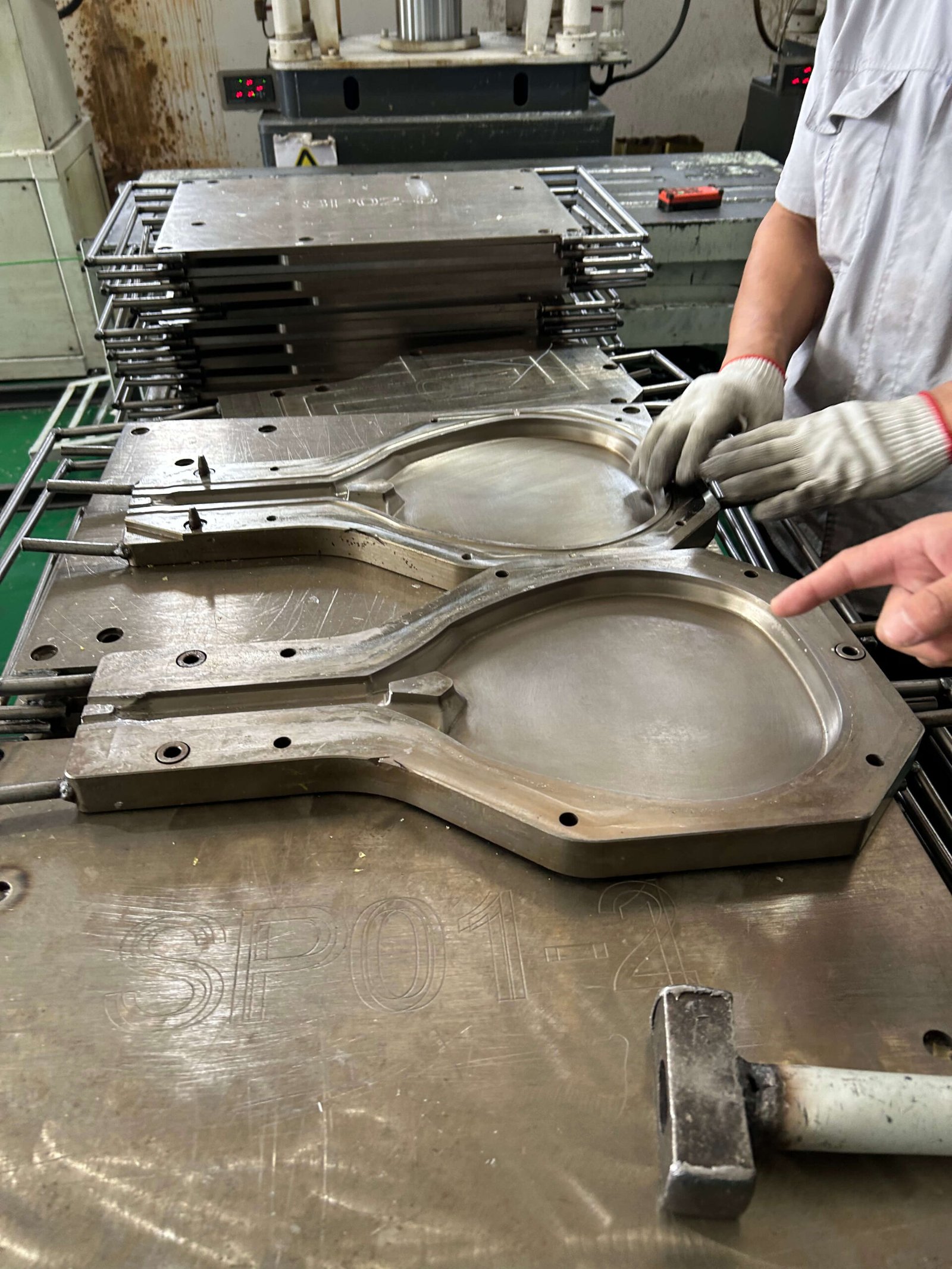
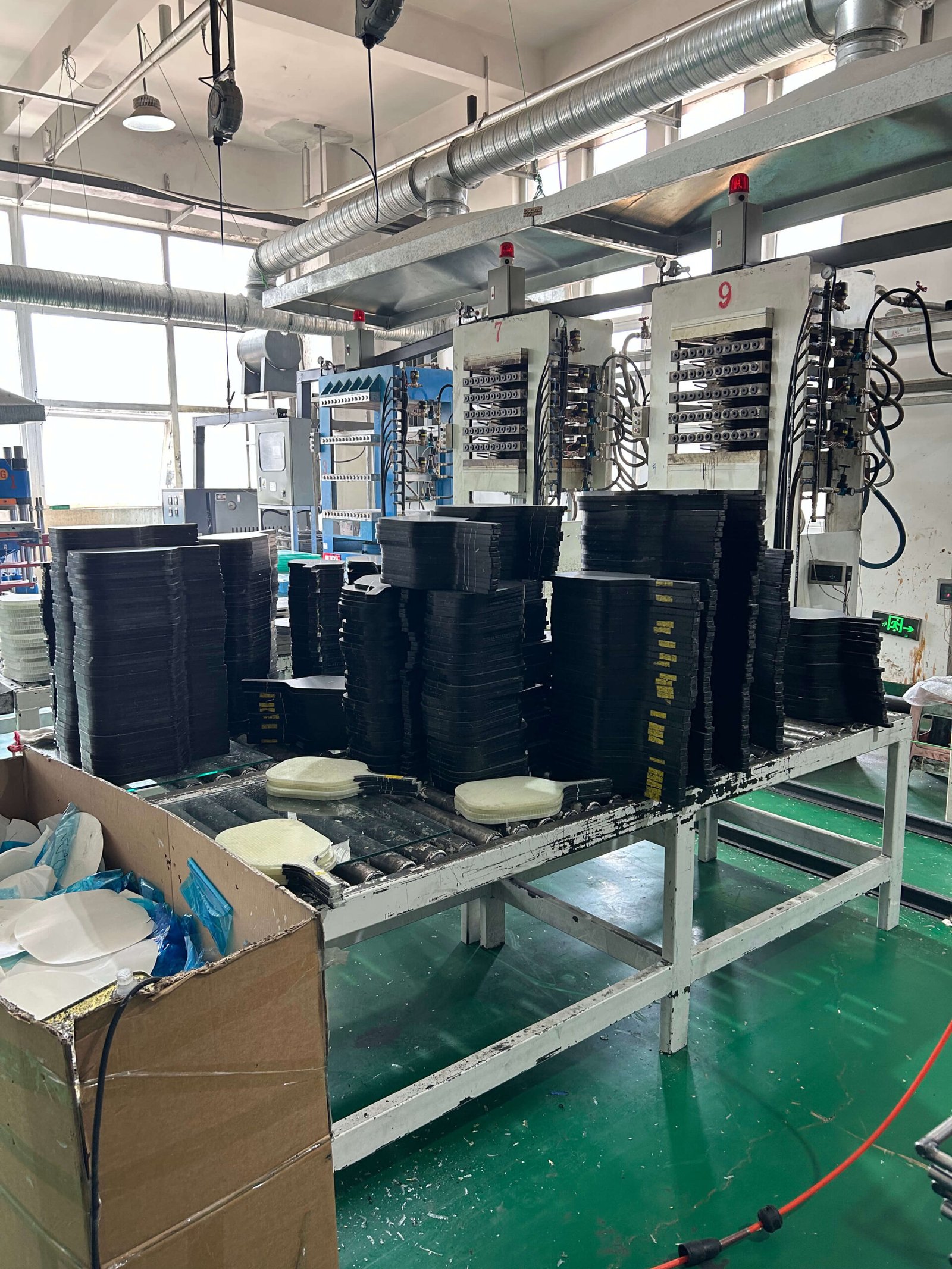
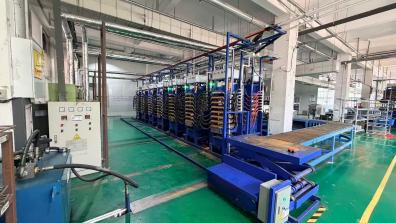
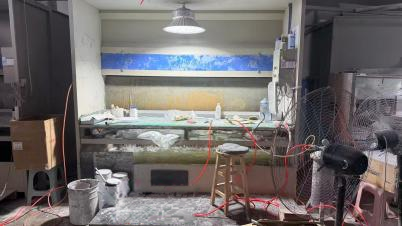
professional experiment equipment to ensure the right product is delivered to you
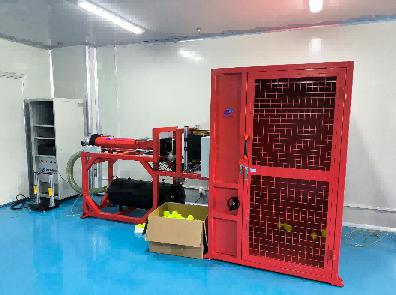
A PBCoR (Paddle/Ball Coefficient of Restitution) test machine is a specialized air cannon used to measure the power and “trampoline effect” of pickleball paddles. It launches a standardized ball at a stationary paddle—typically at 60 mph—while high-speed sensors and lasers calculate the inbound and outbound velocities. By determining the energy transfer ratio, the machine ensures paddles meet USA Pickleball (USAP) standards, preventing equipment from providing an unfair power advantage and maintaining the game’s focus on skill and strategy.
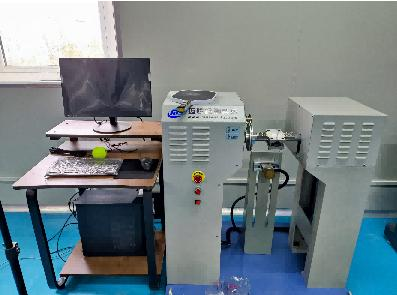
a fatigue test machine evaluates long-term durability by simulating thousands of high-velocity impacts. It repeatedly strikes the paddle face with a mechanical arm or ball launcher to identify structural weaknesses, such as core breakdown, delamination, or handle snapping. By mimicking months of intense play in a compressed timeframe, the machine ensures the paddle maintains its “pop” and structural integrity, guaranteeing the product meets quality standards before reaching the consumer.
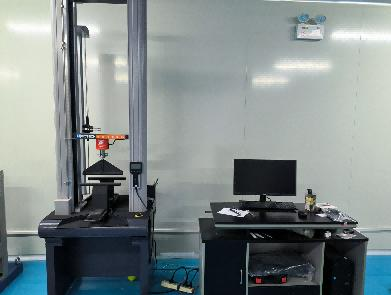
An impact test machine in a pickleball factory measures a paddle’s instantaneous resistance to extreme force. Unlike fatigue testing, which focuses on wear over time, this machine delivers high-energy strikes—often via a weighted pendulum or drop-weight system—to the paddle’s “sweet spot” and edges. It identifies the “break point” of the carbon fiber face or honeycomb core, ensuring the paddle won’t crack or shatter during high-intensity smashes, thereby meeting critical safety and performance benchmarks.
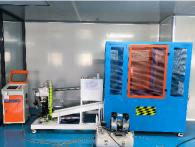
A cannon test machine is a high-precision air launcher used to evaluate both performance and durability. It fires standardized pickleballs at stationary paddles at speeds between 60 and 120 mph. By using high-speed cameras and sensors, engineers measure the Coefficient of Restitution (PBCoR) to ensure the “trampoline effect” stays within legal power limits. Additionally, “durability cannons” perform high-velocity stress tests to ensure the paddle’s core and surface can withstand thousands of impacts without structural failure.
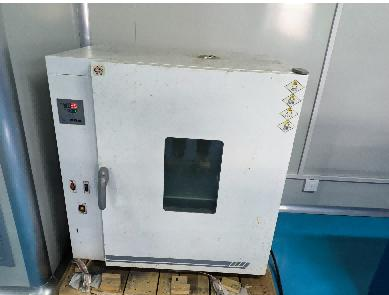
an oven machine (or curing oven) is critical for the thermoforming and bonding process. It uses controlled heat to cure the resins and adhesives that hold the carbon fiber layers and honeycomb core together. By maintaining precise temperatures, the oven ensures a permanent bond, prevents delamination, and hardens the paddle to its final structural rigidity. This thermal processing is essential for creating a consistent “pop” and long-lasting durability across every production batch.
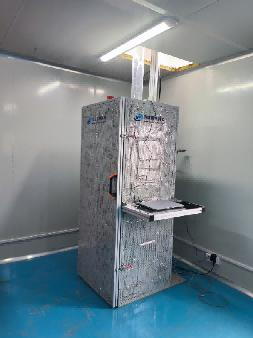
A silence test machine (often called an acoustic or sound testing station) measures the decibel levels and frequency of a paddle’s “pop.” In an anechoic chamber, automated mechanical arms strike the paddle while specialized microphones capture the sound profile. This ensures the paddle meets “Quiet Category” standards—essential for play in noise-sensitive residential communities. By analyzing the vibration modes, engineers can adjust core materials to shift loud, high-pitched tones to a more dampened, lower-frequency sound.
FAQ
01. What is the MOQ for custom pickleball paddles?
200 pcs per model for standard OEM configurations; typically 500 pcs for ODM/custom designs. We’re flexible — share your requirements.
02. Can you put my logo, graphics, and packaging on the paddle?
Yes. UV/screen/water-transfer graphics, custom edge guard, grip, bottom cap, silicone ring, retail box, hang tag, UPC, and Amazon-ready packaging.
03. I have my own idea. Can you help me turn it into a real paddle?
Yes. Cold press needs only a dieline file (no mold fee); thermoformed uses custom molds. Our R&D team optimizes core, face, and layup for your target players.
04. How long will it take to get a sample?
Cold press ~7 days; thermoformed 10–15 days. Sample cost and freight are charged upfront, then deducted from your first bulk order.
05. How long will bulk production take after I approve the sample?
~30 days cold press; 35–40 days thermoformed for orders up to 2,000 pcs, from deposit and design confirmation.
06. Can you help with USAPA and PBCoR related testing?
We maintain testing equipment aligned with USAPA standards and provide compliance documentation. Final certification is the brand’s responsibility.
07. What is the difference between cold pressed and thermoformed paddles?
Cold press: lower cost, faster, free-form shapes, 7-day samples. Thermoformed: heat + high-pressure molds, stronger bond, premium feel, higher brand moat.
08. What payment terms do you accept?
30% T/T advance + 70% before shipment; L/C for large orders; flexible terms for long-term partners.
09. Can I visit your factory?
Yes — we welcome visits to both China (6,000 m²) and Vietnam (3,500 m²) facilities. Video tours available for remote clients.
10. How do you ensure bulk orders match the approved sample?
Multi-point QC checkpoints at layup, pressing, cutting, assembly, and packaging; every batch inspected before shipment. Under-promise, over-deliver.