by Edward lee | Sep 9, 2026 | Blog
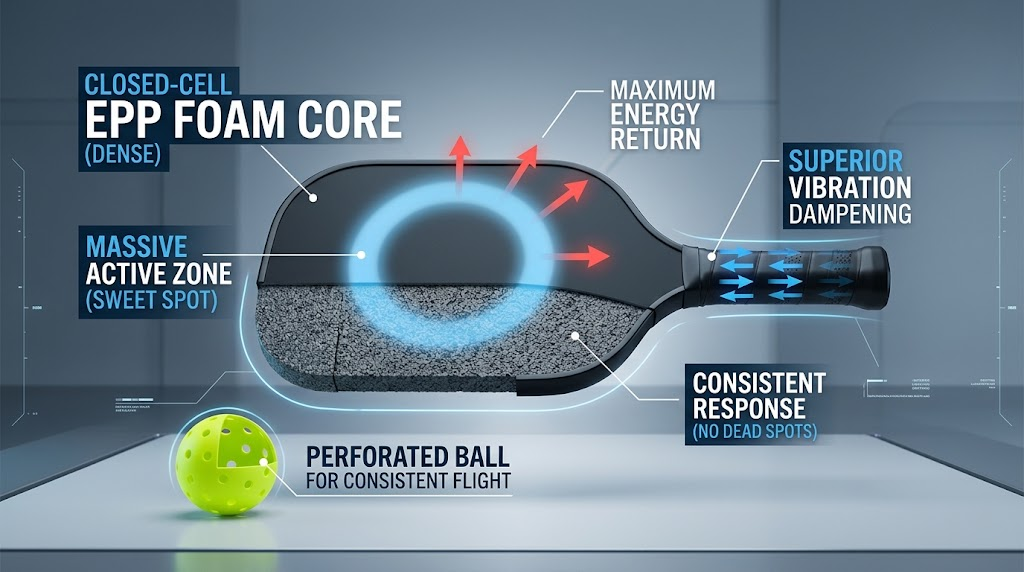
Key Takeaways EPP stands for expanded polypropylene. It is polypropylene plastic turned into a closed-cell bead foam. Closed-cell means each gas pocket is sealed. The foam does not absorb water, does not go flat, and returns to shape after impact. EPP is made by... 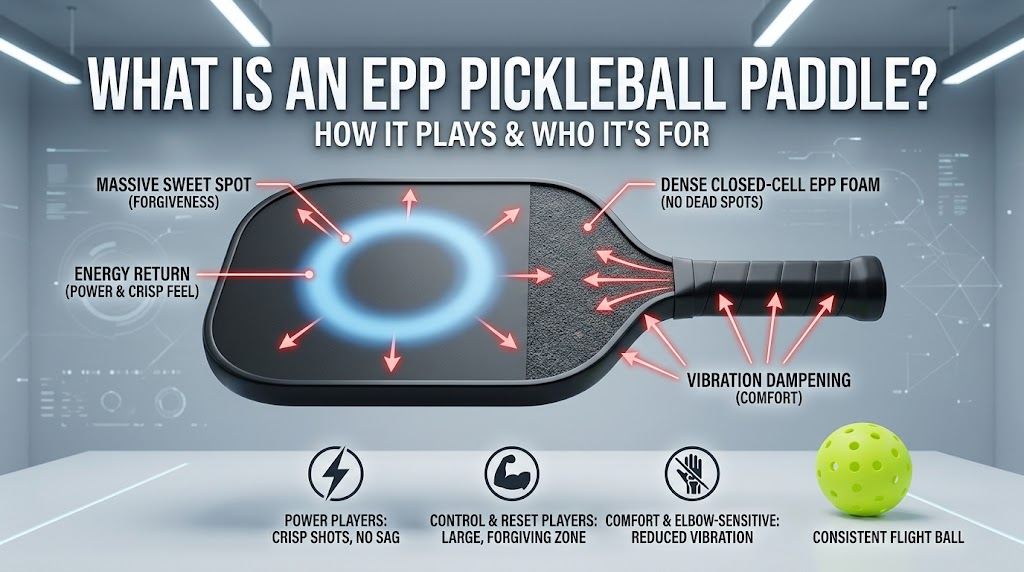
by Edward lee | Sep 9, 2026 | Blog
Key Takeaways EPP stands for expanded polypropylene — a closed-cell bead foam used as a paddle’s core. EPP is light, recovers its shape after impact, and does not crush the way traditional foams do. Bare EPP lacks edge rigidity. The fix in modern thermoformed... 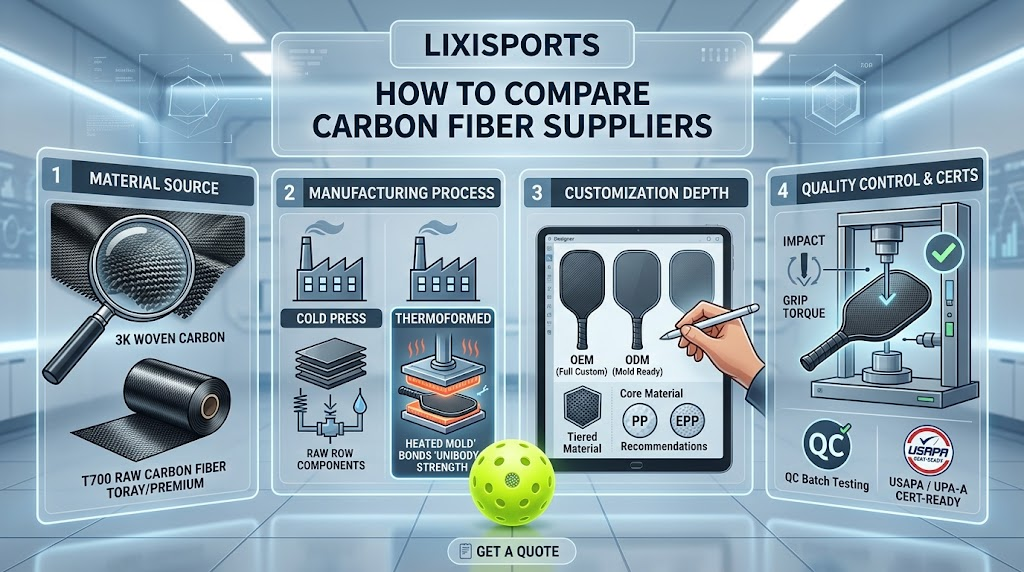
by Edward lee | Aug 27, 2026 | Blog
Summary: Most pickleabll paddle supplier comparisons fail because buyers compare the only number that is easy to get — unit price — and ignore the four numbers that actually decide the outcome. This guide gives you a four-axis framework (price, quality, MOQ, lead... 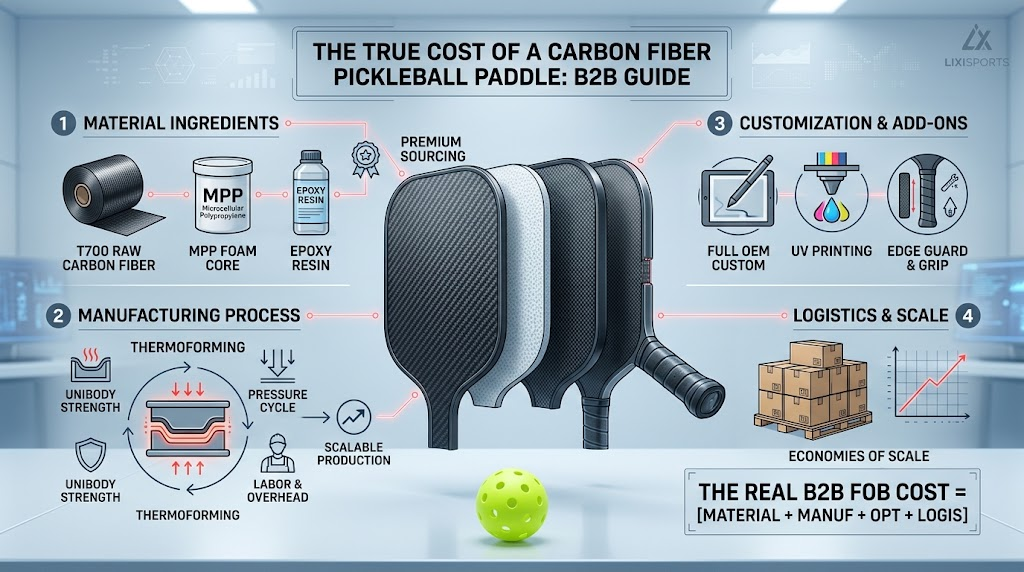
by Edward lee | Aug 27, 2026 | Blog
Summary: The factory price of a carbon fiber paddle is only the starting point. True cost adds volume-tier pricing, one-time tooling, USAP certification, QC, ocean freight, duties and tariffs, and a defect reserve. For a typical 2,000-unit order, landed cost runs... 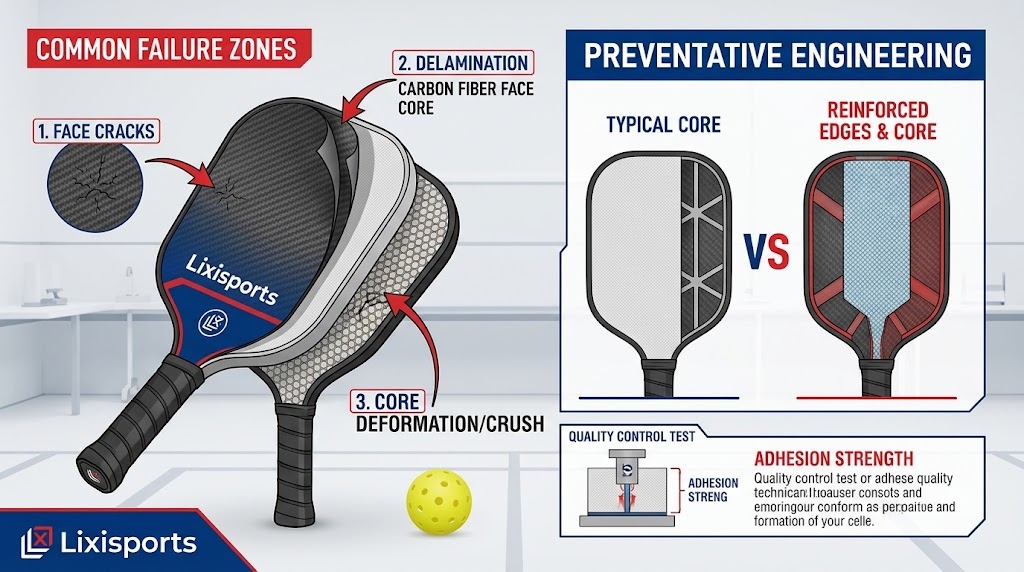
by Edward lee | Aug 27, 2026 | Blog
Summary: Cracks, delamination and print failure are the three defects that drive most paddle warranty claims. Each traces back to a specific production step — resin mixing, layup, pressing, surface prep, curing and printing. Cold-pressed and thermoformed builds fail...