by Edward lee | Oct 13, 2026 | Blog
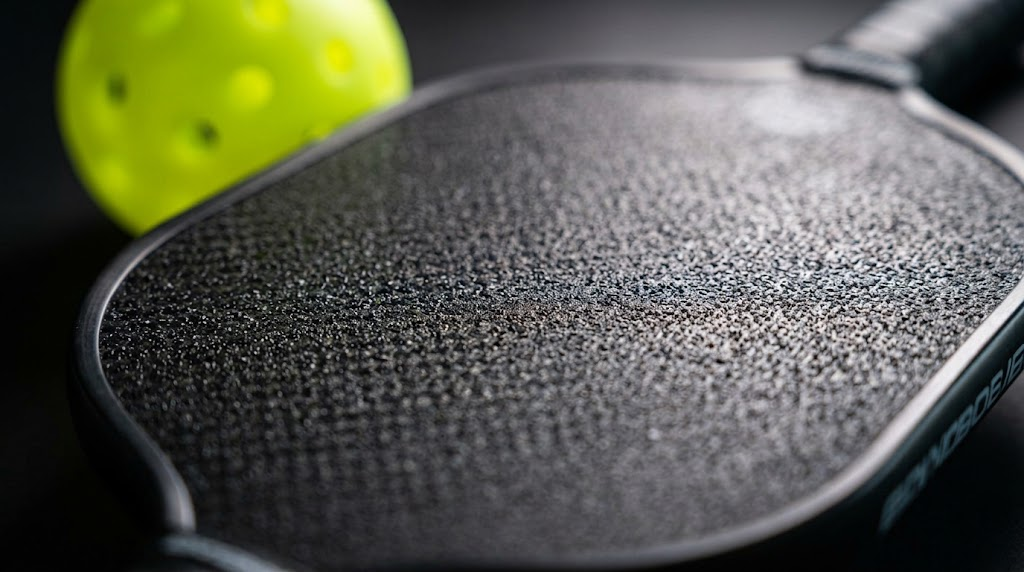
Durable grit is a paddle face that is built to keep its texture through repeated play. It combines hard particles with a resin system and a molding process that hold those particles in place. A paddle face fails in one of three ways, and the way it fails sets how long... 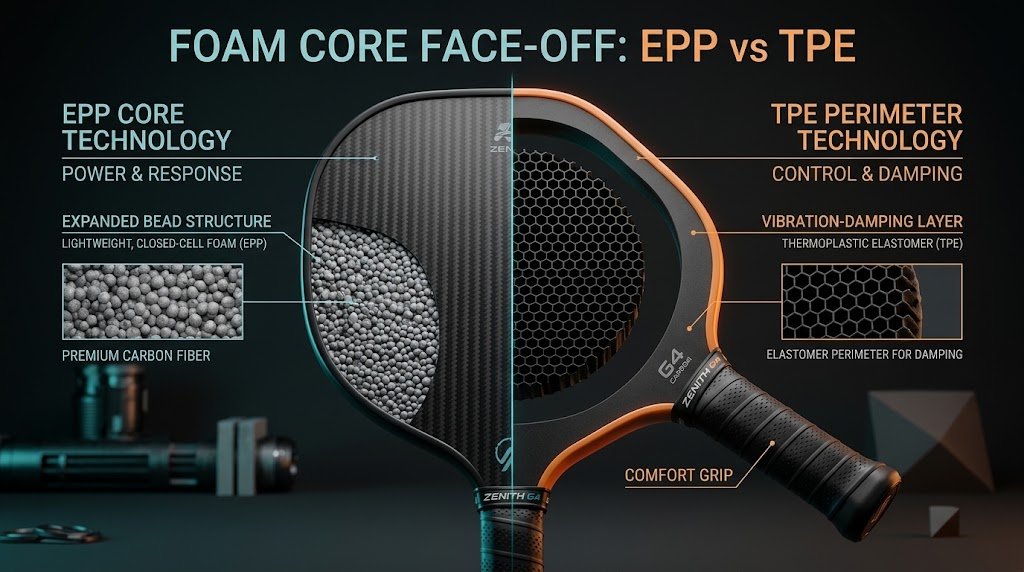
by Edward lee | Sep 28, 2026 | Blog
EPP and TPE rarely compete for the same job. EPP is almost always the answer when the foam is the whole core. TPE is almost always a ring or layer around a honeycomb core. Only a few brands sell a TPE full core — that niche is the only head-to-head matchup. So ask... 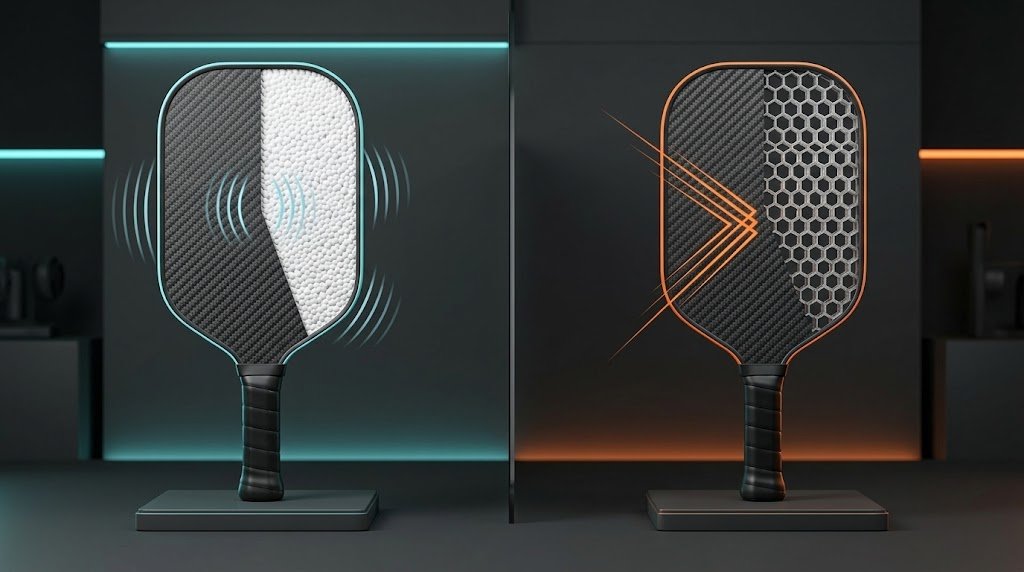
by Edward lee | Sep 28, 2026 | Blog
No core is better by default. EPP wins SKUs that sell comfort and durability; PP honeycomb wins SKUs that sell price and power. Picking the core before the SKU is how brands end up with the wrong paddle and a returns problem. Below: eight decision rows — weight, feel,... 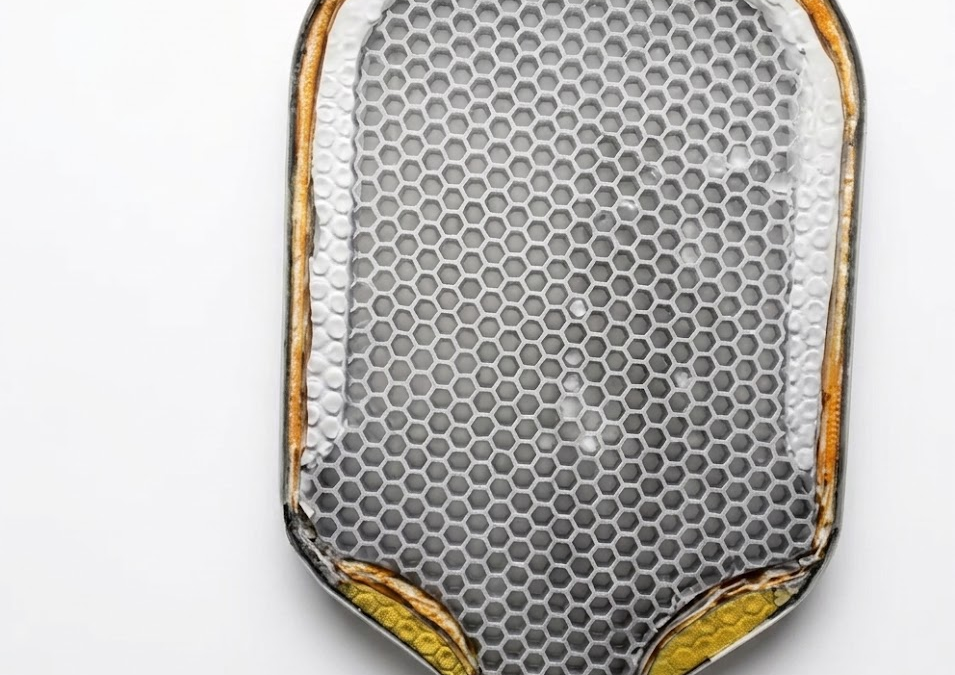
by Edward lee | Sep 28, 2026 | Blog
A Gen 4 paddle is a polypropylene honeycomb paddle with foam added in two places: the perimeter wall and the throat. The main core is still honeycomb, not solid foam. “Gen 4” is a brand-marketing label, not an official standard — no governing body defines... 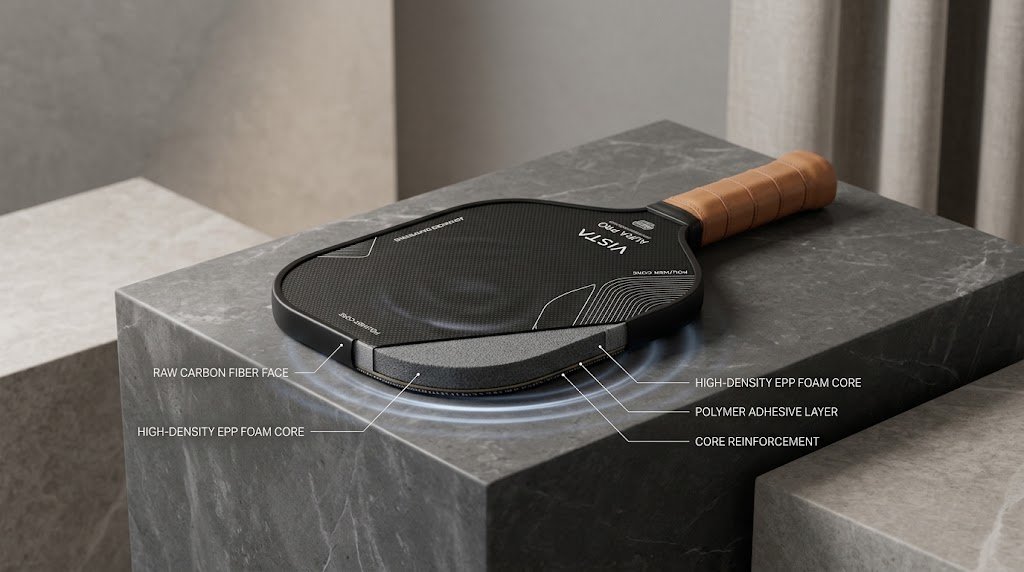
by Edward lee | Sep 16, 2026 | Blog
Short version: yes. EPP suits premium brands — but only if “premium” means durability, comfort, and consistent quality. It does not suit brands whose premium story is “the paddle this touring pro uses,” because almost no touring pro plays EPP...