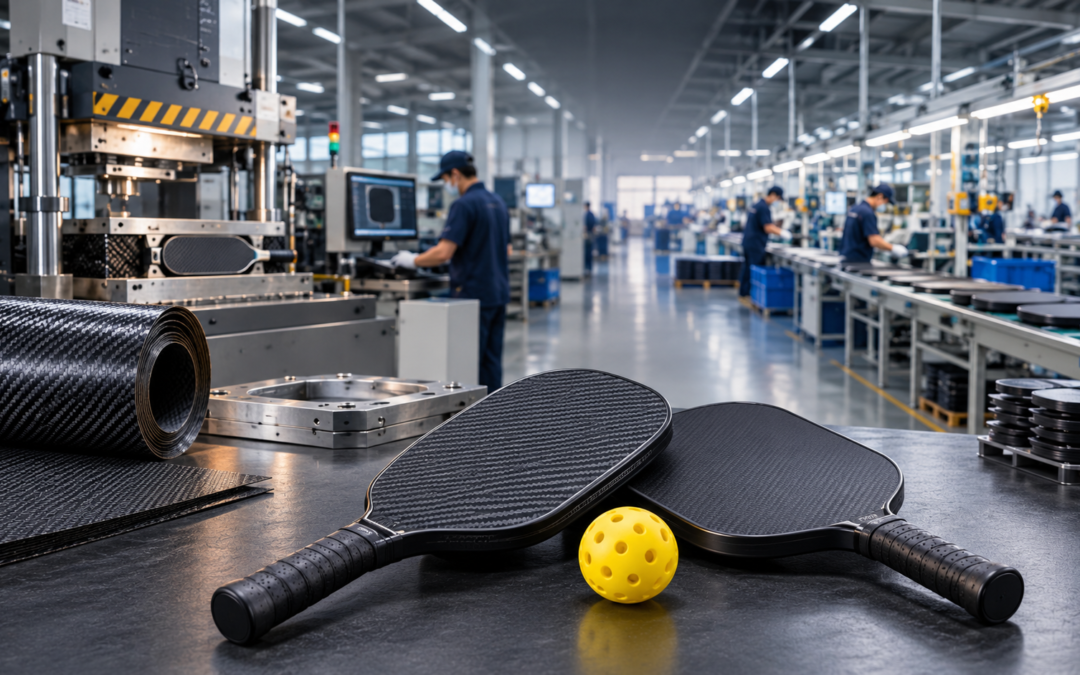
US brands choosing a production base for their next paddle line are working from tariff numbers that no longer describe 2026. In 2025 the US imposed extra duties under the International Emergency Economic Powers Act. The Supreme Court struck those duties down in February 2026. The USTR published a new set of proposed Section 301 rates on 25 November 2026. Those rates could reverse the comparison between the two production bases. This guide uses figures with visible source dates and separates current rules from the proposals that may replace them.
Two questions drive most of these decisions, and both have moved during 2026. The first question is what duty gets charged at the port. The second is how long a repeatable product takes to leave the line. A brand that built a landed-cost model in early 2025 is carrying tariff assumptions that a court has since voided. A brand that assumed Vietnam removed all US duties is ignoring a 12.5% charge that applies there as well.
This comparison is written for a brand choosing where to build. That brand already knows its construction. It does not address a first-time buyer who is still learning what a paddle is made of. Every number in this guide carries the date on which it was read. The text flags any figure that depends on a classification only a licensed broker can confirm.
The Duty Gap Left in 2026 Is 7.5 Points, Not 25
The old headline compared a 25% Section 301 charge on Chinese goods with very low rates on Vietnamese goods. That comparison no longer holds, because the layers underneath it changed on both sides during 2026. The whole stack has to be on the page before the remaining difference makes sense.
One published teardown of HTS 9506.91.00, a neighbouring sports-equipment line, was updated on 27 November 2026. The table shows how the two origins compare on that line. It separates the layers both countries pay from the charge that applies to China only.
| Duty layer | China | Vietnam | Applies to |
| Base duty | 4.6% | 4.6% | Both origins |
| Section 301 List 4A | 7.5% | None | China only |
| Section 301 forced labor | 12.5% | 12.5% | Both origins |
| Total | 24.6% | 17.1% | 7.5-point gap |
Both countries share the base duty and the forced-labor layer, so neither of those explains the gap. The 7.5-point difference is the List 4A charge that applies to China on this line. That forced-labor layer is the detail that most Vietnam comparisons leave out of the calculation.
A November 2026 import guide gives the same example across two other product lines. A Vietnamese shipment still paid roughly 29% on those same lines. The guide attributes that figure to the forced-labor duty, which covers Vietnam too. Vietnam lowers the duty bill on many goods, but it leaves the additional charges in place. Those charges were added across a wide set of origins rather than China alone.
One caution is needed before any of these figures reaches a cost model. The pair in the table belongs to line 9506.91.00, which covers general exercise equipment. A pickleball paddle is usually declared under a different line, and its rate depends on the exact 10-digit code. The example shows the shape of the stack and the size of the China-only layer that applies here. It does not set the rate on your own SKU.
The IEEPA Tariffs That Reshaped 2025 Are Gone
Your cost model may still contain a fentanyl tariff, and it may still carry a reciprocal tariff. Both belong to a tariff regime that a court ended nine months ago. On 20 February 2026 the Supreme Court issued a 6:3 ruling against the government. The case was Learning Resources against the Trump administration. The ruling found that the IEEPA does not authorise the president to impose duties of this kind.
Executive Order 14389, signed the same day, directed that the duties stop being collected. US Customs and Border Protection confirmed that collection stopped on 24 February 2026. The fentanyl tariff on Chinese goods peaked at 20% before the November 2025 truce cut it to 10%. A court then voided it entirely, and the reciprocal tariff programme was voided in the same decision.
American importers who paid those duties can seek refunds through the CBP CAPE process. CBP opened the first phase of refunds across the United States on 20 April 2026. A third phase began on 6 October 2026 for certain finally liquidated entries.
This is why a Vietnam comparison written in 2025 overstates the advantage. Its headline counted on an extra 20 points for China. That 20-point gap no longer exists as a charge on imports from either origin.
For a brand reviewing quotes today, one check is worth doing before you sign. Your broker can itemise every Chapter 99 line on a recent entry. Those lines should sit next to the ones on your cost sheet. A 2025-model IEEPA charge in your numbers means you are budgeting for a repealed duty.
A New Section 301 Proposal Could Reverse the Comparison in 2027
Just as the IEEPA duties cleared, a different route to tariffs appeared. On 25 November 2026 the USTR issued preliminary findings in a Section 301 investigation. The case concerns structural excess capacity across 14 of the 16 economies examined since March 2026. This Flexport briefing sets out the comment deadlines and country-by-country rates. The investigation also proposed exemptions for 2,121 product categories identified by eight-digit HS codes.
The table sets the proposed ceilings against the current example from the first section. Both columns come from figures read on 27 November 2026. The current row uses a neighbouring line, so it shows scale rather than your own SKU rate.
| Item | China | Vietnam |
| Current example, HTS 9506.91.00 | 24.6% | 17.1% |
| USTR proposed ceiling, 25 Nov 2026 | 20% | 35% |
| Rate if a trade deal is reached | Not stated | 20% |
| Proposed ceiling in force on 27 Nov 2026 | No | No |
| Final decision due | 11 Mar 2027 | 11 Mar 2027 |
Read the proposed row again, because it inverts the usual sourcing story. Under the proposal, the higher ceiling sits with Vietnam rather than China. That reverses the assumption built into most 2025 sourcing models.
None of those proposed rates has taken effect under United States law. The written comment period closes in Washington on 5 January 2027. Hearings start on 25 January 2027. The final rate could land well below either ceiling in the table. That is especially likely if Vietnam and the US conclude a trade agreement in the meantime. Vietnam’s Ministry of Industry and Trade said on 25 November that the figures were a proposal. The ministry noted that none of the figures had been implemented.
A brand should treat this as a planning range rather than a reason to move a line this quarter. The 35% ceiling could be applied without a deal, and Vietnam would then lose its duty advantage. That advantage justifies most of the case for a second base. If a 20% deal rate were applied instead, the duty gap would narrow but would still be there. Neither number can support a firm 2027 budget at this stage. Any supplier promising certainty about those rates is guessing.
The HTS Line You Declare Decides the Number You Pay
The classification question matters more than the country question in this comparison. CBP rulings on pickleball-related products have used more than one line. The table shows the three lines that appear most often in published sources.
| HTS line | What it covers | General rate | Where it appears |
| 9506.99.6080 | Paddle set, general line under 9506 | 4% | 2025 CBP ruling |
| 9506.59.80.60 | Tennis, badminton or similar rackets | 4% | Other published references |
| 9506.91.00 | General exercise equipment | 4.6% base duty | Published duty tables |
These three lines carry different additional duties once Chapter 99 is applied. The Section 301 List 4A charge produced the 7.5-point gap. It attaches to specific subheadings and origins rather than to a whole chapter. A paddle declared under one line may attract a charge that a neighbouring line avoids. The Chapter 99 overlays are what change the landed cost, and they move with the code.
There is also a wrong-classification trap that deserves to be named here. Some suppliers have tried to declare carbon-fibre paddles under Chapter 39 composite-panel codes. The aim of that declaration was to escape the sports-equipment duties. Customs classifies the article by what it is and what it does. The tariff line follows the article itself, so the face material has no say in the classification. A paddle with a T700 carbon face sits in Chapter 95. A paddle with a wood face sits in the same chapter. A misdeclaration that lowers a duty today becomes a penalty and a seizure risk later.
One formal step removes most of this uncertainty for a brand. A binding ruling request under 19 CFR Part 177 can settle the classification. The request has to include the actual sample and the full specification. A broker can also pull the CROSS letters that describe the closest products. Those letters show which tariff line each similar product used. A supplier may quote a landed cost without naming a 10-digit code. Request the code before you compare one price with another.
Sample and Bulk Clocks Run Longer Outside China
Lead time is the second place where the two bases differ in a way that shows up on a launch calendar. The figures below combine our own clock with the ranges published in 2026 sourcing guides. All of those guides were read on 27 November 2026.
| Source and build | Sample clock | Bulk or production clock |
| Our Shenzhen plant, fibreglass and EVA | 10 to 15 days | About 35 days under 2,000 pieces |
| Guide, premium thermoformed | 7 to 14 days | Not stated |
| Guide, mid-range hot-pressed | 10 to 18 days | Not stated |
| Guide, budget hot-pressed | 14 to 30 days | Not stated |
| Guide, China by origin | Not stated | 20 to 45 days |
| Guide, custom tooling and approval | Not stated | 30 to 45 days |
| Guide, Vietnam by origin | 45 to 60 days for non-China samples | 30 to 60 days |
The table puts Vietnam about 15 days behind China at the sample stage. That gap can stretch much further on a first production order. Longer transit to the US West Coast adds calendar days after the goods leave the factory. If your launch date is fixed by a retail season, those days come out of your development window. They are not absorbed by slack inside the factory. The detail behind what sets the clock on a custom paddle order matters more than the headline range.
The clock itself is only partly a question of factory speed. It also reflects how close the factory sits to its own raw inputs. A sample can need a face cloth, a core block and an edge guard. If all three ship in from a third country, the sample waits on three deliveries before pressing can start. That waiting is the mechanism behind most of the difference. It is worth asking about directly when you compare two quotes.
Materials and Molds Sit Closer to the Line in China
The input chain is shorter in China for structural reasons that have little to do with effort. A composite paddle pulls in prepreg carbon fabric, a honeycomb or foam core, resin, edge guards and a grip wrap. The table shows where those inputs come from in each base.
| Input | China | Vietnam |
| Prepreg carbon fabric | Multiple qualified sources | Supply base still expanding |
| PP honeycomb or foam core | Short replenishment cycles | Narrower qualified supplier range |
| Resin, edge guards, grip wrap | Local clusters near the press | Some inputs still imported |
Tooling follows much the same pattern as the raw materials do. A mold change is faster when the mold shop and the press share an industrial cluster. A new first-article approval moves faster for the same reason. This is where a design gets expensive once the order scales up. A face material can work at 300 pieces and behave differently at 3,000. The fix often requires a new plate and a fresh approval run. That is when most programmes need their supplier to move quickly.
For a brand running a private-label line, the practical consequence is how many changes you can afford. A grippier face for one retailer is easy to put into a spec. A softer version of the same shape for another is just as easy. That works when the grit grade and the resin batch are controlled at the plant. They become a project when each change needs a new supplier qualification. A scoring framework for that flexibility sits in how buyers compare paddle suppliers on four numbers.
We mix the grit into the resin before the layup step. We also hold the tooling and the quality system for that process. Both the tooling and the quality system sit in one plant. That is the practical difference between two quite different sourcing setups. The first setup is a paddle manufacturer running tooling and QC in house. The other setup coordinates a set of unrelated vendors across a national border. It matters most when the specification changes after the first sample.
Lower Wages Do Not Automatically Mean a Lower Unit Cost
The wage comparison is real and it is also the smallest useful number here. A sourcing guide read on 27 November 2026 gives the figures below. They describe general manufacturing rather than paddle lines specifically.
| Published 2026 figure | Value | Applies to |
| Factory labour in China | USD 5 to 8 per hour | General manufacturing |
| Factory labour in Vietnam | USD 2.5 to 4 per hour | General manufacturing |
| Non-China production premium | 30 to 50% above a China quote | Several 2026 sourcing guides |
Those wage figures leave out the materials that go into a composite paddle. Materials and tooling dominate the cost of a finished paddle. Labour is a smaller share of that cost than the wage gap suggests. Higher Chinese wages come with higher automation and higher throughput. The cost per finished paddle can stay competitive on that same basis. That holds true even before duties enter the calculation.
The premium in the table has little to do with wages. It reflects a smaller supplier base and longer changeover cycles at the new plant. It also reflects the cost of qualifying inputs a China-based line buys locally. That published premium is a range drawn from several sourcing guides rather than a firm quote from our factory. Your own number depends on the build, the order size and the resin grade you choose.
The method that holds up starts with the same bill of materials in both places. The construction and the quality standard should stay identical in both cases. Then add duty, freight and the cost of a first-article approval. The duty line should come from a recent entry for that origin and code. A country-wide average hides the charges that matter here.
The Switch Carries Costs That Never Appear on a Quote
Moving a production line involves far more than moving an order. A brand can qualify a design in China and then place that same design in Vietnam. That transfer carries costs a unit-price table hides. A 2026 sourcing guide names four of them, each with a direct cost and a schedule cost.
| Transfer cost | What the brand has to do | Effect on the schedule |
| New tooling and re-validation | Cut molds and test them on a press | Delays first article |
| Core and face re-qualification | Re-test bond strength and batch consistency | Delays material sign-off |
| Operator training | Teach the build to a line new to it | Delays stable output |
| New logistics plan | Cover the longer transit lane | Raises safety stock |
A change of supplier changes the resin batch behind the face. That can happen even when the two written spec sheets look identical. Thermoforming and surface-coating quality depend heavily on operator practice. They depend on practice as much as they depend on the equipment. The longer lane raises the safety stock you need to hold. That ties up working capital before a single paddle has shipped.
There is a second-order effect that is easy to miss in a duty calculation. When freight takes longer, you have to place orders much further ahead. Ordering further ahead means carrying more inventory of a single model. That model may change its face specification before the next retail season. The duty saving from a second production base is real and measurable in the duty line. It arrives with every shipment and the working-capital cost arrives on every reorder. Both of those costs belong in the same landed-cost comparison.
Some sourcing guides now offer the same design across two separate plants. They remove part of that transfer cost for the brand. The tooling standard and the quality system are shared across both plants. It cannot remove the need for material re-qualification at the new plant. It cannot shorten the longer freight lane to the West Coast. A supplier proposing a second base should answer one question in writing. The question is which of these four items the supplier absorbs. All of the remaining items land on your own company cost sheet. The answer tells you more than the headline duty rate.
One Spec, Two Bases: How Dual-Sourcing Actually Works
Most sourcing guides treat a second base as a new supplier. Our setup treats a second base as an extension of the first. We run the Shenzhen site and the Vietnam site under one quality system. Both plants use the same tooling standards and the same spec sheets. The division of work follows the stage of a programme rather than the size of an order.
| Stage | Shenzhen, China (6,000 m²) | Vietnam (3,500 m²) |
| Tooling and first article | In-house mold shop, fast plate changes | Same tooling standard once approved |
| Sampling | 10 to 15 days from our line | Clock confirmed against the spec |
| R&D and testing | In-house lab, cannon runs, face tests | Test method shared across both sites |
| Bulk production | Short runs and rush orders | Approved designs in higher volume |
| Monthly capacity | Part of 180,000 pcs combined | Part of 180,000 pcs combined |
The split matters because a new design rarely gets the volume right on day one. Keeping tooling and approval in Shenzhen means those fixes happen before the order moves south. The Vietnam line then runs a spec that has already been proven, with the same molds and the same quality records.
One customs step still applies at each base. A second base changes the country of origin. The exported SKU needs a new customs entry and a fresh Chapter 99 line. The broker still has to confirm the 10-digit code for each origin. Vietnam removes the List 4A layer in our example, while the forced-labor charge still applies to both origins. That difference could narrow or reverse if the 2027 proposal takes its final form.
A Dual-Sourcing Checklist Before You Move a Line
Dual-sourcing only reduces risk when both bases can make the same paddle to the same standard. A brand should verify that before it counts the duty saving. The items below follow from the transfer costs and duty layers already described in this guide.
| What to verify | What to ask for | Why it matters |
| Customs line for each origin | The 10-digit code and recent Chapter 99 entries | The two origins do not pay the same duty |
| Tooling ownership | Written confirmation that molds can move between bases | Re-cutting a mold restarts approval |
| Quality records | Per-lot reports from both plants on the same spec | A shared standard needs evidence |
| Sample clock at both sites | Dated sample runs from each plant | A 15-day gap changes the launch calendar |
| Spec-change process | The name of the person who signs off a change | Changes fail at the handover |
| 2027 rate scenario | A cost model at current and proposed ceilings | The proposal could reverse the duty gap |
The last row is the one most suppliers skip. A dual-base plan built only on today’s rates will look wrong if the 2027 decision lands near the proposed ceilings. A written comparison belongs beside the cost model. We can answer these questions for our own two plants with dated records. Any other supplier should be asked for the same.
A Landed-Cost Model That Holds Up in Both Countries
A workable comparison needs the same columns for both origins. Each column should be filled with dates rather than assumptions. The model needs one version at the current duty rate and a second at the proposed ceiling. The layer-by-layer math in the full cost stack behind a paddle quote shows how those numbers add up.
| Cost line | China origin, direct to US | Vietnam origin, second base |
| Base duty on the example line | 4.6% | 4.6% |
| Section 301 List 4A | 7.5% | None |
| Section 301 forced labor | 12.5% | 12.5% |
| Tooling and first article | Cut and approved in Shenzhen | Same tooling standard, transferred |
| Ocean freight to the West Coast | Shorter lane | Longer lane |
| Safety stock | Lower buffer | Larger buffer |
| Proposed 2027 ceiling | 20% | 35%, or 20% with a deal |
The duty rows explain most of the difference today. The freight and stock rows work in the opposite direction, because the longer lane ties up working capital on every reorder. A brand that prices only the duty line will miss that offset. Mark every line with the date on which it was read, since a proposal is pending.
For the time line, add the sample clock and the first-bulk clock to the commercial terms. A 15-day difference at the sample stage compounds very quickly. It compounds when a face fails approval and has to be re-made from scratch. The comparison stays open until you price one rework cycle on each side.
Our own sample and bulk figures all have dates attached in this article. The published duty layers and the USTR proposal do as well. Use those inputs with the same care a licensed broker would use. In most 2025 models, the oldest number in the stack is a tariff that no longer exists.
Where This Comparison Stops
We run both bases ourselves, so the figures in this guide have a clear source. Our Shenzhen plant is the 6,000 m² site where tooling, sampling and testing happen. Our Vietnam plant is the 3,500 m² second base used for higher-volume runs. Combined capacity across both sites is 180,000 paddles a month. The wage ranges and some of the lead-time bands still come from published sourcing guides. Those guides were read on 27 November 2026. They describe market conditions rather than our own clock. Confirm those figures with the factory that will actually build your line.
We also cannot tell you what a 2027 rate will be. The Section 301 proposal was only two days old at the time this was written. At that point the comment period was still open. No final rate existed at that point in the process. Anyone who quotes a firm 2027 duty today is presenting a proposal as a decision. The useful thing we can offer is the structure of the comparison. The numbers carry dates so that you can update them once the final decision is public.
From our own factory floor, one pattern stands out clearly. A specification change after the first sample is where most programmes lose time. A landed-cost spreadsheet tends to leave that part of the decision out. We can show that part of the process to you directly. Our engineering team can walk through it once you send a drawing and a target spec.
FAQ
Is Vietnam still a lower-tariff option for US paddle imports in 2026? Usually yes, but the gap is smaller than it was. On one published sports-equipment line read on 27 November 2026, China carried 24.6%. Vietnam carried 17.1%, a difference of 7.5 percentage points. Both origins pay the base duty and the 12.5% forced-labor charge. Your exact rate depends on the 10-digit line your broker declares. Confirm that line before you build a landed-cost model.
Were the 2025 China tariffs removed? The IEEPA-based fentanyl and reciprocal tariffs were voided by the Supreme Court on 20 February 2026. Collection stopped on 24 February 2026. Refunds are available to importers through the CBP process. Other tariffs, including Section 301 charges that predate IEEPA, are unaffected and still apply.
What did the USTR propose on 25 November 2026? The new round of Section 301 rates covers 14 economies. Those ceilings reach 20% for China and 35% for Vietnam. Vietnam’s rate could fall to 20% under a trade agreement. It is a proposal rather than a rule in force. Written comments close in Washington on 5 January 2027. Public hearings are scheduled to start on 25 January 2027. A final decision is expected by 11 March 2027 at the latest.
How much longer is a Vietnam sample and bulk run? Published guides put Vietnam production in a band of 30 to 60 days. China runs 20 to 45 days on the same basis. One 2026 guide quotes non-China samples at 45 to 60 days. Our own published figures cover a sample and a bulk order. The Shenzhen line takes 10 to 15 days for a sample. A bulk order runs about 35 days under 2,000 pieces. Treat the Vietnam numbers as ranges to confirm with the factory.
Does a lower Vietnamese wage make the paddle cheaper? The wage line alone does not decide the unit cost. Published 2026 wage ranges put China at about USD 5 to 8 per hour. Vietnam sits at roughly USD 2.5 to 4 per hour. Materials and tooling dominate the cost of a composite paddle. Some guides quote a 30% to 50% premium for non-China production. Price the same bill of materials in both places before you conclude anything from the wage line.
Can one supplier run both China and Vietnam? We do. Our Shenzhen site is 6,000 m² and handles tooling, sampling and testing. Our Vietnam site is 3,500 m² and runs approved designs in volume. Combined capacity is 180,000 paddles a month. The two plants share one tooling standard and one quality system, so a spec approved in Shenzhen does not need its molds cut again in Vietnam. The country-of-origin entry still changes, and so does the Chapter 99 line on the customs paperwork.
What should I check before moving a line? Four separate items deserve their own line in the budget. Check the exact HTS line and its current Chapter 99 charges. Price the sample and first-bulk clock with one rework cycle included. Face and core materials will need full re-qualification at the new plant. Longer transit ties up working capital for the importing brand. Duty is one of those four items rather than the whole decision.